

The Bottom Line: An Overweight Cat That Stops Eating for 3+ Days Is in Danger
Hepatic lipidosis (fatty liver disease) is a life-threatening condition unique to cats that develops rapidly when an overweight cat stops eating. The body mobilizes stored fat so quickly that the liver becomes overwhelmed — its cells fill with fat globules and begin to shut down.
If your overweight cat has not eaten for three or more days, treat it as an emergency. Without prompt treatment, the fatality rate is high. However, with proper nutritional support, the survival rate exceeds 80%.
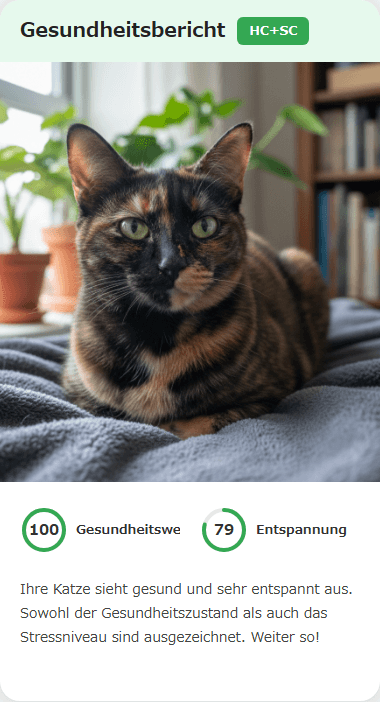

Machen Ihnen diese Symptome Sorgen?
Warten Sie nicht ab. Die KI von CatsMe analysiert das Foto Ihrer Katze und erkennt gesundheitliche Auffälligkeiten in Sekunden.
Über 380.000 Katzenbesitzer in 50 Ländern vertrauen CatsMe


Symptoms and How to Spot Jaundice
Early symptoms:
- Loss of appetite lasting three or more days
- Lethargy or listlessness
- Vomiting
Advanced symptoms:
- Jaundice: The whites of the eyes (sclera), the inside of the ears, and the gums take on a yellow tint. The easiest place to spot it is the whites of the eyes
- Drooling (excessive salivation)
- Dehydration
- Muscle wasting (the cat loses muscle mass even though fat reserves remain)
How to check for jaundice at home: In a well-lit room, gently lift your cat's upper eyelid and look at the color of the sclera. If it appears yellowish rather than white, jaundice may be developing and you should see a vet immediately.
Treatment: Nutritional Support Is the Top Priority
The cornerstone of hepatic lipidosis treatment is ensuring adequate caloric intake.
Hospital care:
- IV fluids to correct dehydration and electrolyte imbalances
- Anti-nausea medication
- Placement of a nasoesophageal or esophagostomy feeding tube: The most effective way to deliver nutrition. Liquid food is administered directly through the tube
Tube feeding:
- Daily calorie requirements are divided into 4 to 6 feedings
- High-protein, high-calorie liquid diets are used (such as Royal Canin Recovery Liquid)
- Duration: 2 to 6 weeks is typical, continuing until the cat begins eating on its own
Supportive therapies:
- L-carnitine: Promotes fat metabolism in the liver
- SAMe (S-adenosylmethionine): Protects liver cells from further damage
- Vitamin B complex and vitamin K supplementation
Prevention: Weight Management Is Key
The best ways to prevent hepatic lipidosis are to keep your cat at a healthy weight and to never crash-diet an overweight cat.
Safe weight-loss guidelines:
- Under veterinary supervision, aim for a loss of 1 to 2% of body weight per week
- Never cut food so drastically that the cat refuses to eat
- See our cat obesity guide for a sustainable weight-loss plan
Act quickly if your cat stops eating:
- Even if the cause is stress (a move, a new pet), see the vet if your cat has not eaten for three days
- Try warming wet food to enhance its aroma, or offer a highly palatable option to restart appetite
Diagnostic Tests for Hepatic Lipidosis & Costs
Diagnosing hepatic lipidosis relies on a combination of tests that together paint a clear picture.
Blood work: $40 to $120 (¥5,000–15,000). Markedly elevated liver enzymes (ALP, ALT, GGT), increased bilirubin (the cause of jaundice), and low albumin are classic findings. A dramatic elevation in ALP is particularly characteristic of feline hepatic lipidosis.
Abdominal ultrasound: $40 to $80 (¥5,000–10,000). The liver appears abnormally bright (hyperechoic) due to fat infiltration — a hallmark imaging finding.
Liver fine needle aspirate (FNA): $40 to $80 (¥5,000–10,000). Under ultrasound guidance, cells are collected directly from the liver and examined for fat accumulation. This is the most definitive diagnostic step.
Coagulation panel: $25 to $40 (¥3,000–5,000). Assesses clotting function, which can be impaired by liver failure. This test is essential before placing a feeding tube.
Total for initial diagnosis plus hospitalization: $400 to $1,600 (¥50,000–200,000), depending on the length of stay and feeding tube management.
The cost may seem steep, but the recovery rate with proper treatment exceeds 80%. Getting to the vet promptly is the best investment — both financially and for your cat's prognosis.
Home Tube Feeding: A Practical Management Guide
After hospital discharge, home tube feeding is often required for several weeks until the cat begins eating on its own. With proper guidance, most owners manage this successfully.
Types of feeding tubes:
- Nasoesophageal tube: For short-term use (days to one week). Accommodates only liquid diets.
- Esophagostomy tube (E-tube): Ideal for longer-term feeding. Allows blended prescription food to be administered.
Feeding procedure:
1. Warm the prescribed liquid diet to approximately body temperature
2. Flush a small amount of water through the tube to confirm it is clear
3. Inject the food slowly with a syringe — each feeding should take 5 to 10 minutes
4. Flush the tube with water afterward to prevent clogging
5. Divide the total daily calorie requirement across 4 to 6 feedings
Important precautions:
- Feeding too quickly causes vomiting. Go slowly.
- Keep the skin around the tube insertion site clean and dry every day
- Use an Elizabethan collar to prevent the cat from pulling out the tube
Signs of recovery: When the cat starts eating voluntarily, gradually reduce the amount given through the tube while increasing self-feeding. Once the cat consistently consumes its full daily calories on its own, the tube can be removed.
If you feel uncertain at any point, Carelogy's online veterinary consultation can help you verify technique and troubleshoot issues.
Recovery from Hepatic Lipidosis & Long-Term Care
Recovery from hepatic lipidosis is entirely achievable, but preventing recurrence and maintaining long-term health require ongoing vigilance.
Typical recovery timeline:
- Weeks 1–2: Stabilization with IV fluids and tube feeding
- Weeks 2–4: Appetite gradually returns. Some cats begin eating on their own during this phase.
- Weeks 4–6: Most cats graduate from the feeding tube. Liver values start improving on blood work.
- Months 2–3: Full recovery. Blood work returns to normal.
Strategies to support recovery:
- Discuss appetite stimulants (mirtazapine) with your vet to encourage self-feeding
- Keep several varieties of high-quality, palatable wet food on hand
- Create a quiet, stress-free dining environment
- Follow our cat food guide for appropriate nutritional support
Preventing recurrence:
- Safe weight loss only: Under veterinary supervision, target no more than 1 to 2% of body weight loss per week
- Respond quickly to appetite changes: If your cat stops eating for more than two days for any reason, see a vet
- Regular checkups: Monitor liver values every 3 to 6 months after recovery
- Obesity prevention: Maintaining a healthy weight is the single most effective way to prevent a second episode
The vast majority of cats that recover from hepatic lipidosis go on to live healthy, normal lives afterward.
Könnten Sie beantworten: ‚Seit wann geht es ihr so?'
Wenn der Tierarzt fragt, sollten Sie nicht raten müssen. CatsMe protokolliert automatisch tägliche Gesundheitswerte, die Sie mit einem Fingertipp teilen können.
肝リピドーシス脂肪肝黄疸食欲不振猫の病気
FAQ
 CatsMe
Seien Sie vorbereitet, wenn Ihnen etwas auffällt
Ein Foto genügt: Die KI liest Schmerz und Zustand am Gesichtsausdruck Ihrer Katze ab. Prüfen Sie im Moment der Sorge und teilen Sie die Aufzeichnung mit Ihrer Tierarztpraxis.