

The Bottom Line: Spotting Arthritis Means Reading Subtle Behavior Changes
Cats are hardwired to hide pain, so arthritis rarely looks like obvious limping. Instead, the clues are behavioral: refusing to jump onto the bed, patches of unkempt fur where they can no longer reach to groom, or hesitating at the litter box edge. Studies show that roughly 90% of cats over 12 have some degree of joint degeneration. Paying close attention to your senior cat's daily habits is the single most effective way to catch arthritis before it severely impacts quality of life.
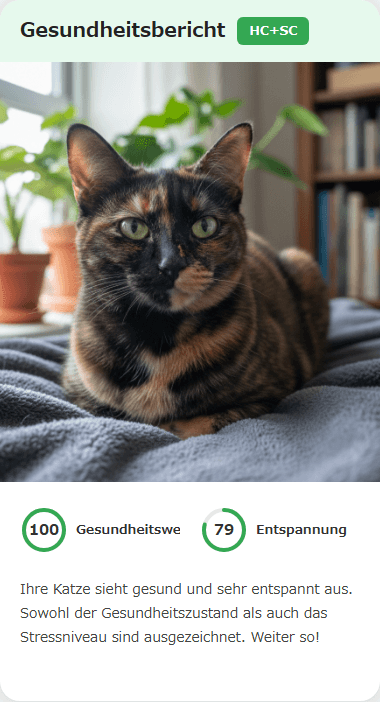

Bei Seniorkatzen zählt jeder Tag
Subtile Veränderungen können bei älteren Katzen auf ernste Probleme hindeuten. CatsMe überwacht Verhalten, Appetit und Gesundheitswerte, damit Sie schnell handeln können.
Über 380.000 Katzenbesitzer in 50 Ländern vertrauen CatsMe


Hard-to-Spot Signs and Symptoms
Unlike dogs, cats rarely limp in an obvious way. Look for these subtler red flags instead.
Mobility changes: Avoiding high surfaces, no longer jumping onto the sofa or shelves. Grooming changes: Matted fur or a scruffy coat on the hind legs and lower back — areas they can no longer comfortably reach. Litter box behavior: Fewer trips, accidents outside the box, or reluctance to step over a high-sided tray. Temperament shifts: Growling or biting when touched in certain areas. Activity level: Less interest in play and noticeably more sleeping.
Any combination of these should prompt a vet visit, even if your cat seems "fine" otherwise.
Home Environment Adjustments That Make a Real Difference
Simple environmental tweaks can dramatically reduce your cat's pain and frustration.
Reduce the need to jump: Place pet stairs or ramps to the sofa, bed, and favorite perches. Upgrade the litter box: Switch to a tray with a low entry (under 5 cm / 2 inches). Keep beds warm: Arthritis flares in cold weather, so provide a warm blanket or a pet-safe heated pad on a low setting. Raise food and water bowls: Use a stand to bring dishes to face height, easing neck strain.
Weight management is equally critical. Keeping your cat at an ideal weight is one of the single most impactful things you can do to reduce joint stress.
Pain Relief Options and Veterinary Management
Cats cannot safely metabolize many common pain relievers, so human or dog NSAIDs and acetaminophen (Tylenol) must never be given to a cat — even a single dose can be fatal.
Safe, vet-prescribed options include: (1) Meloxicam (Metacam): a feline NSAID studied for long-term use, though kidney function must be monitored. (2) Gabapentin: effective for nerve-related pain with a mild sedative effect. (3) Anti-NGF antibody (Frunevetmab/Solensia): the newest breakthrough in feline arthritis treatment — a once-monthly injection. (4) Supplements: omega-3 fatty acids, glucosamine, and chondroitin can serve as helpful adjuncts to medical therapy.
Age-Related Changes to Watch: How Arthritis Progresses Over Time
Arthritis is not a disease that appears overnight — it is a degenerative process that unfolds over years, and understanding the typical progression helps you intervene at the right time.
Ages 7–10: Mild cartilage erosion begins. There are usually no visible symptoms, but early changes may appear on X-rays during routine screening. Ages 10–14: Behavioral signs start to emerge — hesitation before jumping, a shrinking grooming range leaving patches of unkempt fur, and increasing litter box accidents. Age 15+: Chronic pain becomes the norm, and muscle wasting (sarcopenia) accelerates. Polyarthritis — multiple joints affected simultaneously — is common at this stage.
One critical point: the severity of joint changes visible on X-rays does not always correlate with the level of pain a cat is experiencing. Some cats with mild radiographic changes are in significant discomfort, while others with dramatic joint degeneration seem only mildly affected. This is precisely why behavioral observation — not imaging alone — remains the most reliable way to assess how arthritis is actually impacting your cat's daily life. If you notice any change in your cat's willingness to move, groom, or play, bring it up with your vet even if the last set of X-rays looked relatively benign.
Quality of Life Assessment for Cats With Arthritis
The goal of arthritis treatment is not a cure — it is managing pain well enough to preserve quality of life. Rather than relying on gut feeling, use a structured scoring system to track progress over time.
Five dimensions to score: (1) Mobility — can the cat navigate stairs and walk smoothly? (2) Grooming ability — can it reach and clean all body areas? (3) Litter box behavior — can it enter and exit without difficulty? (4) Social engagement — does it approach family members and seek affection? (5) Pain indicators — how does it react to touch, and are there subtle signs like dilated pupils or flattened ears?
Rate each dimension monthly on a 1-to-5 scale and chart the trends. This data becomes invaluable for evaluating whether a pain medication is working and for deciding when to adjust the treatment plan. A steadily declining total score is a clear signal that the current approach needs revisiting — perhaps adding a second pain medication, switching to a newer option like anti-NGF antibody therapy, or making further environmental modifications. Sharing this score sheet with your vet turns a subjective conversation into a data-driven one, leading to faster and more precise treatment decisions.
Nutrition for Senior Cats With Arthritis
Proper nutrition is one of the most powerful non-pharmaceutical tools for reducing arthritis pain and slowing joint deterioration.
Omega-3 fatty acids (EPA/DHA): Their anti-inflammatory properties are backed by solid evidence. Add a fish oil supplement — salmon oil works well — to your cat's daily meal. A general guideline is approximately 300 mg combined EPA+DHA per 4 kg (9 lbs) of body weight. Joint-support diets: Prescription foods like Hill's j/d and Royal Canin Mobility are formulated with glucosamine, chondroitin, and omega-3s already built in, which simplifies supplementation. Balancing weight loss with muscle preservation: Reducing calories to lighten the load on joints is essential, but you must simultaneously maintain adequate protein to prevent muscle loss. Low-calorie, high-protein wet food strikes the best balance between these competing needs. Hydration: Adequate water intake supports the production of synovial fluid, which lubricates the joints. Feed a predominantly wet-food diet and place water bowls in multiple easily accessible locations throughout the home.
Nutrition alone will not eliminate arthritis pain, but combined with medication and environmental changes, it forms the third pillar of a comprehensive management strategy that can keep your cat comfortable for years.
When to Increase Vet Visits for a Cat With Arthritis
Even when arthritis is well managed, a re-evaluation every six months is the recommended minimum. Certain changes warrant an earlier visit.
Urgent care: Sudden inability to walk or complete non-weight-bearing on a limb (possible fracture or dislocation), pain severe enough to stop eating entirely, or a current pain medication that has clearly stopped working. Within one week: New joint swelling, a sharp drop in activity level, or a sudden increase in litter box accidents. Move the next checkup forward: Cats on NSAIDs like meloxicam require kidney function monitoring every three to six months without exception. Schedule a recheck two to four weeks after starting any new pain medication. Seasonal transitions — especially the shift into cold weather — often trigger flare-ups that benefit from a proactive dose adjustment.
For cats aged 15 and older with polyarthritis, a comprehensive assessment every three months — including a pain score, body weight, kidney values, and joint range-of-motion testing — provides the best outcomes. Carelogy's house-call service makes quarterly evaluations practical by eliminating the physical and emotional stress of transporting an arthritic senior cat to a clinic. The vet comes to your cat's environment, observes movement in a familiar setting, and can spot subtle changes that might be masked by the anxiety of a clinic visit.
Get a Home Assessment With Carelogy's House-Call Vet Service
For a senior cat with arthritis, the trip to the clinic itself can cause significant stress and pain. Carelogy's house-call veterinary service brings the exam to your living room, where your cat is relaxed and comfortable.
The vet can observe your cat's actual living environment — litter box setup, bed placement, stairs and jumping surfaces — and provide personalized recommendations for both pain management and home modifications. It is the most cat-friendly way to manage chronic arthritis.
Könnten Sie beantworten: ‚Seit wann geht es ihr so?'
Wenn der Tierarzt fragt, sollten Sie nicht raten müssen. CatsMe protokolliert automatisch tägliche Gesundheitswerte, die Sie mit einem Fingertipp teilen können.
関節炎シニア猫痛み変形性関節症自宅ケア
FAQ
 CatsMe
Seien Sie vorbereitet, wenn Ihnen etwas auffällt
Ein Foto genügt: Die KI liest Schmerz und Zustand am Gesichtsausdruck Ihrer Katze ab. Prüfen Sie im Moment der Sorge und teilen Sie die Aufzeichnung mit Ihrer Tierarztpraxis.