
Turkish Angora
The Turkish Angora is a historic breed from Turkey, known for its silky white coat and elegant build. Highly intelligent and active, they are sociable cats who love being the center of attention. Many have heterochromatic (odd-colored) eyes, adding to their mystical beauty that is admired worldwide.
Turkish Angora Characteristics
History of the Turkish Angora
A natural longhaired breed from the region around Ankara, Turkey; 'Angora' comes from the city's old name. After numbers declined, the Ankara Zoo kept a breeding programme for white cats through the 20th century. The breed has been recognised in the United States since the late 1960s.
Turkish Angora Appearance
A fine-boned but muscular body, long legs, a wedge-shaped head with large ears, and a plumed tail. The single coat has no undercoat and feels silky. White is the best-known colour, but others exist, and some cats have blue or odd-coloured eyes.
Turkish Angora Temperament
Bright and energetic, they climb, follow their people from room to room and join in with play and conversation. They also like doing things their own way, and some dislike being held against their will.
Is a Turkish Angora Right for You?
Suits homes with time for play and room for a cat tree or shelves to climb. With no undercoat the coat mats less than most longhairs, so grooming is fairly easy.
Breeds Often Compared with the Turkish Angora
Common Health Issues in Turkish Angora
These conditions are genetically or physically predisposed in this breed. Early detection and regular checkups are important.
Hereditary Deafness
遺伝性難聴Congenital deafness is common in white-coated, blue-eyed individuals. The W gene affects both coat color and inner ear development.
Hypertrophic Cardiomyopathy (HCM)
肥大型心筋症(HCM)HCM has been reported in Turkish Angoras. Regular echocardiograms are recommended.
Care Tips for Turkish Angora
Turkish Angora Cat Age in Human Years
With an average lifespan of 12-18 years, the Turkish Angora ages fast in the first two years, then about 4 human years per cat year. Senior life begins around age 7.
| Cat age | Human age | Life stage |
|---|---|---|
| 6 months | 10 yrs | Kitten–Junior |
| 1 year | 15 yrs | Kitten–Junior |
| 2 years | 24 yrs | Adult |
| 3 years | 28 yrs | Adult |
| 4 years | 32 yrs | Adult |
| 6 years | 40 yrs | Adult |
| 8 years | 48 yrs | Senior |
| 10 years | 56 yrs | Senior |
| 12 years | 64 yrs | Geriatric |
| 15 years | 76 yrs | Geriatric |
| 18 years | 88 yrs | Geriatric |
| 20 years | 96 yrs | Geriatric |
For average lifespan across all cats, the indoor vs outdoor gap, and what actually extends it, see How long do cats live? Lifespan by breed and how to extend it.
Frequently Asked Questions about Turkish Angora
Q.Are white Turkish Angoras deaf?
White cats with blue eyes are known to be at risk of congenital deafness. In odd-eyed cats, only the ear on the blue-eyed side may be affected. If your cat does not respond to its name or loud sounds, ask a vet to check its hearing.
Q.How often should I brush a Turkish Angora?
Once or twice a week is usually enough, since there is no undercoat to mat. Brush more during spring and autumn moults to cut down on hairballs.
Q.What is the difference between a Turkish Angora and a Turkish Van?
Both come from Turkey but are separate breeds. The Turkish Angora is slender and elegant; the Turkish Van is larger and sturdier, with a white body and colour mainly on the head and tail (the 'van' pattern).
Q.What is the average lifespan of a Turkish Angora?
The Turkish Angora lives about 12-18 years on average. Indoor-only living, a proper diet, and regular health checks all help a cat reach — or exceed — that range.
Q.What health problems are common in Turkish Angora cats?
Hereditary Deafness, Hypertrophic Cardiomyopathy (HCM), Ataxia are among the 3 conditions this breed is genetically or physically predisposed to. Regular checkups and daily monitoring of appetite, behavior, and weight help catch issues early.
Q.How much should a Turkish Angora weigh?
Adult Turkish Angora cats typically weigh 2.5-5kg. Sudden weight changes can signal a health issue, so logging weight monthly is a good habit.
Q.What is the temperament of a Turkish Angora?
Turkish Angora cats are known for being silky white coat, elegant and graceful build, smart, active, and playful. Individuals vary, but understanding the breed's nature helps you set up the right environment.
Q.Where do Turkish Angora cats originate from?
The Turkish Angora originates from Turkey.
Related Articles for Turkish Angora
 CatsMe
Soyez prêt à agir dès que vous sentez que quelque chose cloche
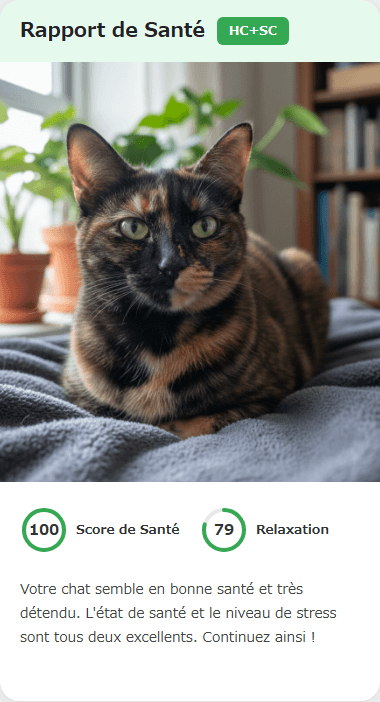
Prenez une photo et CatsMe examine par IA le visage de votre chat à la recherche de signes de douleur. Conservez des suivis datés pour chaque chat, à revoir avec votre vétérinaire. Il ne pose pas de diagnostic.