
News & Trends2026-05-09Carelogy編集部
FDA H5N1 Alert: Raw Pet Food Bird Flu Cat Deaths and Risk Implications for Japan
FDA warns of H5N1 contamination risk in raw pet foods. Multiple cat deaths confirmed including Northwest Naturals and Monarch Raw, ~70% case fatality. Risk assessment and safe alternatives for raw-feeding enthusiasts in Japan.

Bottom Line: Raw Food Risk Has Materialized (3 Lines)
1. The US FDA has officially warned of H5N1 avian influenza contamination in raw pet foods — manufacturers must now include H5N1 in their food safety plans
2. Cat infections and deaths confirmed from frozen raw foods including Northwest Naturals and Monarch Raw — products with best-by dates as recent as May 2026 distributed across the US and Canada
3. Cat case fatality is ~70% — prognosis for H5N1-infected cats is extremely grave; effective treatments are currently limited
Since December 2024, multiple cat deaths from H5N1 after eating raw pet food have been confirmed in the US. With raw feeding gaining interest in Japan, this article covers FDA's official warning, recall details, and the risk assessment + safe alternatives for Japanese owners.

midArticleCta.byCategory.news.title
midArticleCta.byCategory.news.description
50개국 380,000명 이상의 보호자가 사용 중


Inside the FDA Warning: What Changed
FDA's new policy (announced 2026):
Manufacturers of cat and dog foods using uncooked or unpasteurized materials derived from poultry or cattle (uncooked meat, unpasteurized milk or eggs) must now include H5N1 as a 'known or reasonably foreseeable hazard' in their food safety plans.
Specific required measures:
- H5N1 testing of ingredient sources
- Virus inactivation in manufacturing (where applicable)
- Per-batch testing records
- Recall infrastructure for anomaly detection
Major recalls (December 2024 - 2026):
| Manufacturer | Product | Status |
|---|---|---|
| Northwest Naturals | 2lb Feline Turkey Recipe Raw Frozen | Best-by 05/21/26 and 06/23/26 lots positive for H5N1. Distributed in 11 US states + BC, Canada. 1 cat death confirmed. |
| Monarch Raw | Raw pet food | Sold at California farmers markets. 1 of 5 cats in one household confirmed, 4 presumed infected. |
Genetic analysis conclusion:
Virus from the deceased cat genetically matched virus from recalled product → product identified as source. This was the decisive trigger for the FDA policy update.
Why Cats Are Especially Vulnerable to Avian Influenza
Case fatality comparison (H5N1):
| Species | Fatality |
|---|---|
| Cat | ~70% |
| Cattle | 5-10% |
| Chicken | 90%+ (mass death within 24 hours) |
| Human | ~50% (WHO data, rare) |
Why cats are vulnerable:
1. Respiratory receptors highly affinity for H5N1
- Upper airway to lung cell surfaces have abundant virus binding sites
- Infection rapidly causes pneumonia
2. Concentrated exposure via predatory behavior
- Outdoor cats eating infected birds (especially waterfowl) ingest massive viral loads
- Raw food creates a similar exposure route
3. Rapid symptom progression
- Onset in 2-5 days post-infection
- Severity escalates within days
4. Limited antiviral options
- Human drugs like oseltamivir lack safety data in cats
- Mostly supportive care (fluids, oxygen, antipyretics)
Typical infection course:
| Stage | Symptoms |
|---|---|
| Early (1-2d) | Lethargy, appetite loss, mild fever |
| Progressive (3-5d) | High fever, difficulty breathing, open-mouth breathing, cough |
| Severe (5-7d) | Neurological signs (tremors, seizures), respiratory failure |
| Terminal | Multi-organ failure, death |
Zoonotic angle:
Direct cat-to-human transmission risk is currently limited but not zero. Veterinary staff treating suspected cases require PPE-level precautions.
Japan's Current Situation and Risk Assessment
H5N1 cat cases in Japan:
As of May 2026, no confirmed cases in domestic Japanese cats have been reported. However, risk factors exist:
Domestic risk factors:
1. Continued H5N1 detection in wild birds and poultry
- 100+ outbreaks at Japanese poultry farms in 2024-2025 season
- Migration-route prefectures remain on alert
2. Growing raw food enthusiast population
- 'Natural diet' interest spreading via SNS
- Personal imports of overseas products
3. Regional differences in indoor-only rates
- ~80% indoor-only in cities, but outdoor access remains common in rural areas
- Predation of infected birds outdoors remains a route
4. Recognition gap in veterinary practice
- Few vets have H5N1 case experience
- Early symptoms can be missed as 'ordinary respiratory infection'
What Japanese owners should do:
| Action | Priority |
|---|---|
| Pause raw food or ensure thorough cooking | High |
| Switch to domestically-approved pet food | High |
| Move to strictly indoor housing | High |
| Reconsider personal imports | Medium |
| Check raw food shelves at pet retailers | Medium |
Japan's pet food safety framework:
Pet food recall system routes anomalies through MAFF and the Consumer Affairs Agency. Overseas recall info typically reaches Japan with a 1-2 week lag, so checking manufacturer official sites is also useful.
Safe Alternatives for Raw-Feeding Enthusiasts
We understand owners who believe 'only raw food provides certain nutrients,' but here are realistic compromises given current risk.
Option 1: Switch to HPP (High Pressure Processing) products
- High-pressure processing inactivates viruses
- Nutritional value better preserved than heat processing
- Adopted by some US raw food brands
- Now imported to Japan
Option 2: Home-cook with heating
| Method | Temperature/time | Virus inactivation |
|---|---|---|
| Core temp 70°C+ | 1+ min | Excellent |
| Core temp 60°C | 30 min | Good |
| Boil | 5+ min | Excellent |
| Microwave | Even heating throughout | Adequate (verify internal temp) |
Option 3: Use wet canned/pouch products
- Sterilized in production
- High palatability, good acceptance
- Choose AAFCO/AAFS-compliant complete nutrition formulas
Option 4: Rethink nutritional supplementation
The 'enzymes' and 'nutrients' sought from raw food can be substituted with cooked food + appropriate supplements. See Cat Food Selection Guide.
What NOT to do:
- ❌ 'My cat has been fine so far' continued use
- ❌ Using recalled product because it's within best-by date
- ❌ Believing rinsing makes it safe (virus is inside the meat)
- ❌ Half-cooking (lightly searing) as a compromise
Use CatsMe to Visualize the Diet-Health Connection
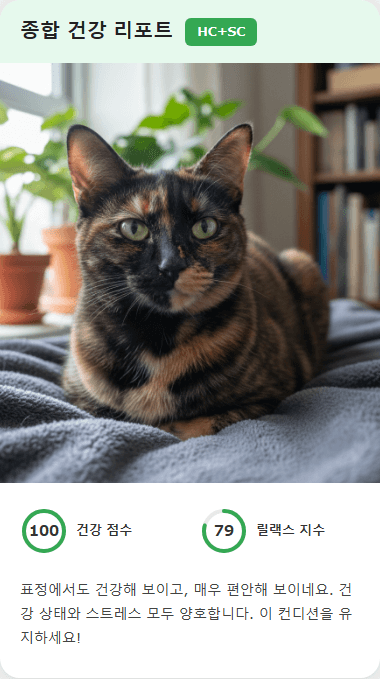
After changing diet, objectively grasping how your cat's condition changes is difficult. CatsMe's AI health analysis visualizes the 'diet quality vs health score correlation' chronologically.
What CatsMe offers:
- Diet log — record food type, amount, and timing
- AI health score — visualize whole-body condition from one photo
- Correlation graphs — compare health score trends before/after diet changes
- Anomaly alerts — early notification of sudden score drops
- Vet-ready PDF reports — submit diet and health data
Use given the H5N1 risk:
1. Log all current diet (raw, wet, dry ratios)
2. Log switching timing and changes
3. Daily health score logging for 2 weeks post-switch
4. Score drop = immediate vet consultation
Start managing diet and health with CatsMe → (3-day free trial)
수의사에게 '언제부터 그랬나요?'라고 물으면 답할 수 있으신가요?
수의사 앞에서 막막해하지 마세요. CatsMe가 매일 건강 점수를 자동으로 기록하고, 탭 한 번으로 공유할 수 있습니다.
H5N1鳥インフルエンザ生肉ローフードFDA2026
FAQ
References
This article is compiled and summarized by the Carelogy editorial team based on publicly available information from the following veterinary organizations, universities, and clinical manuals.
- U.S. Food and Drug Administration (FDA). Cat and Dog Food Manufacturers Required to Consider H5N1 in Food Safety Plans (2026).
- American Veterinary Medical Association (AVMA). Avian influenza A (H5N1) in cats (2026).
- Cornell University College of Veterinary Medicine. H5N1 Avian Influenza and your cat (2025).
- Center for Infectious Disease Research and Policy (CIDRAP), University of Minnesota. FDA warns of H5N1 avian flu detection in raw cat food (2026).
- 厚生労働省. 鳥インフルエンザについて (2026).
- 農林水産省 ペットフード安全法担当. ペットフードの安全に関する情報 (2025).
 CatsMe
이상을 느꼈을 때, 바로 행동할 준비를
사진 한 장이면 AI가 고양이의 표정에서 통증과 건강 상태를 읽어냅니다. 걱정되는 순간 바로 확인하고, 기록은 수의사와 공유하세요.