
News & Trends2026-05-03Carelogy編集部
2026 Feline Infectious Disease Guidelines: Updated FeLV Screening Ages & Vaccine Strategies
JCAS/AAFP 2026 guidelines reverse the long-standing 'one-time FeLV test for life' stance. Re-screening recommendations, updated core vaccine protocols, and realistic risk assessment for indoor-only cats explained.

Bottom Line: What Changed in the 2026 Guidelines (3-Line Summary)
1. The 'one FeLV test for life' rule is officially retired — re-screening is strongly recommended for multi-cat homes, escape history, and new introductions
2. 3 core vaccines (FPV, FHV-1, FCV) are now standardized at 3-year intervals, but the kitten primary series increases from 2 to 3 doses
3. Even indoor-only cats face nonzero rabies and FeLV risk — minimum readiness for disaster evacuation and accidental escapes is recommended
In April 2026, the American Association of Feline Practitioners (AAFP) and the Japan Clinical Veterinary Forum (JCAS) released the first major revision of feline infectious disease guidelines in 6 years. This article distills what cat owners should act on today, in 5 minutes.
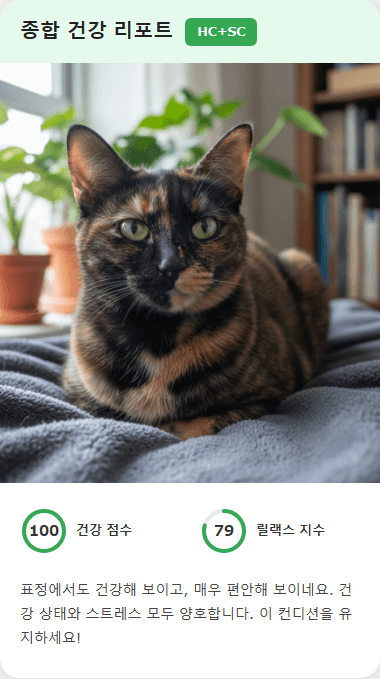

우리 고양이의 '평소와 다른 점', 알아차릴 수 있으신가요?
고양이는 통증을 숨깁니다. CatsMe는 AI로 고양이 얼굴 사진의 표정에서 통증 신호를 확인합니다. 질병을 진단하지는 않으므로, 걱정되면 수의사에게 문의하세요.


Why the 'One FeLV Test for Life' Rule Was Retired
The previous guidance was simple: test kittens for FeLV/FIV once, and if negative, never test again. Follow-up studies from 2020-2025 changed that picture:
New findings:
- 8.4% of self-reported 'indoor only' households had at least one escape event (US survey, N=12,400)
- Increased cases of latent FeLV in newly adopted cats (only detectable via PCR)
- Documented reactivation of latent virus during stress or immune suppression
New 2026 recommendations:
| Scenario | Recommended Test |
|---|---|
| Adopting a kitten | FeLV antigen + FIV antibody (mandatory) |
| Adding to multi-cat household | Test all cats (before introduction + 30 days after) |
| After confirmed escape | Re-test 60 days later |
| Onset of chronic disease | FeLV-PCR as differential diagnosis |
| Entering senior years (age 11) | Once, alongside health screening |
Cost: FeLV/FIV combination kits run ¥4,000-7,000 per test. Many clinics discount when bundled with health checkups.
Core Vaccines: Evidence for 3-Year Intervals and Exception Patterns
Core vaccines (recommended for all cats):
- Feline Panleukopenia Virus (FPV)
- Feline Herpesvirus 1 (FHV-1)
- Feline Calicivirus (FCV)
Confirmed in the 2026 update:
- Kitten primary series increases to 3 doses (8, 12, and 16 weeks of age)
- After the 1-year booster, revaccination every 3 years is sufficient (FPV antibody titers shown to persist long-term)
- Titer testing is now an accepted alternative to revaccination
Exceptions where annual vaccination is still advised:
1. Shelter or multi-cat facility cats
2. Cats with outdoor access
3. Cats regularly using boarding/grooming services
4. Immunocompromised cats (FIV+, on long-term steroids)
Non-core vaccines (case-by-case):
- FeLV vaccine: Outdoor access, cohabiting with FeLV+ cat, young shelter-origin cats
- Chlamydia / Bordetella: Only for group housing environments
- Rabies: Not legally required in Japan, but recommended if international travel or disaster shelter use is anticipated
Vaccine-Associated Sarcoma (VAS) precautions:
Injection site rotation is still recommended in 2026 — right hind leg (FeLV) / left hind leg (rabies) / right shoulder (FPV/FHV/FCV) — using distal limb sites so any mass can be more easily resected.
Realistic Risks Even for Indoor-Only Cats
"My cat is strictly indoors so infections don't apply." The 2026 update explicitly rejects this assumption.
Real-world infection routes:
- Virus exposure through windows or screen doors (FCV spreads via aerosols up to 5m)
- Viruses on owner's shoes and clothing (FPV survives outdoors for up to 1 year)
- Group exposure at disaster shelters
- Transmission in vet clinic waiting rooms from undiagnosed carriers
- New cat introductions (the largest single risk)
5 actions you can take today:
1. Maintain core vaccines on the 3-year schedule — don't lapse during adulthood thinking 'it's no longer needed'
2. Quarantine any new cat for 2 weeks plus FeLV/FIV testing before introduction
3. Re-test cats from hoarding rescues or shelters at the 60-day mark
4. Keep copies of vaccination certificates in your disaster go-bag
5. Keep cats inside their carrier in vet waiting rooms (drape with a towel to reduce stress)
Disaster shelter blind spot:
Since the 2024 Noto Peninsula earthquake, more shelters in Japan accept pets — but many require vaccination certificates for entry. Cats without proof are often segregated or refused. Snap a photo of the current vaccination record now while you have time.
5 Questions to Ask Your Vet at the Next Visit
Question template (copy-paste friendly):
1. "When was my cat's last FeLV/FIV test? Per the 2026 guidelines, does she need re-testing?"
2. "Can we switch core vaccinations to a 3-year interval? Is antibody titer testing an option here?"
3. "Considering disaster preparedness, are there additional vaccines I should consider?"
4. "Given my cat's current medications and conditions, are there vaccine reactions I should watch for?"
5. "Can we run an infectious disease screening alongside the next health checkup?"
If even one of these gets a vague answer, a second opinion may be worthwhile. The 2026 guidelines are public — whether your vet has incorporated them is a meaningful signal.
You'll have clarity on "what does my specific cat need" within 30 minutes.
Record changes in your cat's expression with CatsMe
Keeping vaccination dates and vet-visit history together for each cat makes discussions with your vet smoother. CatsMe (by Carelogy Inc.) uses AI to check a photo of a cat's face for signs of pain in its expression. It does not diagnose disease, assess overall health or replace a veterinarian; if you are worried, contact your vet regardless of the result.
- Keep dated records of vet visits and vaccinations to show your vet
- Records are kept per cat, so it works for multi-cat homes (iOS, Android and web, 14 languages)
- Developed with a background in university joint research; over 1 million checks run to date
Learn more about CatsMe →
수의사에게 '언제부터 그랬나요?'라고 물으면 답할 수 있으신가요?
CatsMe는 AI로 고양이 얼굴 사진의 표정에서 통증 신호를 확인하고, 고양이별로 날짜가 남는 기록을 보관해 수의사와 함께 살펴볼 수 있게 합니다. 질병을 진단하지는 않습니다.
FeLVワクチン感染症ガイドラインAAFPJCAS2026
FAQ
 CatsMe
이상을 느꼈을 때, 바로 행동할 준비를
사진 한 장을 찍으면 CatsMe가 AI로 고양이 얼굴에서 통증 신호를 확인합니다. 고양이별로 날짜가 남는 기록을 보관해 수의사와 함께 살펴보세요. 질병을 진단하지는 않습니다.