

The Bottom Line: Urinary Blockage in Male Cats Is a Life-Threatening Emergency
If your cat is straining in the litter box but producing no urine, get to a vet immediately. Urinary blockage in male cats is especially dangerous — left untreated, it can cause acute kidney failure and death within 24 to 48 hours.
On the other hand, if your cat has blood-tinged urine but is otherwise eating, drinking, and acting normally, a next-day appointment is usually safe. FLUTD is an extremely common group of conditions, estimated to affect 10–15% of all cats at some point in their lives.
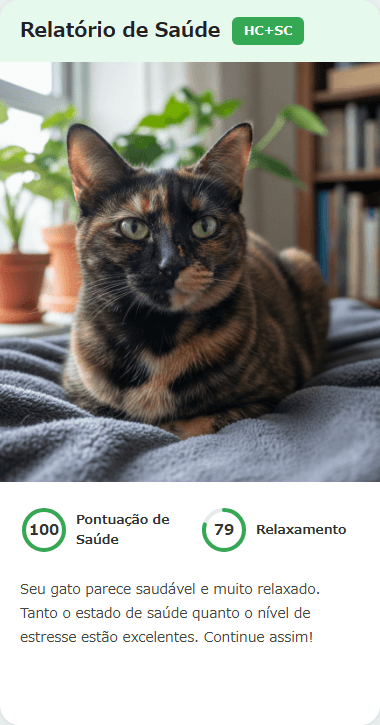

Preocupado com esses sintomas?
Não fique na dúvida. A IA do CatsMe analisa a foto do seu gato e identifica sinais de alerta em segundos.
Mais de 380.000 donos de gatos em 50 países confiam no CatsMe


Key Symptoms of FLUTD
Watch for these telltale signs:
- Frequent trips to the litter box with little or no urine produced
- Blood in the urine (pink to red discoloration)
- Crying or vocalizing while urinating — a clear pain signal
- Urinating outside the litter box — the cat associates the box with pain
- Excessive licking of the genital area
- Not urinating at all — possible urinary blockage
The combination of straining with no urine output + lethargy + vomiting is the classic triad of a urinary blockage and demands emergency veterinary care.
What Causes FLUTD
Feline Idiopathic Cystitis (FIC): The leading cause, responsible for about 60% of FLUTD cases. Stress plays a major role. The bladder becomes inflamed despite no identifiable infection or stones.
Urinary stones (urolithiasis): Struvite (magnesium ammonium phosphate) and calcium oxalate are the two most common types. Diet pH and mineral balance are significant contributing factors.
Urethral plugs: A mixture of crystals, proteins, and cellular debris that lodges in the narrow urethra of male cats, causing a blockage.
Bacterial infection: Relatively uncommon in younger cats but becomes more likely in seniors and cats with pre-existing kidney disease.
Treatment and Preventing Recurrence
Acute treatment:
- For urinary blockage: urethral catheterization (typically 1–3 days of hospitalization)
- Pain relief and anti-inflammatory medication
- IV fluids to correct dehydration and electrolyte imbalances
Recurrence prevention (the most critical part):
- Increase water intake: Prioritize wet food, provide multiple water stations, and use a pet water fountain
- Urinary care diet: Formulated to manage urine pH and mineral balance
- Reduce stress: Add more litter boxes (one per cat plus one), and review indoor safety for environmental improvements
- Weight management: Addressing obesity is equally important
FLUTD has a high recurrence rate — about 50% of cats relapse within a year — so ongoing preventive management is essential.
Diagnostic Tests for FLUTD & What They Cost
Pinpointing the cause of FLUTD requires a focused diagnostic workup. Here is what to expect.
Urinalysis (specific gravity, pH, cytology, crystal analysis): $15 to $40 (¥2,000–5,000). The most fundamental and informative test. It identifies the type of crystals present — struvite or calcium oxalate — which directly guides treatment.
Urine culture: $25 to $40 (¥3,000–5,000). Determines whether bacteria are present and which antibiotics will be effective. Especially important in senior cats, where urinary tract infections are more common.
Blood work: $40 to $120 (¥5,000–15,000). Evaluates kidney function — critical for checking whether a urinary blockage has already triggered acute kidney injury — and monitors potassium levels, which can become dangerously elevated.
Abdominal ultrasound: $40 to $80 (¥5,000–10,000). Visualizes bladder wall thickening, stones within the bladder, and rules out tumors.
Abdominal X-ray: $25 to $65 (¥3,000–8,000). Useful for detecting larger stones and determining their location within the urinary tract.
Emergency urinary blockage treatment: Catheter placement plus 1 to 3 days of hospitalization typically costs $250 to $800 (¥30,000–100,000). If elevated potassium has affected the heart, continuous ECG monitoring will be added.
A standard outpatient evaluation runs approximately $80 to $160 (¥10,000–20,000).
The Deep Connection Between Stress and FLUTD
Feline idiopathic cystitis (FIC), the single most common cause of FLUTD, is now well established as a stress-driven condition. Understanding this link is the key to both treatment and prevention.
How stress affects the bladder: When a cat's stress-response system (the sympathetic nervous system and adrenal axis) is chronically overactivated, the protective mucus layer (glycosaminoglycan, or GAG layer) lining the bladder wall breaks down. This allows irritating substances in the urine to penetrate the bladder wall, triggering inflammation and pain — even without any infection present.
Common stress triggers in cats:
- Tension between cats in multi-cat households
- Insufficient or poorly located litter boxes
- Moving to a new home or major furniture rearrangement
- Changes in the owner's daily routine or work schedule
- The presence of outdoor cats visible through windows, which can cause intense territorial anxiety
The MATE protocol (multimodal environmental modification):
- Multimodal: Combine several approaches rather than relying on a single fix
- Anxiolytic: Use anti-anxiety medications or synthetic pheromones (Feliway) when appropriate
- Toilet: Optimize litter box setup — one per cat plus one extra, in quiet locations, large enough for the cat to move comfortably
- Enrichment: Provide vertical space, hiding spots, scratching surfaces, and daily interactive play
Regularly monitoring for signs of stress in your cat and addressing triggers early is the most effective long-term strategy for preventing FLUTD flare-ups.
Living with FLUTD: Daily Habits That Prevent Recurrence
FLUTD has a notoriously high recurrence rate, but strategic daily habits can dramatically lower the odds of another episode.
Maximizing water intake — the most impactful single change:
- Make wet food the foundation of the diet (dry food is roughly 10% moisture; wet food is about 80%)
- Place water stations in 3 to 5 locations around the home
- Invest in a circulating pet water fountain — many cats prefer moving water over a stagnant bowl
- Add water or warm broth to dry food if your cat insists on kibble
Optimizing the litter box setup:
- Provide one litter box per cat plus one extra
- Scoop daily and do a full clean weekly
- Use the type of litter your cat prefers — most cats favor fine-grain, clumping litter
- Place boxes in quiet, easily accessible locations away from noisy appliances
Weight management: Obesity is a well-documented risk factor for FLUTD. Keeping your cat at an ideal body condition score reduces strain on the urinary system.
Daily stress-reduction routine:
- At least 15 minutes of interactive play per day
- Provide vertical space with cat trees and window perches
- In multi-cat homes, distribute resources (food, water, litter, resting spots) so each cat can access them without competition
Use the CatsMe app to track daily water intake, urination patterns, and any behavioral changes. Catching early warning signs — like a slight increase in litter box visits — gives you and your vet the chance to intervene before a full flare-up develops.
Você saberia responder "quando isso começou?"
Quando o veterinário perguntar, não fique sem resposta. O CatsMe registra automaticamente pontuações de saúde diárias que você pode compartilhar com um toque.
FLUTD血尿膀胱炎尿路結石頻尿猫の病気
FAQ
References
This article is compiled and summarized by the Carelogy editorial team based on publicly available information from the following veterinary organizations, universities, and clinical manuals.
- AAFP / ISFM. AAFP and ISFM Guidelines for Diagnosing and Solving Feline Lower Urinary Tract Diseases (FLUTD) (2014).
- Cornell Feline Health Center. Feline Lower Urinary Tract Disease — Feline Health Topics (2022).
- MSD Veterinary Manual. Disorders of the Lower Urinary Tract in Cats (2023).
- Buffington CAT (Journal of the American Veterinary Medical Association). Idiopathic cystitis in domestic cats — beyond the lower urinary tract (2011).
 CatsMe
Esteja preparado no momento em que sentir que algo não está bem
Basta uma foto: a IA lê dor e estado de saúde pela expressão do seu gato. Verifique no momento da dúvida e compartilhe o registro com o veterinário.