

The Bottom Line: "Just Not Feeling Right" May Be the Only Clue
Unlike dogs, cats with pancreatitis rarely show obvious vomiting or abdominal pain. Instead, the only signs may be vague — a slightly reduced appetite, sleeping more than usual, or just seeming "off." This makes feline pancreatitis one of the most commonly missed diagnoses in veterinary medicine.
If your middle-aged or senior cat has had poor appetite for three or more days, ask your vet about testing for pancreatitis. A simple blood test can point to the diagnosis. It is also worth knowing that pancreatitis in cats frequently occurs alongside inflammatory bowel disease (IBD) and cholangiohepatitis — a trio known as "triaditis" — so your vet may need to evaluate all three organs at once.
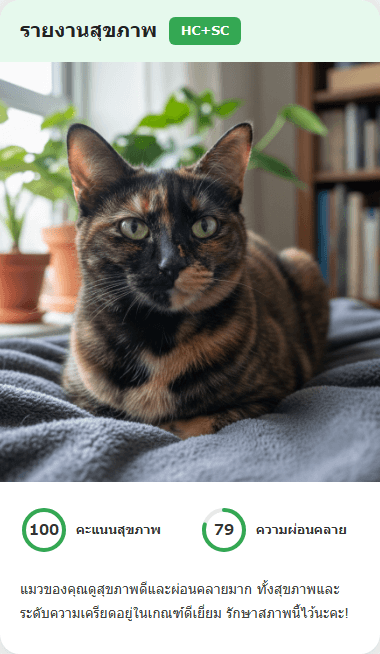

Worried about these symptoms?
Don't wait and wonder. CatsMe's AI analyzes your cat's photo to flag health concerns in seconds.
ทาสแมวกว่า 380,000 คนใน 50 ประเทศไว้วางใจ CatsMe


Symptoms of Pancreatitis in Cats
Common symptoms (mild to moderate):
- Loss of appetite — the single most frequent sign
- Lethargy and reduced activity
- Weight loss
- Mild dehydration
Additional symptoms in severe cases:
- Vomiting (less frequent than in dogs)
- Diarrhea
- Reluctance to be touched on the belly (a sign of abdominal pain)
- Fever
- Jaundice (yellowing of the whites of the eyes or inside the ears)
Chronic pancreatitis typically presents as months of "just not doing well" — the cat gradually loses weight and has intermittent bouts of poor appetite, but never shows a dramatic crisis. This slow, smoldering pattern is exactly what makes it so easy to overlook.
How Pancreatitis Is Diagnosed
fPLI / Spec fPL test: This is a blood test that measures pancreatic lipase specific to cats. It is the first-choice diagnostic tool for feline pancreatitis, offering high sensitivity and specificity.
Abdominal ultrasound: Ultrasound can reveal pancreatic swelling and surrounding fat necrosis. However, the feline pancreas is small, and mild cases may not show obvious changes on imaging.
Routine blood work: A complete blood count and chemistry panel help check for elevated white blood cells and liver enzyme levels, which may indicate concurrent cholangiohepatitis.
Important: Traditional lipase and amylase tests have poor sensitivity for feline pancreatitis — normal values do not rule it out. The fPLI test is the key to an accurate diagnosis.
Treatment and Dietary Management
Acute treatment:
- Aggressive fluid therapy to correct dehydration and maintain blood flow to the pancreas
- Anti-nausea medication (such as maropitant)
- Pain relief (such as buprenorphine — proactive pain management is essential because cats mask discomfort)
- Early nutritional support (the outdated practice of fasting has been replaced by early feeding as the standard of care)
Chronic pancreatitis management:
- Low-fat, highly digestible diet
- Vitamin B12 supplementation (chronic pancreatitis impairs absorption)
- Concurrent treatment of IBD or cholangiohepatitis if present
To help prevent relapses, refer to our cat food guide and choose diets that are gentle on the digestive system. Consistency and long-term dietary discipline are key to keeping flare-ups at bay.
Diagnostic Tests & Costs for Feline Pancreatitis
Diagnosing pancreatitis in cats is notoriously challenging, requiring a combination of tests interpreted together.
fPLI / Spec fPL blood test: $40 to $80 (¥5,000–10,000). Measures feline-specific pancreatic lipase — the most reliable marker for feline pancreatitis, with high sensitivity and specificity. Results from the reference laboratory may take 1 to 3 days.
Routine blood work: $40 to $120 (¥5,000–15,000). Checks for elevated white blood cells, increased liver enzymes (important for screening for concurrent triaditis), and low albumin levels.
Abdominal ultrasound: $40 to $80 (¥5,000–10,000). Can reveal pancreatic swelling and surrounding fat necrosis. However, mild pancreatitis often produces no visible changes on imaging, so a normal ultrasound does not rule it out.
Critical caveat: Traditional lipase and amylase tests have poor reliability for detecting feline pancreatitis. Normal values do not exclude the disease. The fPLI test is essential for an accurate diagnosis.
Total initial diagnostic cost: Approximately $120 to $280 (¥15,000–35,000). Severe cases requiring hospitalization may incur an additional $400 to $1,200 (¥50,000–150,000).
You can discuss test results with a veterinarian through Carelogy's online consultation for added convenience and clarity.
Understanding Triaditis: When Pancreatitis, IBD & Liver Disease Strike Together
Any discussion of feline pancreatitis must address triaditis — the simultaneous inflammation of the pancreas, intestines (IBD), and bile ducts (cholangiohepatitis). This trio is a distinctly feline phenomenon, and understanding it is essential for effective treatment.
Why three organs are affected at once: A key anatomical feature in cats is that the pancreatic duct and the common bile duct share an opening where they enter the duodenum. This means inflammation in one organ can easily spread to the neighboring organs through this shared gateway.
Symptoms of triaditis:
- Chronic vomiting and diarrhea (driven by IBD)
- Loss of appetite and weight loss (driven by pancreatitis)
- Jaundice — a yellow tint to the eyes, ears, or gums (driven by cholangiohepatitis)
- Prolonged lethargy that does not resolve
Treatment approach: All three organs must be addressed simultaneously. A typical protocol combines a gastrointestinal-support diet, corticosteroids for IBD, antibiotics for cholangiohepatitis, and pain medication for pancreatitis. Vitamin B12 supplementation is often essential because chronic intestinal inflammation impairs absorption.
Long-term management: Regular blood work and ultrasound imaging are needed to monitor all three organs on an ongoing basis. Consistency with the prescribed diet and strict medication compliance are the cornerstones of preventing flare-ups.
Living with a Cat Prone to Pancreatitis: Prevention & Daily Care
Pancreatitis has a frustrating tendency to recur, but daily management habits can meaningfully reduce the odds of another episode.
Dietary management (the single most important factor):
- Feed a low-fat, highly digestible diet consistently — no exceptions
- Avoid abrupt food changes (transition gradually over 7 to 10 days)
- Never offer human food, especially high-fat items like cheese, butter, or fried foods
- Refer to our cat food guide for guidance on choosing appropriate options
Stress management:
- Minimize environmental changes and disruptions
- In multi-cat households, distribute key resources (litter boxes, feeding stations) to reduce competition
- Stay alert to signs of stress and address them proactively
Recommended monitoring schedule:
- Blood work (fPLI and liver enzymes) every 3 to 6 months
- Annual abdominal ultrasound
- Monthly weight checks at home
Early signs of a relapse to watch for:
- A subtle dip in appetite — the cat eats less enthusiastically or leaves food behind
- Quieter and less active than usual
- A slight uptick in vomiting frequency
If you notice any of these changes, contact your veterinarian early rather than waiting for a full-blown crisis. Logging daily appetite and activity levels in the CatsMe app gives you objective data to spot subtle shifts before they escalate.
ถ้าสัตวแพทย์ถามว่า "เริ่มเป็นตั้งแต่เมื่อไหร่" คุณตอบได้ไหม?
อย่าปล่อยให้ตัวเองตอบไม่ได้ตอนพบหมอ CatsMe บันทึกคะแนนสุขภาพรายวันอัตโนมัติ แชร์ให้สัตวแพทย์ได้แค่แตะเดียว
膵炎嘔吐食欲不振消化器猫の病気
FAQ
 CatsMe
เตรียมพร้อมตั้งแต่วินาทีที่รู้สึกว่ามีอะไรผิดปกติ
ถ่ายรูปเพียงใบเดียว AI จะอ่านความเจ็บปวดและสภาพสุขภาพจากสีหน้าของแมว ตรวจได้ทันทีที่กังวล และแชร์บันทึกให้สัตวแพทย์ได้