

The Bottom Line: Twice-Yearly Blood Work After Age 7 Catches CKD Before It's Too Late
Chronic kidney disease (CKD) is the most common life-limiting disease in senior cats, affecting approximately 30% of cats over the age of 15. Because kidney tissue, once damaged, cannot regenerate, the single most important thing you can do for your aging cat is detect CKD early, ideally at Stage 2 or before, when interventions are most effective at slowing progression.
The challenge is that the kidneys have enormous reserve capacity. By the time traditional blood markers like creatinine become elevated, roughly 75% of kidney function has already been lost. This is why proactive screening is essential. Starting at age 7, cats should have blood work including SDMA (symmetric dimethylarginine) at least twice a year. SDMA can detect kidney dysfunction when as little as 25% of function is lost, months to years earlier than creatinine alone.
Early symptoms are maddeningly subtle: a slight increase in water consumption, a marginally larger urine volume, or a barely noticeable change in coat quality. Most owners do not recognize these signs until the disease is well advanced. Routine wellness exams are the most reliable path to catching CKD in its treatable early stages.
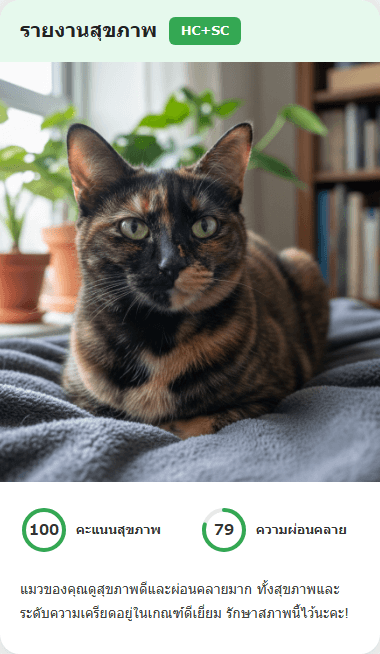

For senior cats, every day matters
Subtle changes can signal serious issues in older cats. CatsMe tracks behavior, appetite, and health scores so you can act fast.
ทาสแมวกว่า 380,000 คนใน 50 ประเทศไว้วางใจ CatsMe


Recognizing Early Symptoms: What to Watch For at Each Stage
CKD symptoms correspond closely to the stage of the disease. Knowing what to look for at each stage increases your chances of catching the disease early.
Early Stage (IRIS Stage 1-2): Subtle Changes
- Slightly increased water intake (you may notice the water bowl needs refilling more often)
- Mildly increased urine volume or more frequent litter box visits
- Coat losing its usual luster or feeling rough
- Occasional mild nausea (lip-smacking, grass-eating)
- Very gradual weight loss that may only be apparent on a scale
Advanced Stage (IRIS Stage 3-4): Obvious Decline
- Marked loss of appetite and noticeable weight loss
- Frequent vomiting, especially frothy or bile-colored
- Strong breath odor with an ammonia-like quality (uremic halitosis)
- Significant lethargy and weakness
- Visible dehydration (skin tenting, dry gums)
- Mouth ulcers from uremic toxins
- Muscle wasting, particularly along the spine
The critical takeaway: If CKD is detected at Stage 2 or earlier, appropriate management including diet change, hydration support, and medication can maintain good quality of life for years. Waiting until Stage 3 or 4 dramatically narrows the treatment window.
Home Monitoring & Early Detection: Practical Steps You Can Take
While laboratory testing is the definitive tool for diagnosing CKD, there is a great deal you can do at home to catch early warning signs and provide your veterinarian with valuable data.
1. Schedule regular blood work: For cats 7 years and older, aim for blood panels including SDMA and creatinine every 6 months. SDMA detects kidney function decline earlier than creatinine alone, catching disease at the point where intervention is most effective.
2. Monitor water intake: Measure how much water your cat drinks daily for a week to establish a baseline. A sudden or gradual increase is one of the earliest home-detectable signs of kidney dysfunction. Normal intake is roughly 40-60 ml per kg of body weight per day (including water from food).
3. Track weight monthly: Use a kitchen scale or baby scale to weigh your cat at the same time each month. Gradual weight loss of even 100-200 grams over several months can signal developing disease.
4. Observe urine changes: Note if urine is becoming paler, if there are more or larger clumps in the litter box, or if your cat is visiting the box more frequently.
5. Use CatsMe for regular check-ins: The facial analysis AI can detect subtle changes in expression and behavior that may correlate with early illness.
Bring your observations to your vet. Even if changes seem minor, they provide important context that helps catch CKD before it progresses. Online veterinary consultations make it easy to discuss concerns without the stress of a clinic visit.
Renal Diet & Daily Care: Managing CKD at Home
Once CKD is diagnosed, a comprehensive management plan can significantly slow progression and maintain quality of life. Here are the key pillars of daily care.
Renal Diet Therapy
Switching to a veterinary prescription renal diet is one of the most impactful interventions available. Clinical studies have demonstrated that cats on renal diets survive approximately twice as long as those on standard adult food. These diets are:
- Restricted in phosphorus (the primary driver of CKD progression)
- Moderate in sodium (to support blood pressure)
- Controlled in protein (high-quality, easily digestible protein in appropriate amounts to reduce uremic toxin production)
- Supplemented with omega-3 fatty acids (EPA and DHA for anti-inflammatory and renoprotective effects)
- Supplemented with potassium (CKD cats commonly develop hypokalemia)
Hydration Support
Dehydration is a constant concern in CKD cats. Strategies include:
- Feeding wet food exclusively or as the majority of the diet to maximize water intake
- Providing multiple water stations and a water fountain
- Subcutaneous fluid therapy (administered at home under veterinary guidance) for cats in Stage 3-4 who cannot maintain hydration through drinking alone
CKD management is a long-term commitment that requires regular monitoring. Online veterinary consultations provide convenient follow-up without the stress of frequent clinic visits for your senior cat.
What the Vet Will Do: Diagnostic Tests, Staging & Treatment Options
When CKD is suspected, your veterinarian will run a series of tests to confirm the diagnosis, determine the stage, and identify any complicating factors that need simultaneous treatment.
Diagnostic Tests
- Blood panel: Creatinine, BUN (blood urea nitrogen), SDMA, phosphorus, potassium, calcium, and packed cell volume (to check for anemia)
- Urinalysis: Urine specific gravity (dilute urine indicates reduced concentrating ability), urine protein-to-creatinine ratio (UPC) to detect proteinuria
- Blood pressure measurement: Approximately 30% of CKD cats develop secondary hypertension, which accelerates kidney damage and can cause retinal detachment and blindness
- Imaging: Ultrasound to evaluate kidney size, shape, and architecture. Small, irregular kidneys suggest chronic disease.
IRIS Staging System
The International Renal Interest Society (IRIS) staging system guides treatment decisions:
- Stage 1: Normal creatinine, SDMA mildly elevated. Early intervention focus.
- Stage 2: Mild creatinine elevation (1.6-2.8 mg/dL). Renal diet and monitoring.
- Stage 3: Moderate elevation (2.9-5.0 mg/dL). Active management needed.
- Stage 4: Severe elevation (>5.0 mg/dL). Intensive supportive care.
Treatment Options by Stage
- Renal diet (all stages)
- Phosphate binders (when dietary restriction alone is insufficient)
- Antihypertensive medication (amlodipine is the drug of choice for feline hypertension)
- Anti-nausea medication (maropitant/Cerenia for uremic nausea)
- Erythropoietin for CKD-related anemia
- Subcutaneous fluid therapy for hydration support
- Potassium supplementation
Monthly management costs typically range from 5,000 to 20,000 yen depending on stage and treatment intensity.
Prevention & Long-Term Management of Feline CKD
While CKD cannot always be prevented, especially given the genetic predisposition in certain breeds, there are meaningful steps that reduce risk and slow progression once disease is present.
Preventive Strategies
- Encourage adequate hydration from a young age by incorporating wet food into the diet. Chronic dehydration is a significant contributor to kidney stress.
- Feed high-quality food without excessive phosphorus content.
- Maintain dental health, as chronic oral bacteria may seed to the kidneys and contribute to inflammation.
- Prevent exposure to nephrotoxic substances: lily plants (even pollen exposure can be fatal), antifreeze (ethylene glycol), and certain medications (NSAIDs, some antibiotics).
- Begin screening blood work at age 7 and continue every 6 months.
Long-Term Management Principles
- Recheck blood work and urinalysis every 3 to 6 months to track progression and adjust treatment.
- Monitor appetite, weight, water intake, and activity level daily at home. Keep a simple log or use the CatsMe app.
- Combine multiple therapeutic approaches: diet, hydration, medications, and supplements work synergistically.
- Prioritize quality of life over numbers on lab reports. A cat with stable Stage 3 CKD that eats well, grooms, purrs, and engages with family has excellent quality of life.
With proper management, many CKD cats live 2 to 5 years or more after diagnosis with good quality of life. Online and home-visit veterinary services reduce the burden of frequent clinic trips for both the cat and the owner.
Age-Specific Kidney Disease Risks: Young Adults vs. Senior Cats
While CKD is predominantly a disease of aging, understanding kidney risks across all life stages ensures comprehensive protection.
Young Adult Cats (1 to 7 Years)
CKD is uncommon in this age group, but acute kidney injury (AKI) can strike at any age. Common causes include lily plant ingestion (one of the most frequent causes of fatal poisoning in young cats), antifreeze exposure, and accidental NSAID ingestion. Unlike CKD, AKI can be reversible if treated within hours. Certain breeds, particularly Persians and related breeds, are predisposed to polycystic kidney disease (PKD), a genetic condition where fluid-filled cysts slowly destroy kidney tissue. Genetic testing is available for breeding cats.
Middle-Aged Cats (7 to 10 Years)
This is the critical window to begin CKD screening. Establish a habit of annual or semi-annual blood panels including SDMA. Diet and hydration management during this period directly influences long-term kidney health. Transition to a senior diet with controlled phosphorus levels if your vet recommends it.
Senior Cats (10+ Years)
CKD risk increases dramatically with age. Complicating factors are common: approximately 30% of CKD cats also develop high blood pressure, and hyperthyroidism frequently co-exists. Both conditions need simultaneous management. Semi-annual or quarterly screening is recommended. Never dismiss changes in drinking, eating, or behavior as simply aging. Many symptoms attributed to old age are actually treatable medical conditions.
At every age, regular wellness checks remain the cornerstone of kidney disease prevention and early detection.
ถ้าสัตวแพทย์ถามว่า "เริ่มเป็นตั้งแต่เมื่อไหร่" คุณตอบได้ไหม?
อย่าปล่อยให้ตัวเองตอบไม่ได้ตอนพบหมอ CatsMe บันทึกคะแนนสุขภาพรายวันอัตโนมัติ แชร์ให้สัตวแพทย์ได้แค่แตะเดียว
腎臓病CKDシニア猫早期発見
Related Symptoms
FAQ
 CatsMe
เตรียมพร้อมตั้งแต่วินาทีที่รู้สึกว่ามีอะไรผิดปกติ
ถ่ายรูปเพียงใบเดียว AI จะอ่านความเจ็บปวดและสภาพสุขภาพจากสีหน้าของแมว ตรวจได้ทันทีที่กังวล และแชร์บันทึกให้สัตวแพทย์ได้