

The Bottom Line: Over-Grooming, Litter Box Issues & Hiding Are Key Stress Indicators
The most common signs of stress in cats are excessive grooming that creates bald patches, urinating or defecating outside the litter box, and spending significantly more time hiding. Unlike dogs, cats are masters at concealing vulnerability — a survival instinct inherited from their wild ancestors, where showing weakness meant becoming prey. This means behavioral changes are often the only visible clue that something is wrong.
Chronic stress does not just affect behavior — it has real physiological consequences. Prolonged stress suppresses the immune system, making cats more susceptible to infections. It is a well-documented trigger for feline idiopathic cystitis (FIC), a painful urinary condition that accounts for up to 65% of lower urinary tract disease in cats under 10 years old. Stress also exacerbates inflammatory bowel disease, triggers flare-ups of feline herpesvirus, and can lead to compulsive behaviors like psychogenic alopecia (self-barbering).
The key to catching stress early is knowing your cat's baseline behavior. What are their normal eating habits, sleeping patterns, play preferences, and social behaviors? When you know what "normal" looks like, even subtle shifts — a slightly reduced appetite, a new reluctance to sit on your lap, a change in vocalization patterns — become recognizable signals that your cat needs help.
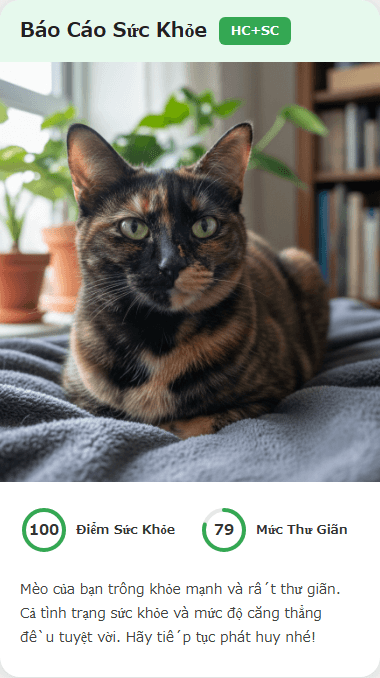

Your cat's daily companion
From grooming reminders to weight trends, CatsMe keeps your cat's care routine on track — all in one app.
Hơn 380.000 chủ mèo tại 50 quốc gia đang tin dùng CatsMe


Stress Signal Checklist: Physical & Behavioral Signs
Not every behavioral change means stress, but when multiple signs appear together or persist for more than a few days, stress should be considered. Use this checklist to evaluate your cat:
Physical Signs
- Excessive grooming leading to bald patches, typically on the belly, inner thighs, or forearms
- Sudden appetite change — either eating significantly more or refusing food
- Increased frequency of vomiting or diarrhea
- Urinating or defecating outside the litter box (a common stress response, especially urination on soft surfaces like beds or laundry)
- Dilated pupils that persist even in bright light
- Excessive shedding (stress-induced shedding is well-documented in veterinary literature)
Behavioral Signs
- Spending much more time hiding under furniture, in closets, or in elevated spots
- Sudden aggression toward humans or other pets (swatting, hissing, biting)
- Excessive vocalization, including nighttime yowling
- Loss of interest in play, toys, or interactions that previously engaged them
- Urine spraying (vertical marking on walls and furniture)
- Startling easily at normal household sounds
- Changes in sleeping patterns — either sleeping far more or restless pacing
If you observe two or more of these signs lasting longer than a few days, investigate potential stressors and consider a veterinary consultation to rule out underlying medical causes.
Common Stress Triggers in Cats
Understanding the root cause of your cat's stress is essential for effective intervention. Cats are territorial creatures of habit, and disruptions to their environment or routine can have an outsized impact on their wellbeing.
Environmental Changes
Moving to a new home, rearranging furniture, home renovations, and an increase in visitors or household noise are classic stress triggers. Even something as seemingly minor as a new piece of furniture in a cat's favorite room can cause unease.
Social Conflict
Introducing a new pet, inter-cat tension in multi-cat households, and territorial disputes are among the most intense and persistent stressors. Cats are not inherently social animals in the way dogs are, and forced cohabitation without adequate resources can create chronic low-grade stress that persists for months or years.
Routine Disruptions
Changes in the owner's work schedule, extended absences, a new family member (including babies), or the loss of a bonded companion — human or animal — all destabilize a cat's sense of predictability and security.
Litter Box Issues
A dirty litter box, a change in litter type or box location, insufficient boxes (the rule of thumb is one per cat plus one extra), or a box in a high-traffic or noisy area can all trigger stress-related elimination problems.
Boredom and Understimulation
Indoor cats without environmental enrichment — no climbing structures, no puzzle feeders, no interactive play — can develop chronic boredom that manifests as destructive behavior, over-grooming, or withdrawal.
Stress Relief & Environmental Enrichment Strategies
Environmental enrichment is the cornerstone of feline stress management. The goal is to transform your home into a space that satisfies your cat's natural instincts — climbing, hunting, hiding, and surveying territory from a safe vantage point.
1. Provide Vertical Space
Cat trees, wall-mounted shelves, and cleared bookshelf tops give cats the elevated vantage points they instinctively seek. Height equals safety and control in the feline mind. In multi-cat households, vertical space dramatically reduces conflict by allowing cats to claim territories at different levels.
2. Create Safe Hiding Spots
Cardboard boxes, covered cat beds, tunnels, and even the space behind curtains serve as retreats where a stressed cat can decompress without feeling exposed. Every cat should have at least one hideaway that is exclusively theirs.
3. Schedule Interactive Play
Dedicate 15–20 minutes per day to active play with wand toys, laser pointers (always end with a tangible "catch"), or tossed toys. Play mimics hunting behavior and provides crucial mental stimulation and physical exercise. For cats home alone during the day, rotating puzzle feeders maintain engagement.
4. Optimize Litter Box Conditions
Scoop at least once daily. Provide one box per cat plus one extra, placed in quiet, accessible locations throughout the home. Avoid scented litter — many cats find it aversive.
5. Use Synthetic Pheromones
Feliway (synthetic feline facial pheromone) diffusers or sprays can reduce anxiety in many cats. Place diffusers in rooms where your cat spends the most time. While not effective for every cat, they are a low-risk intervention worth trying.
If behavioral improvements are not seen within two to three weeks of implementing these changes, consult a veterinarian through an online consultation to explore further options.
The Stress-Disease Connection: How Chronic Stress Harms Your Cat's Body
Feline stress is not merely a mood issue — it is a medically recognized condition with tangible physiological consequences. Chronic stress activates the hypothalamic-pituitary-adrenal (HPA) axis, flooding the body with cortisol and other stress hormones that, over time, cause measurable organ damage.
Stress-Related Diseases in Cats
- Feline Idiopathic Cystitis (FIC): The most significant stress-related disease in cats. It accounts for up to 65% of lower urinary tract disease in cats under 10. Stress hormones damage the protective glycosaminoglycan (GAG) layer of the bladder wall, causing inflammation, blood in urine, painful urination, and in male cats, potentially fatal urethral obstruction.
- Gastrointestinal Disorders: Stress alters gut motility and disrupts the intestinal microbiome, leading to chronic vomiting, diarrhea, and inflammatory bowel disease flare-ups.
- Psychogenic Alopecia: Compulsive over-grooming driven by anxiety creates characteristic bald patches on the belly, inner thighs, and forearms. The behavior is self-reinforcing — grooming releases endorphins, creating a cycle that is difficult to break.
- Feline Herpesvirus Reactivation: Stress triggers latent herpesvirus to become active, causing recurrent episodes of sneezing, nasal discharge, and conjunctivitis.
- Immune Suppression: Chronically elevated cortisol weakens the immune response, leaving cats more vulnerable to bacterial, viral, and fungal infections.
When a cat presents with unexplained or recurring physical symptoms, it is crucial to evaluate environmental stress as a contributing factor alongside medical diagnostics. The most effective treatment plans address both the physical disease and the underlying stressor.
Age-Specific Stress Factors: Kittens, Adults & Senior Cats
Stress triggers and effective interventions change as cats age. Tailoring your approach to the specific life stage ensures the best outcomes.
Kittens (Under 1 Year)
The most common stressors for kittens are separation from the mother and siblings, adaptation to a completely new environment, and insufficient socialization during the critical 2–7 week window. Start by confining the kitten to a single, quiet room with all essentials — food, water, litter box, hiding spots, and toys. Gradually expand their access to the rest of the home as confidence builds. If there are resident cats, introductions should be slow and controlled over at least two weeks, using scent swapping before face-to-face meetings.
Adult Cats (1–10 Years)
Environmental changes, multi-cat social tension, and understimulation are the primary stressors for adult cats. The solution lies in comprehensive environmental enrichment: vertical space, interactive play sessions, puzzle feeders, and ensuring each cat in a multi-pet household has their own food station, water bowl, litter box, and resting area. For conflict between cats, physically separating contested resources across different rooms can dramatically reduce tension.
Senior Cats (10+ Years)
Aging brings unique stressors: cognitive decline causing confusion and disorientation, reduced vision and hearing that make familiar environments feel unfamiliar, chronic pain from arthritis, and a diminished ability to adapt to any change in routine. Keep the environment stable — avoid rearranging furniture or changing the cat's core routine. Add nightlights to hallways, provide low-entry litter boxes in multiple locations, and create warm, padded resting spots on the ground floor for cats that can no longer jump to favorite perches.
Regardless of age, early intervention is key. The longer stress persists, the more entrenched the behavioral and physiological consequences become.
When to See the Vet: Distinguishing Stress from Medical Problems
Many stress-related behaviors overlap with symptoms of physical illness. It is important to rule out medical causes before attributing changes solely to stress. Here is a guide for when professional evaluation is needed.
See a Vet Promptly If:
- Litter box avoidance persists for more than 3 days
- You see blood in the urine
- Your cat cries during urination or makes repeated, unproductive trips to the litter box (in male cats, this may indicate urethral obstruction — a life-threatening emergency)
- Complete appetite loss lasting more than 24 hours
- Severe vomiting or diarrhea
- Noticeable weight loss over a short period
Veterinary Check Recommended:
- Over-grooming with expanding areas of hair loss
- Sudden onset of aggression (pain is a common hidden cause)
- Persistent nighttime yowling, especially in senior cats (may indicate hyperthyroidism, high blood pressure, or cognitive dysfunction)
- Any behavioral change that does not improve after two to three weeks of environmental modifications
An online veterinary consultation is an excellent first step — you can share video clips of the concerning behavior, which helps the vet distinguish between stress-based and medically-driven symptoms without the added stress of a clinic visit for your cat.
Nếu bác sĩ thú y hỏi "bắt đầu từ khi nào?", bạn trả lời được không?
Đừng để mình lúng túng trước bác sĩ. CatsMe tự động ghi lại điểm sức khỏe hàng ngày, chia sẻ chỉ với một chạm.
ストレス行動変化問題行動環境エンリッチメント
Related Symptoms
FAQ
 CatsMe
Sẵn sàng hành động ngay khi bạn cảm thấy có gì đó không ổn
Chỉ cần một tấm ảnh: AI đọc dấu hiệu đau và tình trạng sức khỏe từ biểu cảm của mèo. Kiểm tra ngay khi bạn thấy lo, và chia sẻ nhật ký với bác sĩ thú y.