

The Golden Rule: "Number of Cats Plus One" for Every Resource
Living with multiple cats can provide wonderful social enrichment, but a poorly managed environment breeds chronic stress. The foundational rule of multi-cat living is the "N+1" principle: provide one more litter box, water station, and resting spot than the total number of cats.
Stay vigilant for signs of stress and address conflicts early before they escalate.
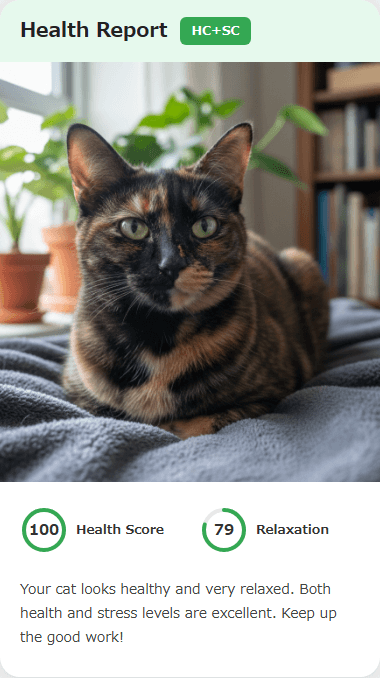

Your cat's daily companion
From grooming reminders to weight trends, CatsMe keeps your cat's care routine on track — all in one app.
يستخدمه أكثر من 380,000 مالك قطط في 50 دولة


How to Introduce a New Cat
Gradual introduction (minimum 2 weeks):
Week 1: Keep the new cat completely isolated in a separate room. Let the cats become aware of each other through scent only. Swap towels between the two.
Early Week 2: Allow sniffing through a gap under the door. Feed both cats on opposite sides of the door so they associate each other's scent with something positive.
Late Week 2: Move the new cat to a different room and let the resident cat explore the newcomer's space (without direct contact).
First face-to-face: Start with short meetings of 5 to 10 minutes. Some hissing is normal. If a serious fight breaks out, separate them and restart the process.
Health screening: Always complete FeLV/FIV testing and deworming for the new cat before any introductions.
Infection Control in Multi-Cat Homes
Vaccinate every cat: Follow the vaccination guide to keep all cats up to date.
FeLV/FIV testing: Test every cat in the household. FeLV-positive cats should be kept separate. FIV-positive cats may coexist peacefully if there's no aggression.
Ringworm: If one cat is diagnosed, test all of them and thoroughly disinfect the environment.
Parasite prevention: Treat all cats simultaneously. Treating just one while others remain untreated leads to reinfection.
Scoop litter boxes at least twice daily, and use separate food bowls. Multi-cat living also increases the risk of feline coronavirus, the precursor to FIP.
Resource Placement & Stress Management
Litter boxes: N+1 boxes placed in different locations (two boxes side by side count as one). See our litter box management guide.
Food & water: Place stations in separate areas so each cat can eat without feeling threatened. If cats eat at different speeds, consider staggering meal times.
Vertical space: Cat trees, shelves, and wall-mounted perches are critical. Cats express social hierarchy through height, so more elevated spots means less conflict.
Hiding spots: Ensure each cat has a private retreat. Even a cardboard box works.
Play time: Give each cat individual play sessions. Avoid focusing all your attention on just one cat.
Common Misconceptions About Multi-Cat Living
Let's address widespread misconceptions that lead to multi-cat household problems.
"Cats get lonely and need a friend": Cats are fundamentally solitary hunters by nature. They don't inherently need feline companionship. A cat that's fulfilled by its relationship with its human owner may actually become stressed when another cat is introduced, perceiving the newcomer as a territorial intruder rather than a welcome friend. Assess your individual cat's temperament honestly before deciding to add another.
"Sibling cats will always get along": While littermates often bond well as kittens, relationships can deteriorate as cats reach social maturity between ages 1 and 3. Hormonal and personality changes during this period can transform peaceful cohabitation into chronic tension. Being prepared for this possibility is essential.
"If they're not fighting, everything is fine": Feline conflict frequently manifests as silent, passive aggression that owners completely miss. Watch for resource guarding (one cat blocking the other from the litter box, food bowl, or favorite resting spot), avoidance behavior (one cat consistently leaves rooms when the other enters), and stress-related symptoms like excessive grooming or appetite changes. Review our guide to cat stress signs to learn what subtle conflict looks like.
"Once they bond, the relationship is permanent": Environmental changes — a move, new furniture, a new baby, or even rearranging rooms — can disrupt established feline relationships unexpectedly. Ongoing observation and willingness to intervene with environmental adjustments remain necessary throughout the cats' lives.
Practical Tips & How-To: Solving Multi-Cat Conflicts
Here are concrete solutions for the most common multi-cat household conflicts.
Litter box avoidance: If one cat starts eliminating outside the box, first check whether another cat is guarding or blocking access. Redistribute boxes so each one has multiple approach routes and escape paths. Avoid covered litter boxes in multi-cat homes — they create ambush points where a dominant cat can trap a subordinate inside.
Feeding conflicts: When cats eat at different speeds or one steals the other's food, microchip-activated feeders are a game-changer. These open only for the registered cat's microchip, ensuring each cat eats their own food at their own pace. This technology is especially valuable when one cat requires a therapeutic diet for kidney disease or diabetes.
Territory disputes: Adding vertical space is consistently the most effective solution for territorial tension. Install wall-mounted cat shelves, add tall cat trees in key rooms, and create window perches. When every cat can claim a high vantage point, the competition for territory drops dramatically because cats use vertical position as a social hierarchy tool.
Sudden aggression: Separate the cats immediately using a barrier (never reach between fighting cats with your hands). Place them in different rooms for a cool-down period of at least 24 hours. Before attributing the fight to behavioral issues, have both cats examined by a vet — pain from an undiagnosed condition frequently triggers sudden aggression toward housemates.
CatsMe Health Tracking for Multi-Cat Households
Managing the health of multiple cats individually is challenging, but CatsMe makes it organized and systematic.
Individual profiles: Create separate health profiles for each cat in your household. Track vaccination dates, diagnostic results, weight trends, and medication schedules independently. When you walk into a vet appointment, you have each cat's complete history at your fingertips rather than trying to remember which cat got which vaccine when.
Behavioral change detection: Log appetite, activity levels, and litter box patterns for each cat. In multi-cat homes, one cat's behavioral shift often reflects an interpersonal problem rather than an individual health issue. Viewing all cats' data side by side can reveal correlations — for example, if Cat A's appetite drops the same week Cat B starts guarding the food bowl.
Medication coordination: Parasite prevention must be administered to all cats simultaneously to be effective. CatsMe reminders ensure you treat every cat on the same schedule, preventing the reinfection cycle that happens when one cat is missed.
Vaccination tracking: Multi-cat living elevates infection risk, making vaccination schedule management particularly critical. CatsMe lets you see at a glance which cats are current and which are due for boosters, preventing the dangerous gaps that leave your household vulnerable to outbreaks of preventable diseases.
هل تستطيع الإجابة عن سؤال "متى بدأ هذا؟"
عندما يسألك الطبيب البيطري، لا تبقَ بلا إجابة. CatsMe يسجّل تلقائيًا نقاط الصحة اليومية ويمكنك مشاركتها بلمسة واحدة.
多頭飼い相性ストレス感染症予防猫の飼い方
FAQ
 CatsMe
كن مستعدًا للتصرف لحظة شعورك بأن شيئًا ليس على ما يرام
التقط صورة واحدة، ويقرأ الذكاء الاصطناعي علامات الألم والحالة الصحية من تعابير قطتك. تحقّق في اللحظة التي تقلق فيها، وشارك السجل مع طبيبك البيطري.