Osteochondrodysplasia (OCD)
The gene causing folded ears affects cartilage throughout the body, leading to joint deformities and pain. All folded-ear cats are affected to varying degrees.
Detailed guide to 4 health conditions common in Scottish Fold, including symptoms, risk levels, and prevention tips.
The gene causing folded ears affects cartilage throughout the body, leading to joint deformities and pain. All folded-ear cats are affected to varying degrees.
Progression of osteochondrodysplasia leads to joint deformities and chronic pain, particularly in the ankles and tail joints.
HCM has also been reported in Scottish Folds. Regular cardiac examinations are important for early detection.
The folded ear structure reduces air circulation in the ear canal, making earwax buildup and ear infections more likely.
 CatsMe
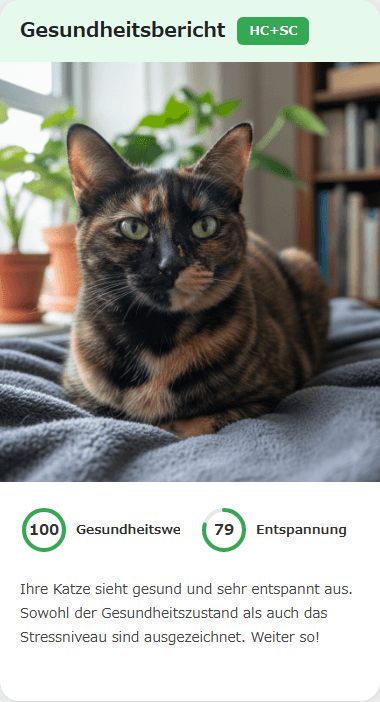
Ein Foto genügt: CatsMe prüft per KI das Gesicht Ihrer Katze auf Anzeichen von Schmerz. Führen Sie datierte Aufzeichnungen pro Katze, die Sie mit Ihrer Tierarztpraxis besprechen können. Es stellt keine Diagnosen.