

The Bottom Line: Microchipping Is Mandatory for Breeders, Recommended for All Owners
In Japan, a 2022 amendment to the Animal Welfare Act made microchipping mandatory for pet shops and breeders. For individual pet owners, it remains a strong recommendation rather than a legal requirement.
A microchip is a tiny IC chip about 2mm wide and 12mm long that stores a unique 15-digit ID number. When scanned with a dedicated reader, it links back to the owner's contact information — making it the single most reliable method for identifying lost or disaster-displaced pets. Unlike collars, which can fall off, a microchip stays with your cat for life.
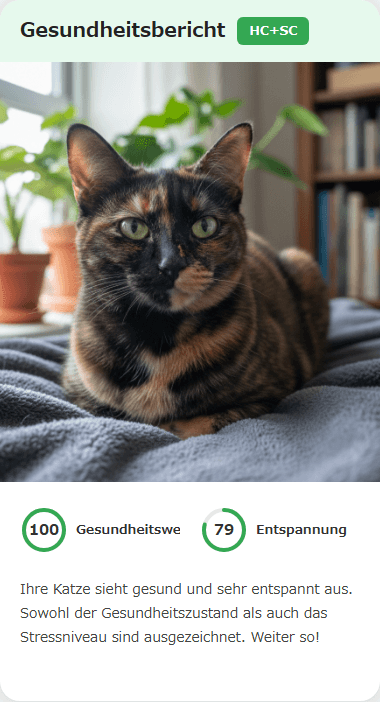

Probleme erkennen, bevor sie entstehen
Tägliches Gesundheits-Tracking ermöglicht Früherkennung. CatsMe protokolliert Veränderungen automatisch, damit Ihnen nichts entgeht.
Über 380.000 Katzenbesitzer in 50 Ländern vertrauen CatsMe


How It's Done: Procedure, Cost & Pain
Procedure: A special syringe injects the chip under the skin between the shoulder blades. The needle is thicker than a standard vaccination needle, but no anesthesia is needed and the whole thing takes just seconds. The least stressful option is to have it done while your cat is already under anesthesia for spay/neuter surgery.
Cost: Typically $25 to $50 for the chip implantation, plus a small registration fee for the national pet database.
Pain: There's a brief pinch, but most cats barely react. Complications are extremely rare — the chip almost never migrates or malfunctions.
Registration & Updating Your Information
Where to register: Your country's national pet microchip database (in the US, companies like HomeAgain, Found.org, or PetLink; in the UK, the government's database; in Japan, the Ministry of the Environment).
Registration steps:
1. Your vet implants the microchip
2. The vet issues a microchip implantation certificate
3. You register online (or by mail) with the database
4. You receive a registration confirmation
When to update:
- Moving: File an address change
- Change of ownership: Transfer the registration to the new owner when rehoming
- If your cat passes away: Submit a notification of death
Critical reminder: Outdated contact information defeats the entire purpose. Always update your records when you move or change phone numbers.
Microchips as Disaster Preparedness
Major disasters have separated countless pets from their families. Collars can slip off, but a microchip is embedded under the skin and stays with your cat permanently.
Disaster preparedness checklist for cat owners:
- Microchip implanted with up-to-date registration
- At least 5 days' worth of food, water, and medications stockpiled
- Regular carrier training so your cat is comfortable going inside
- Clear photos of your cat (showing distinguishing features) saved on your phone
- Your vet's contact information readily accessible
- Vaccinations kept current
Recording your cat's health information in the CatsMe app means you'll have access to their medical history even if you're evacuated to an unfamiliar location.
Common Misconceptions About Pet Microchipping
Let's clear up the most common misunderstandings about microchipping.
"It tracks my cat's location via GPS": Microchips contain no GPS technology whatsoever. They're passive identification devices that store a unique number readable only with a dedicated scanner. For real-time location tracking, you'd need a separate GPS collar tracker — an entirely different product.
"A collar with ID tags is enough": Collars break, slip off, or get caught on objects and detach. A microchip is the only permanent, tamper-proof identification method because it's implanted under the skin and cannot be lost. Best practice is to use both: a collar with visible tags for immediate identification, and a microchip as the fail-safe backup.
"The procedure is risky for my cat": With over three decades of global use and hundreds of millions of implantations, serious complications are virtually unheard of. The needle is larger than a standard vaccination needle, but the entire procedure takes just seconds and requires no anesthesia. Most cats react less to the microchip injection than they do to a routine vaccine.
"My indoor cat doesn't need one": Indoor cats escape more often than owners expect — through open doors during deliveries, broken window screens, or during natural disasters when walls and windows may be damaged. A microchip is cheap insurance that costs nothing to maintain once implanted and registered.
Practical Tips & How-To: Keeping Microchip Records Current
A microchip is only as useful as the information linked to it. Outdated contact details completely defeat the purpose of having one.
When to update your registration:
- Immediately after moving to a new address
- Whenever you change phone numbers
- When emergency contact information (family members, trusted friends) changes
- Once a year as a routine verification — set a calendar reminder
Register with multiple databases: Depending on your country, several microchip databases may operate independently. Registering with more than one increases the likelihood that a shelter or vet who scans your cat will connect to a database containing your current information. The small extra effort during registration pays enormous dividends if your cat ever goes missing.
Annual scan verification: During your cat's yearly health exam, ask your vet to scan the microchip to confirm it's still readable and hasn't migrated from its original position. While chip migration is rare, catching it during a routine visit is far better than discovering it during an emergency.
Transfer of ownership: If you've adopted or rehomed a cat, transferring the microchip registration to your name and contact information is essential. An alarming number of adopted cats have microchips still registered to previous owners, shelters, or breeders — rendering the chip useless if the cat gets lost under your care.
CatsMe Health Tracking for Microchip Management
CatsMe serves as the perfect digital companion to your cat's physical microchip, storing all the information the chip itself cannot carry.
Chip number storage: Save your cat's 15-digit microchip number in CatsMe. Having it instantly accessible on your phone means you can file a lost pet report or contact shelters without needing to dig through paperwork. In a crisis, this 10-second lookup can accelerate the search process by hours.
Database registration details: Record which microchip database you're registered with, along with login credentials. When you need to update your address or phone number, you can access the registration portal immediately rather than trying to remember which service you used years ago.
Medical information backup: A microchip stores only an ID number — it carries no medical data. By maintaining your cat's complete health history, allergies, and medication details in CatsMe, you ensure that a veterinarian at an evacuation shelter or emergency clinic has the information needed to provide appropriate care, even when your regular vet and their records are inaccessible.
Photo documentation: Store multiple clear photos of your cat in CatsMe, showing distinctive features like markings, eye color, and any unique physical characteristics. These photos become immediately available for creating lost pet flyers or social media search posts — no scrambling through your camera roll during a stressful situation.
Könnten Sie beantworten: ‚Seit wann geht es ihr so?'
Wenn der Tierarzt fragt, sollten Sie nicht raten müssen. CatsMe protokolliert automatisch tägliche Gesundheitswerte, die Sie mit einem Fingertipp teilen können.
マイクロチップ義務化迷子災害猫の飼い方
FAQ
 CatsMe
Seien Sie vorbereitet, wenn Ihnen etwas auffällt
Ein Foto genügt: Die KI liest Schmerz und Zustand am Gesichtsausdruck Ihrer Katze ab. Prüfen Sie im Moment der Sorge und teilen Sie die Aufzeichnung mit Ihrer Tierarztpraxis.