

Das Wichtigste zuerst: Hecheln bei Katzen ist fast immer ein Warnsignal – ab 5 Minuten zum Tierarzt
Anders als Hunde atmen Katzen normalerweise nicht durch das Maul. Wenn deine Katze hechelt, ist das in den allermeisten Fällen ein Zeichen dafür, dass im Körper etwas nicht stimmt.
Wann Hecheln (selten) noch im normalen Bereich liegt:
- Direkt nach sehr ausgelassenem Spielen – das Hecheln klingt innerhalb von 5 Minuten ab
- Bei extremer Aufregung oder Stress, etwa während einer Autofahrt oder eines Umzugs
- An sehr heißen Tagen – aber Achtung: hält es länger an, droht ein Hitzschlag
Wann du sofort zum Tierarzt musst:
- Deine Katze atmet im Ruhezustand mit offenem Maul
- Das Hecheln hält länger als 5 Minuten an
- Die Atmung ist beschleunigt (mehr als 40 Atemzüge pro Minute)
- Zunge oder Zahnfleisch verfärben sich bläulich-violett (Zyanose)
- Deine Katze ist apathisch oder zeigt Appetitlosigkeit
Einordnung der Dringlichkeit:
| Zustand | Dringlichkeit | Was tun |
|---------|---------------|---------|
| Beruhigt sich innerhalb von 5 Min. nach dem Spielen | gering | beobachten |
| Beruhigt sich innerhalb von 10 Min. nach Stress | mittel | Ruhe gönnen, beobachten |
| Maulatmung im Ruhezustand | hoch | noch am selben Tag zum Tierarzt |
| Zyanose + Apathie | kritisch | sofort in die Notaufnahme |

Machen Ihnen diese Symptome Sorgen?
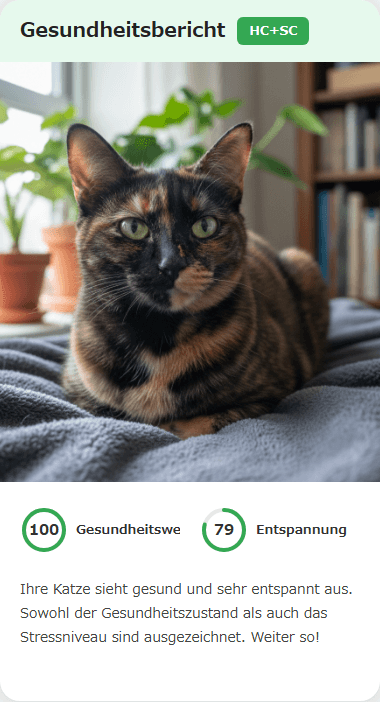
Warten Sie nicht ab. Die KI von CatsMe analysiert das Foto Ihrer Katze und erkennt gesundheitliche Auffälligkeiten in Sekunden.
Über 380.000 Katzenbesitzer in 50 Ländern vertrauen CatsMe


7 Ursachen, warum deine Katze mit offenem Maul atmet
1. Herzerkrankungen (z. B. hypertrophe Kardiomyopathie)
Eine der gefährlichsten Ursachen für Maulatmung. Bei Herzerkrankungen sammelt sich Flüssigkeit in der Lunge an (Lungenödem) und führt zu Atemnot. Besonders häufig betroffen sind Maine Coon, Ragdoll und Perserkatzen.
2. Asthma und Bronchitis
Felines Asthma tritt bei 1–5 % aller Katzen auf. Typisch ist die Kombination aus Husten und Maulatmung.
3. Hitzschlag
Ab einer Körpertemperatur von über 40 °C beginnt deine Katze zu hecheln. Vorbeugung durch konsequente Hitzeprävention im Sommer ist hier entscheidend.
4. Brust- oder Bauchhöhlenerguss
Bei FIP oder Herzerkrankungen kann sich Flüssigkeit im Brustraum ansammeln und die Lunge zusammendrücken.
5. Verlegung der Atemwege
Verschluckte Fremdkörper, Tumoren oder Polypen können die Atemwege verengen.
6. Anämie
Wenn das Blut weniger Sauerstoff transportieren kann, beschleunigt sich die Atmung. Blasses Zahnfleisch ist ein wichtiger Hinweis auf eine Anämie.
7. Schmerzen und Stress
Starke Schmerzen oder extremer Stress können ebenfalls Hecheln auslösen.
Wie dir CatsMe helfen kann: Mit dem täglichen Gesichts-Check erkennst du subtile Veränderungen am Atemmuster frühzeitig. Sinkt dein „Tages-Gesundheitsscore" plötzlich ab, solltest du sofort genauer hinschauen.
Erste Hilfe zu Hause: Was du jetzt tun und worauf du achten solltest
So gehst du Schritt für Schritt vor, wenn deine Katze hechelt:
Schritt 1: Die Umgebung optimieren
- Bring deine Katze in einen kühlen Raum (Klimaanlage ca. 25 °C)
- Sorge für einen ruhigen, abgedunkelten Platz
- Hebe sie auf keinen Fall hoch und jage sie nicht – das belastet das Herz zusätzlich
Schritt 2: Genau beobachten und dokumentieren
- Zähle die Atemzüge (Brustbewegungen pro Minute)
- Prüfe die Farbe des Zahnfleischs: rosa = normal, blass = Anämie, bläulich-violett = Sauerstoffmangel
- Notiere, wann das Hecheln begonnen hat
- Filme die Atmung mit dem Smartphone – diese Aufnahme ist für den Tierarzt extrem hilfreich
Schritt 3: Über den Tierarztbesuch entscheiden
- Beruhigt sich innerhalb von 5 Minuten → beobachten (bei Wiederholung zum Tierarzt)
- Hält länger als 10 Minuten an → so schnell wie möglich zum Tierarzt
- Zyanose oder Apathie → sofort in die Notaufnahme
Was du auf keinen Fall tun solltest:
- Deine Katze zum Trinken zwingen (Aspirationsgefahr)
- Mit Eiswasser übergießen (der abrupte Temperaturschock kann lebensgefährlich sein)
- Nach dem Motto „wird schon wieder" abwarten – Maulatmung ist bei Katzen grundsätzlich ein Warnsignal
Diagnostik und Behandlung in der Tierarztpraxis
Typische Untersuchungen:
| Untersuchung | Zweck | Richtwert Kosten |
|--------------|-------|-------------------|
| Auskultation | Herzgeräusche, Lungengeräusche prüfen | in der Sprechstundengebühr enthalten |
| Röntgen Brustkorb | Herzgröße und Lungenstatus beurteilen | 50–100 € |
| Herz-Ultraschall (Echokardiografie) | Wandstärke und Klappenfunktion beurteilen | 80–200 € |
| Blutbild | Anämie, Infektionen, Organfunktion | 60–150 € |
| Pulsoxymetrie | Sauerstoffsättigung im Blut | 15–40 € |
Notfallbehandlung:
- Sauerstoffbox: Ruhe in einer Umgebung mit etwa 40 % Sauerstoff
- Diuretika (Furosemid): zur Ausschwemmung bei Lungenödem
- Thorakozentese: Punktion und Ablassen von Brusthöhlenerguss
- Bronchodilatatoren: schnelle Erleichterung bei Asthmaanfällen
Laufende Behandlungskosten (Richtwerte):
- Medikamente bei Herzerkrankungen: 40–120 € pro Monat
- Inhalationstherapie bei Asthma: 25–70 € pro Monat
- Eine Katzenkrankenversicherung kann dir hier viel finanzielle Sorge nehmen
Maulatmung nach Lebensalter: Risiken und Reaktion richtig einschätzen
Ursachen und Dringlichkeit von Hecheln unterscheiden sich erheblich nach Alter deiner Katze. Wer diese Unterschiede kennt, kann im Ernstfall Leben retten.
Kitten (0–1 Jahr):
- Infektionen der oberen Atemwege (Katzenschnupfen) und die damit verbundene verstopfte Nase sind die häufigste Ursache
- Ist die Nase blockiert, müssen Kitten zwangsläufig durch das Maul atmen – ihr Zustand verschlechtert sich dabei deutlich schneller als bei ausgewachsenen Katzen, weil ihre Atemwege so klein sind
- Auch angeborene Herzfehler (z. B. ein Ventrikelseptumdefekt) können unentdeckt schlummern und sich erst unter Belastung zeigen
- Atemprobleme entgleisen bei dem kleinen Körper rasend schnell von „besorgniserregend" zu „lebensbedrohlich"
- Hecheln bei einem Kitten ist immer ein Fall für den sofortigen Tierarztbesuch
- Die noch unausgereifte Temperaturregulation macht Kitten zusätzlich anfällig für Hitzschlag
Erwachsene Katzen (1–7 Jahre):
- Felines Asthma zeigt sich typischerweise erstmals zwischen 2 und 8 Jahren – das ist also das Hauptrisikoalter
- Stressbedingtes Hecheln tritt in dieser Lebensphase besonders bei Autofahrten, Umzügen oder Tierarztbesuchen auf
- Kurzes Hecheln nach intensivem Spielen kann normal sein, sollte aber binnen 5 Minuten abklingen
- Die hypertrophe Kardiomyopathie (HCM) wird in diesem Lebensabschnitt häufig erstmals klinisch sichtbar
- Besonders gefährdete Rassen sind Maine Coon und Ragdoll – für sie empfiehlt sich ein routinemäßiges Screening per Herzecho
Seniorkatzen (ab 7 Jahren):
- Das höchste Risiko für Herzerkrankungen liegt in dieser Altersgruppe – Maulatmung in Ruhe kann auf eine dekompensierte Herzinsuffizienz hindeuten und erfordert sofortiges Eingreifen
- Eine Schilddrüsenüberfunktion führt zu erhöhter Herz- und Atemfrequenz und kann ein Herzproblem täuschend echt imitieren
- Lungentumoren – sei es ein Primärtumor oder eine Metastase – verursachen langsam fortschreitende Atemnot
- Bei Brustkorbergüssen kommen neben Herzerkrankungen auch FIP und verschiedene Krebsarten als Ursache infrage
- Eine Anämie infolge chronischer Nierenerkrankung führt zu kompensatorisch beschleunigter Atmung, weil der Körper versucht, mit weniger roten Blutkörperchen genügend Sauerstoff zu transportieren
Diese Notfall-Anzeichen gelten unabhängig vom Alter – sofort zum Tierarzt:
- Zyanose (bläulich-violette Zunge oder Zahnfleisch)
- Maulatmung in Seitenlage, deine Katze schafft es nicht mehr aufzustehen
- Sichtbar angestrengte Bauchatmung bei jedem Atemzug (Schnappatmung)
Häusliche Pflege: So schaffst du eine atemfreundliche Umgebung
Lebt deine Katze mit einer chronischen Atemwegserkrankung wie Asthma oder einem Herzproblem, kannst du mit der richtigen Umgebung im Zuhause viel bewirken – sowohl beim Atemkomfort als auch bei der Häufigkeit von Atemnot-Episoden.
Luftqualität optimieren:
- In der Wohnung darf nicht geraucht werden – Passivrauch verschlimmert felines Asthma laut Studien um über 50 %
- Stelle einen HEPA-Luftreiniger in den Raum, in dem deine Katze am meisten Zeit verbringt. Er filtert Pollen, Staub und Reizstoffe aus der Luft, die Atemnot auslösen können
- Vermeide parfümierte Katzenstreu – Staub und Duftstoffe reizen bereits empfindliche Atemwege zusätzlich
- Ätherische Öle, Räucherstäbchen, Duftkerzen und intensive Lufterfrischer sind für Katzen mit Atemwegserkrankungen schädlich
- Bring deine Katze in einen anderen Raum, bevor du staubsaugst oder Staub wischst – die aufgewirbelten Partikel können einen Anfall auslösen
Temperatur und Luftfeuchtigkeit:
- Halte die Raumtemperatur zwischen 24 und 26 °C. Im Sommer sollten 28 °C nicht überschritten werden
- Die ideale Luftfeuchtigkeit liegt zwischen 40 und 60 %. Trockene Luft reizt die Schleimhäute, zu hohe Feuchtigkeit fördert Schimmel
- Vermeide extreme Temperatursprünge – der Wechsel von einem stark klimatisierten Raum in die Sommerhitze ist besonders riskant
Häusliches Management bei Asthma:
- Lass dir vom Tierarzt die richtige Inhalationstechnik mit einem katzenspezifischen Spacer (z. B. AeroKat) zeigen
- Verabreiche inhalative Kortikosteroide (Fluticason) konsequent täglich – die Regelmäßigkeit ist entscheidend für die Langzeitkontrolle
- Halte das Notfallspray (Albuterol/Salbutamol) griffbereit für akute Anfälle
- Dokumentiere Häufigkeit und Dauer der Anfälle in CatsMe – das hilft dem Tierarzt, die Therapie sinnvoll anzupassen
Häusliches Monitoring bei Herzerkrankungen:
- Miss zwei- bis dreimal pro Woche die Atemfrequenz im Schlaf. Normal sind 15–30 Atemzüge pro Minute
- Liegt der Wert dauerhaft über 40 pro Minute, ruf zeitnah deinen Tierarzt an – das kann auf eine zunehmende Flüssigkeitsansammlung hindeuten
- Verpasse keine Medikamentengabe (Diuretika, Herzmedikamente). Nutze die Erinnerungsfunktion von CatsMe
- Verzichte auf wildes Spielen – lass deine Katze das Tempo selbst bestimmen und sich jederzeit ausruhen
Notfall-Set vorbereiten:
- Hänge die Telefonnummern deiner Tierarztpraxis und der Notfallklinik gut sichtbar (z. B. an den Kühlschrank)
- Halte die Transportbox an einem leicht zugänglichen Platz bereit
- Sorge dafür, dass dein Smartphone geladen ist, um Atemnot-Episoden zu filmen – das ist für die Diagnose enorm wertvoll
Vorbeugung und Langzeitmanagement: So senkst du das Risiko für Atemwegserkrankungen
Mit einer strategischen Vorbeugung lassen sich Risiko und Auswirkungen von Atemwegserkrankungen über das ganze Katzenleben hinweg deutlich reduzieren.
Proaktives Herz-Screening rettet Leben:
- Hochrisiko-Rassen wie Maine Coon, Ragdoll, Perserkatze und Scottish Fold sollten ab dem 1. Lebensjahr jährlich per Herzultraschall untersucht werden
- Auch bei nicht-vorbelasteten Rassen gehört ab dem 7. Lebensjahr eine gründliche Auskultation zu jeder Vorsorgeuntersuchung
- Der proBNP-Bluttest misst Herzbiomarker und zeigt eine Herzbelastung schon vor klinischen Symptomen an (etwa 30–50 €). Ein erhöhter Wert ist Anlass für weiterführende Bildgebung
- Wird eine Herzerkrankung im asymptomatischen Stadium entdeckt, kann eine frühzeitige medikamentöse Therapie den Verlauf deutlich verlangsamen und den Beginn einer Herzinsuffizienz hinauszögern
Langzeitziele beim Asthma-Management:
- Akute Anfälle auf weniger als 2 pro Monat reduzieren
- Nächtlichen Husten vollständig vermeiden
- Normale Aktivität ohne Belastungsintoleranz aufrechterhalten
- Auslöser systematisch identifizieren und entfernen – dazu zählen Tabakrauch, Hausstaub, Duftstoffe und Pollen. Eine konsequente Beobachtung und ein Auslassversuch helfen dabei
Übergewicht und Atemwegserkrankungen:
- Übergewicht beeinträchtigt die Atemfunktion direkt, weil es den Brustkorb belastet und die Lungenkapazität reduziert
- Adipositas gilt als bekannter Verstärker von Asthma und Herzerkrankungen bei der Katze
- Ein gesundes Körpergewicht durch Portionskontrolle und Bewegung ist ein Grundpfeiler im Atemwegsmanagement
Impfungen schützen die Atemwege:
- Impfungen gegen felines Herpes- und Calicivirus verhindern oder mildern Atemwegsinfekte, die chronische Probleme nach sich ziehen können
- Auch wenn keine Impfung 100 % Schutz bietet: geimpfte Katzen erleben deutlich mildere und kürzere Krankheitsverläufe
Saisonale Aspekte des Atemwegsmanagements:
- Frühling und Herbst: Pollen können Asthma verschlimmern – an pollenreichen Tagen die Fenster geschlossen halten
- Sommer: erhöhtes Hitzschlagrisiko, hohe Luftfeuchtigkeit begünstigt Schimmel und damit Atemnot
- Winter: Heizungsluft trocknet die Schleimhäute stark aus – ein Luftbefeuchter hält die Feuchtigkeit zuverlässig bei 40–60 %
Nutze die Langzeitdaten aus CatsMe, um mit deinem Tierarzt saisonale Muster und die Wirksamkeit der Medikamente strukturiert zu besprechen und die Behandlung gezielt anzupassen.
Vorbeugung und alltägliches Monitoring
Die tägliche Atem-Routine etablieren:
Miss die Atemfrequenz deiner Katze einmal pro Woche im Schlaf.
- Normalwert: 15–30 Atemzüge pro Minute
- Warnsignal: über 40 Atemzüge pro Minute
- Zähle die Brustbewegungen für 15 Sekunden und multipliziere mit 4
Herzerkrankungen vorbeugen und früh erkennen:
- Einmal jährlich Gesundheitscheck mit Auskultation auf Herzgeräusche
- Ab 7 Jahren empfehlen sich zwei Vorsorgetermine pro Jahr
- Besonders wachsam solltest du bei den Risikorassen sein: Maine Coon, Ragdoll, Scottish Fold und Perserkatze
Hitzschlag vermeiden:
- Raumtemperatur konsequent unter 28 °C halten
- Konsequente Hitzeprävention im Sommer umsetzen
- Immer frisches Trinkwasser bereitstellen
Atemveränderungen früh erkennen mit CatsMe: Die KI analysiert tägliche Veränderungen im Gesicht und meldet sich, wenn etwas ungewöhnlich erscheint. Du kannst Hechel-Episoden mit Fotos festhalten und beim Tierarztbesuch direkt zeigen.
Könnten Sie beantworten: ‚Seit wann geht es ihr so?'
Wenn der Tierarzt fragt, sollten Sie nicht raten müssen. CatsMe protokolliert automatisch tägliche Gesundheitswerte, die Sie mit einem Fingertipp teilen können.
口呼吸パンティング呼吸困難心臓病熱中症緊急
Häufig gestellte Fragen
 CatsMe
Seien Sie vorbereitet, wenn Ihnen etwas auffällt
Ein Foto genügt: Die KI liest Schmerz und Zustand am Gesichtsausdruck Ihrer Katze ab. Prüfen Sie im Moment der Sorge und teilen Sie die Aufzeichnung mit Ihrer Tierarztpraxis.