

Key Takeaway: Cats DO Get Separation Anxiety — Cases Have Surged Post-Remote-Work
"Cats are fine alone" is a misconception. Research shows approximately 13% of cats exhibit separation anxiety signs, with cases surging after owners who worked remotely during the pandemic returned to offices.
Typical separation anxiety signs:
- Excessive vocalization when the owner starts preparing to leave
- Inappropriate elimination (urinating/defecating outside the litter box) during absence
- Excessive grooming while alone → hair loss patches develop
- Scratching doors and destructive behavior
- Abnormally clingy behavior when the owner returns
- Vomiting or diarrhea (stress-induced)
Cats at higher risk:
- Kittens separated from their mother too early
- Single-cat households
- Rescue cats (history of abandonment)
- Cats whose routine changed after prolonged owner presence at home
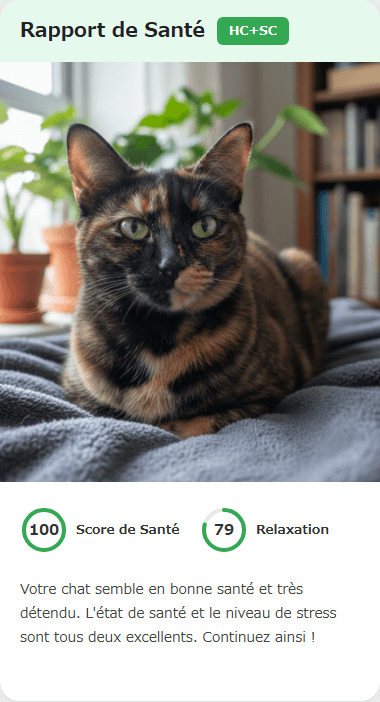

Remarqueriez-vous si quelque chose n'allait pas ?
Les chats cachent leur douleur. CatsMe utilise l'IA pour examiner une photo du visage de votre chat à la recherche de signes de douleur dans son expression. Il ne pose pas de diagnostic : si vous êtes inquiet, contactez votre vétérinaire.


Separation Anxiety Desensitization Training
Gradual desensitization is the most effective approach for separation anxiety.
Step 1: Neutralize departure cues (1-2 weeks)
- Regularly perform 'leaving signals' (putting on shoes, picking up keys) without actually leaving
- Repeat until the cat stops reacting to departure preparations
Step 2: Gradually increase absence duration (2-4 weeks)
- Start by leaving the room for just 1-2 minutes, then return
- If no reaction, gradually extend to 5 min → 15 min → 30 min
- Don't make a fuss when returning (keep departures and arrivals low-key)
Step 3: Environmental enrichment
- Leave-behind stimulation: window bird-watching spots, cat trees
- Food puzzle toys to prevent boredom during absence
- Place clothing with owner's scent in the cat's bed
- Leave calming music or TV on
- Feliway (synthetic pheromone) diffuser
Step 4: Post-return routine
- Don't immediately shower the cat with attention upon return (ignore for 5-10 minutes)
- After they calm down, schedule play time
- Daily grooming sessions provide security and bonding
Treatment Options for Severe Cases
When behavioral modification alone isn't sufficient, discuss medication with your veterinarian.
Pharmaceutical options:
- Fluoxetine (Prozac) — Most evidence-based anti-anxiety medication for cats. Takes 4-6 weeks for full effect. ~¥3,000-5,000/month
- Clomipramine — Tricyclic antidepressant effective for separation anxiety. ~¥2,000-4,000/month
- Gabapentin — Fast-acting anti-anxiety effect. Useful for spot treatment before outings. ~¥500-1,000/dose
Important: Never give human anti-anxiety medications to cats. Always use veterinary-prescribed feline formulations.
Supplements (for mild cases):
- Zylkene (alpha-casozepine) — Milk-derived anti-anxiety compound. ~¥2,000-3,000/month
- L-Theanine — Green tea extract with calming effects. ~¥1,500-2,500/month
Veterinary behaviorist consultation:
- Initial consultation: ~¥10,000-20,000
- Personalized behavior modification program
Start by identifying stress signs to determine whether it's separation anxiety or another issue.
Home Care & Practical Tips: Complete Environmental Enrichment Guide
Improving separation anxiety requires enriching the environment your cat experiences while alone. The goal is to transform solo time from an anxiety-triggering ordeal into a comfortable, stimulating part of your cat's daily routine.
Multi-sensory environmental enrichment:
- Visual stimulation: Position a cat tree near a window so your cat can watch birds, passing people, and outdoor activity. Installing a bird feeder outside the window dramatically increases engagement
- Auditory stimulation: Leave a television or radio playing during absences — nature documentaries and specially designed cat music playlists are popular choices that provide comforting background sound
- Olfactory stimulation: Distribute multiple catnip-infused toys throughout the home and use Feliway diffusers to create a calming pheromone environment
- Tactile stimulation: Provide beds and resting spots in varied textures — fleece, cardboard, wool — so your cat can choose what feels right
- Gustatory stimulation: Load puzzle feeders with kibble or treats before you leave, turning your absence into a treasure hunt rather than a stressor
Maximizing puzzle feeder effectiveness:
- Beginner level: Dry food inside a plastic bottle with holes drilled in it — the cat rolls it to release food
- Intermediate: Commercial puzzle balls that engage problem-solving instincts
- Advanced: Multiple puzzles hidden throughout the house to stimulate exploration and hunting behavior
- Aim to serve 30-50% of daily food through puzzle feeders rather than in a standard bowl
Creating safe zones throughout the home:
- Install elevated hiding spots such as cat walkways and boxes on high shelves — height provides security and a sense of control
- Place worn clothing items with your scent (old t-shirts or towels) in your cat's favorite sleeping areas for comfort
- Provide enclosed dark spaces like cardboard boxes and tunnels — these satisfy the instinct to hide and decompress
Pre-departure routine optimization:
- Set up puzzle feeders 15 minutes before leaving to redirect your cat's focus
- Avoid elaborate goodbyes — prolonged holding, baby talk, and dramatic departures actually increase anxiety by signaling that something unusual is happening
- Aim for a calm, unremarkable exit as if leaving is completely ordinary
- Learn to recognize stress signals so you can assess your cat's state before departing
What the Vet Will Do: Behavioral Medicine Consultation
When separation anxiety is severe or home-based training has not produced improvement, consulting a veterinary behaviorist is the recommended next step. A behavioral medicine consultation differs significantly from a standard veterinary visit.
What happens at the initial consultation:
- Detailed behavioral history taking (typically 1-2 hours): The specialist will thoroughly document the specific problem behaviors, their frequency, triggers, duration, and progression over time
- Physical examination: Rules out medical conditions that can mimic or contribute to anxiety, such as hyperthyroidism, chronic pain, or cognitive dysfunction syndrome
- Blood work: If medication is being considered, liver and kidney function must be assessed to ensure safe drug metabolism
- Environmental assessment: Bring photos or video of your home layout, the cat's behavior during your absence, and the litter box and feeding areas
Diagnosis and evaluation process:
- Separation anxiety severity is rated on a scale from mild to moderate to severe, which guides treatment intensity
- Differential diagnosis distinguishes separation anxiety from generalized anxiety disorder, compulsive disorder, or underlying medical conditions
- Trigger identification and behavioral pattern analysis map exactly what events precipitate anxiety episodes
Treatment plan development:
- A personalized desensitization program with weekly milestones tailored to your cat's specific triggers and tolerance thresholds
- Specific environmental modification instructions based on your home assessment
- Medication plan if warranted, including drug selection, dosing, duration, and expected timeline for therapeutic effect
- Follow-up schedule, typically every 4-6 weeks, to assess progress and adjust the plan
Cost overview:
| Item | Cost |
|------|------|
| Initial behavioral consultation | ¥10,000-20,000 |
| Follow-up visits (every 4-6 weeks) | ¥5,000-10,000 |
| Monthly medication | ¥3,000-5,000 |
| Estimated total (3-month treatment) | ¥30,000-60,000 |
Age-Specific Considerations for Separation Anxiety
Separation anxiety manifests differently depending on your cat's age, and understanding these age-related variations leads to more effective intervention strategies.
Kittens (under 1 year):
- Premature weaning (before 8 weeks) is a major risk factor for developing separation anxiety later in life
- The socialization experiences during this critical period shape lifetime anxiety levels and emotional resilience
- Intervention: Begin gradual "practice" absences starting with very short periods and slowly extending the duration
- Kitten-to-kitten play develops social confidence — consider a multi-cat household if appropriate
Adult cats (1-7 years):
- The transition from remote work back to office attendance is the single most common trigger for this age group (cases have surged since 2020)
- Moving house, changes in family composition (divorce, children leaving home), and schedule disruptions are also significant triggers
- Intervention: Desensitization training combined with environmental enrichment forms the core treatment approach
- Behavioral therapy alone achieves improvement in over 70% of cases in this age group, making it the most responsive demographic
Senior cats (7+ years):
- Cognitive dysfunction syndrome (CDS) must be carefully differentiated from separation anxiety — symptoms like nighttime vocalization, wandering, and litter box accidents can overlap significantly
- Hearing and vision decline can amplify anxiety by removing sensory cues that previously provided reassurance
- Arthritis pain may be driving behavioral changes that mimic anxiety
- Intervention: Address physical health issues first. SAMe supplements and omega-3 fatty acids show benefit for CDS
- Minimize environmental changes — major furniture rearrangements can disorient aging cats and worsen anxiety
Rescued cats and cats with trauma history:
- Previous abandonment or neglect experiences create deep-rooted separation anxiety that requires patience and specialized approaches
- Expect improvement timelines to be 2-3 times longer than for cats without trauma backgrounds
- Never force exposure to anxiety triggers — respect the cat's pace and build trust incrementally
- Combined medication and behavioral therapy is typically the most effective approach for trauma-associated anxiety
Keeping dated photos of anything unusual in CatsMe gives your vet a clear timeline at visits.
Record changes in your cat's expression with CatsMe
Because you cannot see what happens while you are out, notes on meals, litter-box use and any behaviour changes make it easier to talk to your vet. CatsMe (by Carelogy Inc.) uses AI to check a photo of a cat's face for signs of pain in its expression. It does not diagnose disease, assess overall health or replace a veterinarian; if you are worried, contact your vet regardless of the result.
- Keep dated records of meals and litter-box use to show your vet
- Records are kept per cat, so it works for multi-cat homes (iOS, Android and web, 14 languages)
- Developed with a background in university joint research; over 1 million checks run to date
Learn more about CatsMe →
Pourriez-vous répondre « depuis quand ça dure ? »
CatsMe utilise l'IA pour examiner une photo du visage de votre chat à la recherche de signes de douleur dans son expression, et conserve des suivis datés pour chaque chat, à revoir avec votre vétérinaire. Il ne pose pas de diagnostic.
分離不安留守番問題行動粗相鳴き声ストレス行動学
FAQ
 CatsMe
Soyez prêt à agir dès que vous sentez que quelque chose cloche
Prenez une photo et CatsMe examine par IA le visage de votre chat à la recherche de signes de douleur. Conservez des suivis datés pour chaque chat, à revoir avec votre vétérinaire. Il ne pose pas de diagnostic.