

What California's Declawing Ban Actually Says
On January 1, 2026, California became the second US state (after New York in 2019) to ban elective cat declawing statewide. The law, which passed with strong bipartisan support, prohibits veterinarians from performing onychectomy (declawing) on cats except when medically necessary — such as when a tumor or severe infection affects the claw and surrounding tissue.
Veterinarians who violate the ban face fines of up to $1,000 for a first offense and potential license review for repeated violations. The law explicitly distinguishes between elective declawing (now illegal) and medically necessary procedures (still permitted with documented justification).
The legislation was driven by mounting scientific evidence that declawing causes lasting physical and behavioral harm to cats. Supporters included the American Association of Feline Practitioners, the Humane Society of the United States, and numerous veterinary organizations that had already adopted position statements against elective declawing.
What cat owners need to know:
- If your cat was previously declawed, no action is required — the law applies only to future procedures
- If you're considering declawing for furniture protection or behavioral reasons, you must now explore alternatives
- Medical exemptions remain available when a veterinarian determines the procedure is necessary for the cat's health
- The law applies to all cats, regardless of whether they're indoor or outdoor, owned or in shelters
California joins a growing global movement. Many cities, including Los Angeles, San Francisco, and Denver, had already banned declawing locally before the statewide ban. Several other states have pending legislation that could expand the ban nationwide in coming years.
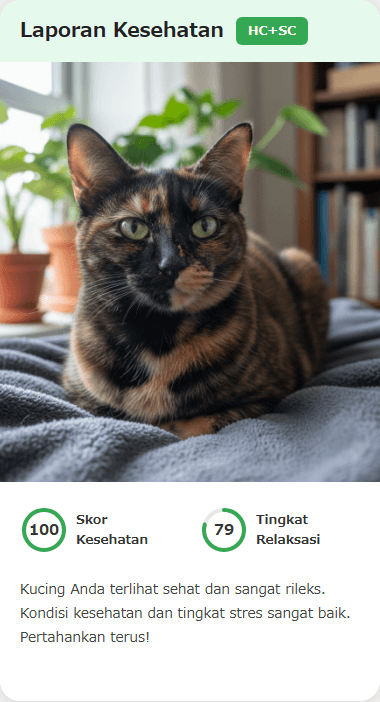

Your cat's daily companion
From grooming reminders to weight trends, CatsMe keeps your cat's care routine on track — all in one app.
Dipercaya oleh lebih dari 380.000 pemilik kucing di 50 negara


What Declawing Really Involves: The Medical Truth
Many cat owners who consider declawing don't fully understand what the procedure involves. Declawing is not simply removing the nail — it is a partial digital amputation.
The technical name, onychectomy, involves amputating the last bone (distal phalanx) of each toe. In human terms, this is equivalent to cutting off each finger at the last knuckle. The procedure severs tendons, nerves, and ligaments in addition to removing bone.
Short-term effects:
- Significant post-operative pain lasting days to weeks
- Risk of surgical complications including infection, hemorrhage, and incomplete bone removal
- Lameness during recovery that may persist
- Requirement for special litter (shredded paper) during healing, as standard litter causes pain in surgical wounds
Long-term consequences documented in peer-reviewed research:
- Chronic pain — Studies show that up to 63% of declawed cats have bone fragments remaining in their paws, causing ongoing pain similar to walking on broken glass
- Altered gait — Cats walk on their toes (digitigrade), and removing the toe tips changes their biomechanics permanently, potentially leading to arthritis in the legs, shoulders, and spine
- Behavioral changes — Declawed cats are significantly more likely to bite (their primary defense is gone) and to avoid the litter box (association of paw pain with digging in litter)
- Phantom pain — Similar to human amputees, cats may experience nerve pain where the removed tissue once was
The 2026 AAFP (American Association of Feline Practitioners) position statement describes declawing as "an ethically controversial procedure that is NOT recommended" and notes that the procedure provides no medical benefit to the cat.
Humane Alternatives to Declawing
The good news is that there are many effective, humane alternatives to declawing that address the underlying concerns — typically furniture scratching — without harming the cat. Most veterinary behaviorists report that implementing these alternatives resolves scratching problems in the vast majority of cases.
Environmental solutions:
- Scratching posts and surfaces — Provide multiple options in different materials (sisal rope, corrugated cardboard, carpet, wood). Place them near furniture the cat targets and near sleeping areas (cats often scratch after waking). Vertical and horizontal options should both be available, as individual cats have preferences.
- Deterrent products — Double-sided tape (Sticky Paws), aluminum foil, or citrus sprays on furniture surfaces make them less appealing to scratch. Temporary furniture covers protect while training is underway.
- Pheromone products — Feliway spray applied to furniture can reduce stress-related scratching. Scratching is partly a territorial marking behavior, and pheromones can reduce the drive.
Physical solutions:
- Regular nail trimming — Trim your cat's claws every 2-3 weeks. This is simple, painless, and dramatically reduces scratching damage. Start young to build tolerance. See our claw care guide for step-by-step instructions.
- Nail caps (Soft Paws) — Vinyl caps glued over the claws. They're humane, temporary (4-6 weeks), and prevent damage while allowing normal scratching behavior. Available in multiple sizes and even decorative colors.
Behavioral solutions:
- Positive reinforcement — Reward your cat with treats and praise when they use appropriate scratching surfaces. Never punish scratching — it's a natural, necessary behavior for claw maintenance, stretching, and territorial marking.
- Redirection — When you catch your cat scratching furniture, calmly redirect them to an appropriate surface. Catnip applied to scratching posts increases their appeal.
- Environmental enrichment — Bored cats scratch more destructively. Interactive play, window perches, and puzzle feeders reduce stress-related scratching.
Global Declawing Bans: Where the World Stands in 2026
California's ban is part of a clear global trend toward prohibiting elective cat declawing. Understanding where different countries and regions stand provides important context for this evolving animal welfare issue.
Countries with national declawing bans:
- United Kingdom — Banned under the Animal Welfare Act 2006 (classified as mutilation)
- Australia — Banned in all states and territories
- European Union — Banned in most member states under the European Convention for the Protection of Pet Animals. Germany, Austria, Switzerland, Sweden, Norway, Finland, and others explicitly prohibit it
- Brazil — Banned nationwide since 2008
- Israel — Banned since 2011 with fines up to $20,000
- Japan — Not explicitly banned by law, but the Japan Veterinary Medical Association advises against it and most Japanese veterinarians do not perform the procedure. Cultural attitudes in Japan generally oppose the practice, as it's seen as unnecessarily harmful
United States — a patchwork of laws:
- New York — First state to ban declawing (2019)
- California — Second state, effective January 2026
- Maryland — Ban enacted in 2022
- Cities with bans — Los Angeles, San Francisco, Denver, Pittsburgh, St. Louis, and others banned declawing before their states did
- Pending legislation — As of 2026, at least 10 additional states have declawing ban bills in progress
Canada:
- Most provinces have banned or strongly discouraged declawing through veterinary regulatory bodies. Nova Scotia, British Columbia, Alberta, Prince Edward Island, New Brunswick, and Newfoundland have all enacted bans.
The global trajectory is clear: elective declawing is increasingly recognized as an unnecessary procedure that causes harm. Veterinary organizations worldwide are moving from "discouraging" to "prohibiting" the practice, reflecting evolving scientific understanding and changing societal values around animal welfare.
Track Your Cat's Claw Health with CatsMe
Whether you're transitioning from considering declawing to implementing humane alternatives, or simply want to maintain optimal claw health for your cat, CatsMe helps you stay organized and consistent.
Claw care tracking with CatsMe:
- Set regular nail trimming reminders (every 2-3 weeks is recommended for most cats)
- Log scratching behavior patterns to identify if there's a stress component or preference for certain surfaces
- Track the effectiveness of deterrent products and environmental modifications over time
- Record any claw-related health issues (ingrown nails, torn claws, infections) for your veterinary record
Understanding scratching behavior:
Scratching is not misbehavior — it's an essential feline need that serves multiple functions: claw maintenance (removing dead outer sheaths), stretching muscles and tendons, marking territory (visual marks and scent from paw pads), and stress relief. CatsMe's behavior tracking helps you understand your cat's scratching patterns and address them constructively.
For previously declawed cats:
If your cat was declawed in the past, monitoring for signs of chronic pain is especially important. CatsMe's daily health logging can help you track mobility changes, litter box avoidance, or behavioral shifts that might indicate pain requiring veterinary attention.
Start tracking with CatsMe →
Bisakah Anda menjawab "sejak kapan ini terjadi?"
Saat dokter hewan bertanya, jangan sampai Anda bingung. CatsMe mencatat skor kesehatan harian secara otomatis yang bisa dibagikan hanya dengan satu ketukan.
抜爪爪切りカリフォルニア動物福祉猫の爪爪とぎdeclawing ban
FAQ
 CatsMe
Siap bertindak saat Anda merasa ada yang tidak beres
Cukup satu foto: AI membaca rasa sakit dan kondisi kesehatan dari ekspresi kucing Anda. Periksa saat Anda mulai khawatir, dan bagikan catatannya ke dokter hewan.