

The Bottom Line: Socialization (Weeks 2-7) and Age-Appropriate Feeding Are the Keys to a Healthy Start
The two most critical factors in raising a healthy, well-adjusted kitten are socialization during the sensitive period (weeks 2 through 7) and age-appropriate feeding throughout the first year. These two pillars shape your kitten's personality and physical development more than any other single factor.
The socialization window is remarkably brief. Experiences during this period, both positive and negative, leave lasting imprints on how the cat relates to people, other animals, and new environments for the rest of its life. Kittens that miss out on gentle human handling, exposure to household sounds, and interaction with other animals during this window are far more likely to become fearful, anxious adults.
Equally important is nutrition. Kittens grow at an extraordinary rate, roughly doubling their birth weight every two weeks for the first two months. For the stages before this — pregnancy through delivery — see our cat pregnancy and birth guide. This rapid growth demands an energy-dense, high-protein diet specifically formulated for kittens, fed at frequent intervals that decrease as the kitten matures.
Before bringing a kitten home, ensure you have age-appropriate food, a safe litter box, a kitten-proofed room, a warm bed, and a scratching post ready. Begin vaccinations at 8 weeks of age, and if you have resident cats, plan for a minimum two-week quarantine in a separate room before introductions begin.

Your cat's daily companion
From grooming reminders to weight trends, CatsMe keeps your cat's care routine on track — all in one app.
Dipercaya oleh lebih dari 380.000 pemilik kucing di 50 negara


Month-by-Month Feeding Guide for Kittens
Birth to 4 Weeks: Nursing Phase
Kittens should nurse from their mother exclusively during this period. If the mother is unavailable, use a commercial kitten milk replacer (KMR), never cow's milk, which causes diarrhea. Orphaned kittens need feeding every 2 to 3 hours around the clock, including overnight, using a specialized kitten nursing bottle. Bottle-fed kittens that gulp milk too quickly often get hiccups after eating — usually harmless, but a slower feeding pace helps. Keep them warm, as newborns cannot regulate their own body temperature.
4 to 8 Weeks: Weaning
Introduce solid food gradually. Mix high-quality kitten wet food with a small amount of warm water or KMR to create a gruel consistency. Offer this 4 to 5 times per day. Most kittens are fully weaned by 6 to 8 weeks and can eat soft kitten food independently.
2 to 6 Months: Rapid Growth
Feed a complete and balanced kitten food 3 to 4 times per day. Begin introducing dry kibble alongside wet food if desired. Kittens in this stage are growing rapidly and have very high caloric needs relative to their body size.
6 to 12 Months: Adolescence
Reduce feeding to 2 to 3 times per day. Continue with kitten-formula food, as the higher protein and calorie content supports the final growth spurt. Most kittens reach their adult size between 10 and 12 months, though some large breeds continue growing until 18 to 24 months.
Keep your kitten on kitten food until 12 months of age, then transition gradually to adult food over 7 to 10 days.
The Critical Socialization Window: Weeks 2 Through 7
The period between 2 and 7 weeks of age is known as the critical socialization window in feline behavioral development. During this brief but profoundly important phase, kittens are neurologically primed to form positive associations with new stimuli. Experiences during this window shape the cat's temperament for life.
- Human handling: Gently hold, cuddle, and stroke the kitten daily. Expose them to people of different ages, genders, and appearances. Kittens handled by at least four different people during socialization grow up significantly more confident and sociable.
- Sound desensitization: Introduce household sounds gradually: vacuum cleaners, washing machines, doorbells, television, and music. Start at low volume and increase slowly.
- Body handling practice: Touch the ears, open the mouth, examine the paws and toe pads, and gently restrain the kitten for brief moments. This training pays enormous dividends when the cat needs dental care, nail trims, ear cleaning, or veterinary examinations as an adult.
- Play-based learning: Play teaches bite inhibition (kittens learn from siblings that biting too hard ends the game), predatory motor sequences, and problem-solving. Provide age-appropriate toys and interactive play sessions.
The more positive, varied experiences a kitten accumulates during this window, the more adaptable, confident, and people-friendly the adult cat will be. Kittens that miss this window can still be socialized, but the process is significantly slower and less complete.
Kitten Health Milestones: Vaccination, Deworming & Checkup Schedule
Staying on top of your kitten's health milestones ensures a strong foundation for a long, healthy life. Here is the recommended timeline:
- 8 Weeks: First FVRCP vaccination, first deworming treatment, initial wellness exam including weight check and physical assessment
- 12 Weeks: Second FVRCP vaccination, FeLV vaccine if recommended, second deworming
- 16 Weeks: Third FVRCP dose (crucial for ensuring immunity), begin monthly flea and heartworm prevention
- 4 to 6 Months: Discuss spay/neuter surgery with your vet. Most veterinarians recommend surgery around 5 to 6 months, before sexual maturity.
- 6 Months: Microchip implantation for permanent identification, transition from kitten to twice-daily feeding schedule
- 12 Months: Final kitten wellness exam before transitioning to adult care schedule, gradual switch to adult food
Weigh your kitten weekly during the first few months to ensure consistent growth. The CatsMe app makes tracking easy. If you have any concerns about your kitten's development, an online veterinary consultation provides convenient access to professional guidance, even for first-time cat owners.
Litter Box Training: Getting It Right from Day One
Litter training kittens is remarkably straightforward compared to housebreaking a puppy, thanks to cats' natural instinct to bury their waste. However, proper setup and a few key practices prevent common problems.
Setting Up the Litter Box
- Use a shallow, easy-to-enter box for young kittens. Standard adult litter boxes have sides that are too high for small kittens to climb over. A disposable aluminum tray or a cut-down cardboard box works well initially.
- Choose unscented, fine-grained litter. Kittens often dislike heavily scented or coarse-textured litters.
- Place the box in a quiet, accessible location away from food, water, and the sleeping area.
- For multi-story homes, provide a box on each floor.
Training Tips
- After meals and naps, gently place your kitten in the litter box. Most will instinctively dig and use it.
- Praise success with a soft, encouraging voice. Treats are not necessary.
- Never punish accidents. Scolding or rubbing a kitten's nose in a mess creates fear and stress, making future accidents more likely, not less.
- Scoop soiled litter daily and replace all litter weekly.
If Accidents Persist
- Try a different litter type or box location.
- Rule out urinary tract issues with a veterinary check.
- Ensure the box is not in a high-traffic or noisy area.
Most kittens learn to use the litter box reliably within a few days of arriving in their new home.
Kitten-Proofing Your Home: Safety & Environment Setup
Kittens face a higher risk of household accidents than adult cats due to their small size, insatiable curiosity, and still-developing coordination. A thorough kitten-proofing sweep before your new arrival comes home is essential.
Critical Safety Measures
- Remove all string, hair ties, rubber bands, and ribbons from accessible areas. These are the number one cause of foreign body ingestion in kittens and can require emergency surgery.
- Cover electrical cords with protective tubing.
- Block small gaps behind and under appliances (refrigerators, washers, dryers) where kittens can become trapped.
- Remove all toxic plants from the home.
- Keep the bathtub drained and toilet lids closed.
- Secure window screens, as kittens are light enough to push through flimsy screens.
Creating an Ideal Kitten Environment
- Start with a single room as the kitten's home base, then gradually expand access as they grow in confidence and size.
- Provide safe hiding spots: cardboard boxes with entry holes, covered cat beds, or a blanket draped over a chair.
- Introduce a scratching post early to establish good scratching habits before furniture damage begins.
- Offer age-appropriate toys, avoiding anything small enough to be swallowed. Wand toys with supervision are excellent; unsupervised string toys are dangerous.
Thorough indoor safety preparation during the kitten phase prevents the vast majority of household emergencies.
Spay/Neuter Decisions: Timing, Benefits & What to Expect
Spaying and neutering offer significant health and behavioral benefits for kittens and are one of the most important decisions a new cat owner makes.
Recommended Timing
Most veterinarians recommend surgery between 5 and 6 months of age, before sexual maturity. Female cats can have their first heat cycle as early as 4 months, so early planning is important.
Benefits
- Females: Dramatically reduces the risk of pyometra (a life-threatening uterine infection) and mammary tumors. Cats spayed before their first heat have nearly zero risk of mammary cancer.
- Males: Reduces or eliminates urine spraying, roaming behavior, and inter-cat aggression.
- Prevents unplanned litters, which contribute to pet overpopulation.
- Studies show that spayed and neutered cats live longer on average than intact cats.
Post-Surgery Care
- Keep your kitten quiet and restrict vigorous activity for 3 to 5 days.
- Use an Elizabethan collar (cone) or surgical suit to prevent licking the incision.
- Monitor for signs of infection: redness, swelling, discharge, or fever.
- Contact your vet if appetite or energy levels have not returned within 48 hours.
- After surgery, metabolism slows. Adjust food portions to prevent weight gain.
Discuss the optimal timing and any concerns about spay/neuter surgery through an online veterinary consultation before the procedure.
Bisakah Anda menjawab "sejak kapan ini terjadi?"
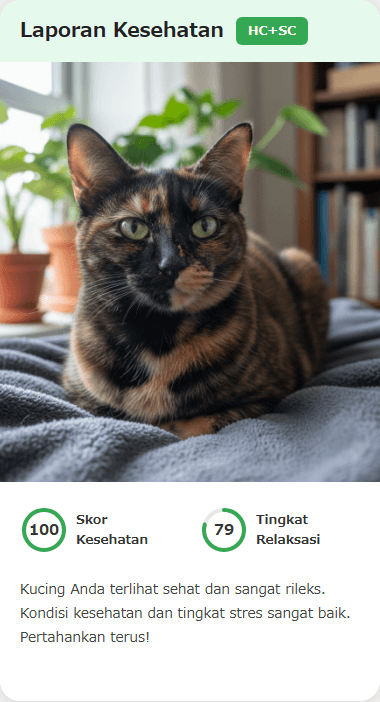
Saat dokter hewan bertanya, jangan sampai Anda bingung. CatsMe mencatat skor kesehatan harian secara otomatis yang bisa dibagikan hanya dengan satu ketukan.
子猫育て方離乳社会化
FAQ
 CatsMe
Siap bertindak saat Anda merasa ada yang tidak beres
Cukup satu foto: AI membaca rasa sakit dan kondisi kesehatan dari ekspresi kucing Anda. Periksa saat Anda mulai khawatir, dan bagikan catatannya ke dokter hewan.