

What Your Cat's Tail Is Telling You
Tail straight up (vertical): Happy and confident — a greeting. A slight curve at the tip adds an extra "glad to see you!" note.
Slow, wide sweeping: Relaxed and contemplative. The cat is focused on something but calm.
Rapid side-to-side flicking: Irritation or agitation. This is the opposite of a happy dog wag — approach with caution.
Puffed-up (bottle brush) tail: Fear or aggression. The fur along the body is usually raised as well.
Tail wrapped tightly around the body: Anxiety or self-protection. Cats also do this to conserve warmth.
Tail held low: Insecurity or feeling unwell. It can be a sign of lethargy or illness.
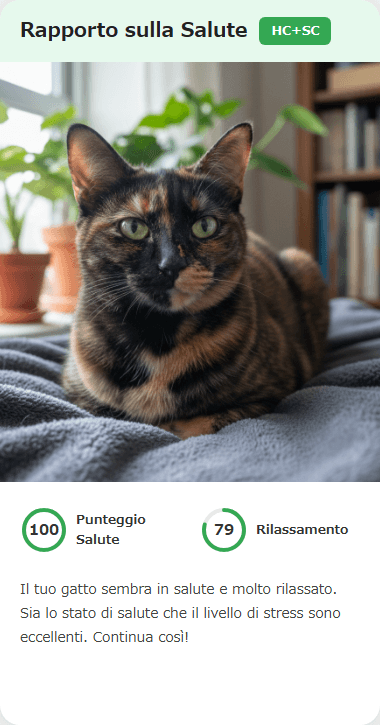

Il compagno quotidiano del tuo gatto
Promemoria per la cura, andamento del peso e routine di salute: CatsMe gestisce tutto in un'unica app.
Oltre 380.000 proprietari di gatti in 50 paesi si affidano a CatsMe


Reading Ear and Eye Signals
Ears:
- Forward-facing: Curiosity and interest
- Rotated sideways ("airplane ears"): Anxiety or caution
- Flattened back: Fear or aggression — do not touch!
- Swiveling independently: Tracking sounds in the environment
Eyes:
- Slow blink: A sign of affection and trust — the cat equivalent of saying "I love you." Returning the slow blink deepens your bond.
- Narrow, slit pupils: Relaxation or aggression, depending on context
- Wide, dilated pupils: Excitement, fear, or low light
- Prolonged stare: A challenge or threat. Among cats, avoiding direct eye contact signals peace.
Combine these cues with stress signals for a more complete reading of your cat's emotional state.
Body Postures and Behaviors
Belly exposure (rolling over): A display of trust — but not necessarily an invitation to touch. Many cats will bite or kick if you reach for their belly.
Head bunting: Rubbing their head against you deposits scent and is a sign of affection and ownership.
Kneading (making biscuits): A carryover from kittenhood nursing. This indicates deep relaxation.
Purring: Usually a sign of contentment, but cats also purr when in pain or stressed. Always interpret it alongside other body language cues.
Grooming you: A social bonding behavior that means the cat considers you part of their trusted group.
Hiding: Can signal illness, fear, or stress. If a normally social cat suddenly starts hiding, investigate promptly.
Understanding these cues early can help prevent behavioral shifts from escalating into behavior problems.
Step-by-Step Guide to Reading Cat Body Language
Follow this structured approach to accurately interpret what your cat is telling you through body language.
Step 1: Look at the whole picture. Observe the tail, ears, eyes, and body posture together as a unified message rather than reading any single signal in isolation.
Step 2: Consider the context. The same body language can mean different things during mealtime, play, or when a visitor arrives. Always factor in the situation.
Step 3: Know your cat's baseline. Individual variation between cats is enormous. Understanding your cat's normal behavior patterns is essential for recognizing when something is different.
Step 4: Prioritize stress signals. Flattened ears, dilated pupils, and a puffed tail are high-priority stress indicators that demand immediate attention.
Step 5: Respond without overreacting. Once you read the signal, respect your cat's wishes. If they show discomfort, give them space rather than forcing interaction.
Common Mistakes in Interpreting Cat Behavior
These common misinterpretations can lead to negative interactions with your cat.
Mistake 1: Tail wagging means happiness. This is the opposite of dogs. A cat flicking its tail rapidly is irritated.
Mistake 2: Belly exposure means they want belly rubs. While it signals trust, it is not necessarily an invitation to touch.
Mistake 3: Purring always means contentment. Purring can also indicate pain or stress.
Mistake 4: Direct eye contact means affection. Among cats, a prolonged stare is a challenge. The slow blink is the sign of love.
Expert Tips for Better Cat Communication
Animal behaviorists recommend these techniques for building deeper communication with your cat.
Practice the slow blink. Deliberately slow-blink at your cat and watch for a returned blink. Research confirms this is the most effective human action for building feline trust.
Check for invitation signals before touching. When a cat approaches and rubs their head against you, that is your green light. Do not initiate contact yourself.
Observe interactions in multi-cat homes. Watching cats communicate with each other reveals social dynamics.
Record behavioral changes. Preventing behavior problems starts with documenting normal patterns. Subtle shifts can be early indicators of illness.
When to Consult a Vet Based on Body Language Changes
Seek veterinary attention if your cat's body language shows these concerning changes.
Sudden behavioral shifts. A normally social cat that starts hiding or becomes aggressive may be experiencing pain or illness.
Pain indicators. Remaining curled up and immobile, growling when touched, or obsessively licking one area are expressions of pain.
Pupil abnormalities. Unequal pupil sizes may indicate a neurological issue requiring urgent evaluation.
Lethargy. A noticeable decline from your cat's normal activity level warrants a wellness exam.
Sapresti rispondere "da quando sta così?"
Quando il veterinario chiede, non restare senza risposta. CatsMe registra automaticamente i punteggi di salute giornalieri che puoi condividere con un tocco.
ボディランゲージしっぽ気持ちコミュニケーション
FAQ
 CatsMe
Sii pronto ad agire nel momento in cui senti che qualcosa non va
Basta una foto: l'IA legge dolore e condizioni di salute dall'espressione del tuo gatto. Controlla nel momento in cui ti preoccupi e condividi il diario con il veterinario.