

How Long Do Cats Live? The Quick Answer
The average indoor cat lives 12 to 18 years, with many reaching their early twenties when given excellent care. Outdoor cats, by contrast, have a dramatically shorter average lifespan of just 2 to 5 years due to traffic accidents, predators, disease exposure, and territorial fights. Indoor-outdoor cats fall somewhere in between at roughly 10 to 14 years.
These numbers have improved significantly over the past few decades. In the 1980s, the average cat lifespan was around 7 years. Advances in veterinary medicine, better nutrition, widespread spaying and neutering, and the shift toward indoor living have nearly doubled feline life expectancy.
Several factors determine where your individual cat falls on the lifespan spectrum:
- Breed genetics — some breeds are predisposed to heart disease or kidney failure, while others are known for exceptional longevity
- Indoor vs. outdoor lifestyle — the single biggest modifiable factor
- Diet quality — proper nutrition prevents obesity, the number one health risk for pet cats
- Veterinary care frequency — annual wellness exams catch problems years earlier
- Spay/neuter status — fixed cats live 1-2 years longer on average due to reduced cancer and behavioral risks
The oldest verified cat ever was Creme Puff from Austin, Texas, who lived to 38 years and 3 days. While that is extraordinary, cats reaching 20+ is no longer rare with modern care.

Il compagno quotidiano del tuo gatto
Promemoria per la cura, andamento del peso e routine di salute: CatsMe gestisce tutto in un'unica app.
Oltre 380.000 proprietari di gatti in 50 paesi si affidano a CatsMe


Cat Lifespan by Breed: Complete Guide
Breed plays a meaningful role in longevity, largely because of inherited health conditions. Here is a comprehensive breakdown of average lifespans for popular breeds:
Long-lived breeds (15-20+ years):
- Siamese — 15 to 20 years. One of the longest-lived purebreds, though prone to respiratory issues and amyloidosis
- Burmese — 16 to 18 years. Robust health overall, with some risk of diabetes
- Russian Blue — 15 to 20 years. Generally healthy with few breed-specific conditions
- Balinese — 15 to 20 years. Similar longevity to Siamese with slightly fewer health issues
Average lifespan breeds (12-17 years):
- Persian — 12 to 17 years. Brachycephalic (flat-faced) breeds face respiratory and dental challenges; polycystic kidney disease (PKD) screening is essential
- Ragdoll — 12 to 17 years. Watch for hypertrophic cardiomyopathy (HCM), the most common heart disease in cats
- British Shorthair — 12 to 17 years. Prone to HCM and obesity
- Abyssinian — 12 to 16 years. Risk of renal amyloidosis and retinal atrophy
- Scottish Fold — 11 to 15 years. Osteochondrodysplasia (cartilage/bone disorder) is a breed-specific concern
Shorter-lived breeds (10-15 years):
- Maine Coon — 10 to 15 years. The gentle giants face higher rates of HCM and hip dysplasia
- Sphynx — 10 to 15 years. Susceptible to HCM and skin conditions requiring regular care
- Bengal — 10 to 16 years. Generally healthy but some lines carry HCM risk
Mixed-breed cats typically live 14 to 18 years, benefiting from greater genetic diversity — a phenomenon called hybrid vigor.
Indoor vs. Outdoor: The Biggest Factor in Cat Longevity
The decision to keep a cat indoors is the single most impactful choice an owner can make for their cat's longevity. The statistics are striking: indoor cats live an average of 12 to 18 years, while outdoor-only cats average just 2 to 5 years.
Why the dramatic difference? Outdoor cats face a gauntlet of daily risks:
- Vehicle strikes — the leading cause of death for outdoor cats, especially at dusk and dawn when cats are most active and visibility is lowest
- Predators — coyotes, dogs, birds of prey, and in some regions, snakes
- Infectious diseases — FIV (Feline Immunodeficiency Virus), FeLV (Feline Leukemia Virus), FIP, and rabies spread through fights and contact with infected cats
- Parasites — fleas, ticks, intestinal worms, and toxoplasmosis exposure
- Toxin exposure — antifreeze, pesticides, rat poison, and toxic plants like lilies
- Territorial fights — bite wounds frequently abscess and can transmit fatal diseases
- Extreme weather — hypothermia in winter, heatstroke in summer
For owners who want to give their indoor cat outdoor enrichment safely, consider:
- Catios (enclosed patios) — provide fresh air, sunlight, and bird-watching without any risk
- Harness training — many cats adapt well to supervised outdoor walks
- Window perches and bird feeders — stimulate the hunting instinct without the danger
A study published in the Journal of Feline Medicine and Surgery confirmed that indoor cats not only live longer but also have significantly lower rates of chronic disease and injury-related veterinary visits.
5 Science-Backed Ways to Help Your Cat Live Longer
Beyond keeping your cat indoors, these five evidence-based strategies have the strongest proven impact on feline longevity:
1. Maintain a healthy weight. Over 60% of pet cats are overweight or obese, and excess weight shortens lifespan by an estimated 2-3 years. It dramatically increases the risk of diabetes, arthritis, and urinary disease. Measure portions precisely — do not free-feed kibble. Check our cat weight management guide for detailed instructions.
2. Schedule annual (or twice-yearly for seniors) veterinary checkups. Cats are masters at hiding illness. Annual blood work, dental exams, and physical assessments catch kidney disease, hyperthyroidism, and cancer months to years before symptoms appear. Cats over 10 should see the vet every 6 months.
3. Feed a high-quality, protein-rich diet. Cats are obligate carnivores. Diets with animal protein as the first ingredient, moderate fat, and minimal fillers support lean muscle mass and organ health. Wet food is preferable for its higher moisture content, which supports kidney function.
4. Prioritize dental health. Dental disease affects up to 70% of cats over age 3 and creates chronic inflammation that damages the heart, kidneys, and liver over time. Annual dental cleanings and daily tooth brushing (or dental treats/water additives) make a measurable difference.
5. Provide mental stimulation and physical exercise. Boredom and inactivity accelerate cognitive decline and obesity. Interactive toys, puzzle feeders, vertical climbing spaces, and 15-20 minutes of daily play keep cats mentally sharp and physically fit well into their senior years.
Home Care & Practical Tips for Every Life Stage
Each stage of your cat's life brings different health priorities and care requirements. Adapting your daily routine to match your cat's current life stage is one of the most impactful things you can do to support a long, healthy life.
Kitten stage (0-1 year) — Building the foundation:
- Complete the full vaccination series on schedule — this protects against life-threatening diseases during the most vulnerable period
- Spay or neuter by 5-6 months to reduce mammary cancer risk (by up to 91% in females) and prevent reproductive health complications
- Establish positive habits early: tooth brushing, nail trimming, carrier training, and regular handling that makes future veterinary visits less stressful
- Feed kitten-specific food with higher calories and protein to support rapid growth and development
Adult stage (1-10 years) — Maintaining peak health:
- Annual wellness exams catch problems before they become serious — cats are masters at hiding illness
- Monitor weight closely and prevent obesity through portion control and daily interactive play. The adult years are when weight often creeps up
- Establish a dental care routine: daily brushing is ideal, but dental treats and water additives also help
- Feed a balanced, high-protein diet appropriate for adult maintenance
- Keep parasite prevention current year-round, even for indoor-only cats
Senior stage (11-14 years) — Proactive monitoring:
- Switch to biannual vet visits with comprehensive blood work to screen for kidney disease, hyperthyroidism, and diabetes
- Add ramps or steps to favorite elevated spots — joint stiffness develops even when cats do not show obvious pain
- Transition to senior-formulated food with joint support supplements such as glucosamine and omega-3 fatty acids
- Watch for subtle behavior changes: sleeping more, grooming less, reduced jumping height, altered social patterns
Geriatric stage (15+ years) — Comfort-focused care:
- Provide heated beds and easily accessible litter boxes with low entry sides
- Monitor hydration carefully — kidney function decline makes dehydration more likely
- Adjust feeding to smaller, more frequent meals if appetite decreases
- Maintain gentle daily interaction and mental stimulation, even as activity levels decline
- Quality of life becomes the primary focus — work closely with your veterinarian to manage chronic conditions compassionately
Prevention & Long-Term Management for Maximum Lifespan
Beyond the five science-backed strategies covered earlier, there are additional evidence-based practices that contribute to feline longevity. These measures work synergistically — implementing them together creates a compounding effect that far exceeds any single intervention.
Environmental safety is a longevity multiplier:
- Secure all windows with screens or mesh to prevent falls — high-rise syndrome (injuries from falling) is a leading cause of death in young urban cats
- Remove or restrict access to toxic plants such as lilies (even a small amount of lily pollen can cause fatal kidney failure in cats), poinsettias, and sago palms
- Store all medications, cleaning products, and chemicals behind locked cabinets — cats are curious explorers, and accidental ingestion is more common than most owners realize
- Eliminate string, rubber bands, and small objects that could be swallowed — linear foreign body obstruction requires emergency surgery
Chronic stress reduction extends life measurably:
- Provide vertical territory through cat trees, shelves, and window perches — cats feel safer when they can observe from above
- In multi-cat households, ensure adequate resources: one litter box per cat plus one extra, separate feeding stations, and multiple resting areas
- Use Feliway diffusers in homes with tension between cats or during stressful events like renovations or visitors
- Maintain a predictable daily routine — cats thrive on consistency and become stressed by unpredictable schedules
The power of the human-animal bond:
Research increasingly shows that cats with strong, positive relationships with their owners live longer. Daily interactive play, gentle grooming sessions, and simply spending quiet time together all contribute to reduced stress hormones and improved immune function. A loved cat is, quite literally, a healthier cat.
Create a preventive care calendar:
- Monthly: parasite prevention, weight check, brief home dental assessment
- Quarterly: home health evaluation including body condition score
- Annually (under 10): comprehensive vet exam with blood work
- Biannually (10+): full senior wellness panel including thyroid, kidney values, blood pressure
- Track everything with the CatsMe app to maintain a continuous health record
Age-Specific Health Risks Every Owner Should Know
Understanding the specific health risks associated with each age bracket empowers you to take targeted preventive action rather than waiting for problems to appear. Here is what to watch for at every stage.
Young cats (1-6 years) — Common threats:
- Accidents and ingestion of foreign objects remain the leading causes of emergency visits in this age group
- Feline lower urinary tract disease (FLUTD) peaks between ages 2 and 6, particularly in male cats
- Infectious diseases including FeLV and FIV primarily affect young, outdoor, or recently adopted cats
- Dental disease begins developing as early as age 3 — by this point, up to 70% of cats already show signs of periodontal disease
- Obesity often begins in this stage due to overfeeding and insufficient activity after the kitten energy phase subsides
Middle-aged cats (7-10 years) — The turning point:
- Diabetes mellitus risk increases significantly, especially in overweight cats. Early signs include increased thirst, frequent urination, and weight loss despite a good appetite
- Hyperthyroidism becomes a possibility. Watch for weight loss with increased appetite, restlessness, and a rapid heart rate
- Early chronic kidney disease may be silently developing. Routine blood work catches this before symptoms appear
- Cancer screening becomes important — regularly feel for lumps during petting and grooming sessions
Senior and geriatric cats (11+ years) — Managing decline gracefully:
- Chronic kidney disease affects up to 80% of cats over 15. Management through diet, hydration, and medication can add years of quality life
- Arthritis is present in over 90% of cats over 12, though most cats never show obvious limping. Subtle signs include reluctance to jump, sleeping more, and changes in grooming patterns
- Cognitive dysfunction syndrome (feline dementia) affects approximately 50% of cats over 15, causing nighttime vocalization, disorientation, and changes in social behavior
- Hypertension (high blood pressure) develops secondary to kidney disease or hyperthyroidism and can cause sudden blindness if untreated
The single most powerful action you can take is consistent preventive veterinary care matched to your cat's current life stage. CatsMe helps you stay on schedule and track health changes that might otherwise go unnoticed between vet visits.
Track Your Cat's Aging with CatsMe
Understanding your cat's health trajectory is the key to a longer life. The CatsMe app provides the tools you need to stay ahead of age-related changes.
How CatsMe supports feline longevity:
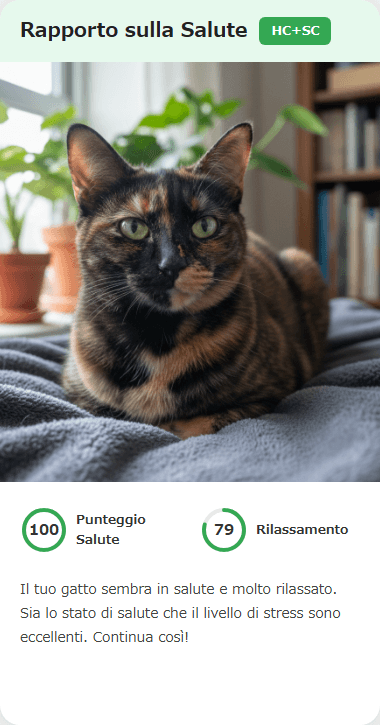
- Daily health scores — track appetite, activity, and behavior over months and years. Gradual changes that are invisible week-to-week become obvious on a long-term trend graph
- AI facial expression analysis — detects early signs of pain and discomfort from conditions like arthritis, dental disease, and chronic kidney disease. Cats hide pain instinctively, but their faces reveal micro-expressions the AI is trained to catch
- Weight tracking — log weekly weights and see the trend. Even a 200g loss in a 4kg cat is a 5% change worth investigating
- Breed-specific health alerts — get reminders for screening tests relevant to your cat's breed, like HCM echocardiograms for Maine Coons or PKD ultrasounds for Persians
- Vet visit reminders — never miss an annual or semi-annual checkup
The best time to start tracking is today, whether your cat is a kitten or a senior. The earlier you establish a baseline, the earlier you catch deviations.
Download CatsMe and start tracking →
Sapresti rispondere "da quando sta così?"
Quando il veterinario chiede, non restare senza risposta. CatsMe registra automaticamente i punteggi di salute giornalieri che puoi condividere con un tocco.
cat lifespan猫 寿命how long do cats live猫 品種 寿命cat life expectancy
FAQ
 CatsMe
Sii pronto ad agire nel momento in cui senti che qualcosa non va
Basta una foto: l'IA legge dolore e condizioni di salute dall'espressione del tuo gatto. Controlla nel momento in cui ti preoccupi e condividi il diario con il veterinario.