

Key Things to Check on a Cat Food Package
When choosing cat food, knowing how to read the package is the key to finding the best option.
1. "Complete and Balanced" Statement
This is the single most important label element. A "complete and balanced" food meets all of a cat's nutritional requirements. Products labeled as "complementary," "supplemental," or "treats" should not be used as a primary diet.
2. Life-Stage Designation
"Kitten," "adult," "senior," or "all life stages" — choose the one that matches your cat's age.
3. AAFCO Compliance
Confirm the food meets nutritional standards set by the Association of American Feed Control Officials (AAFCO).
4. Ingredient List
Ingredients are listed in descending order by weight. The first three are especially important.
5. Guaranteed Analysis
This section lists minimum or maximum levels of crude protein, crude fat, crude fiber, ash, and moisture.
6. Calorie Content
Kilocalories per 100 g — essential for weight management.
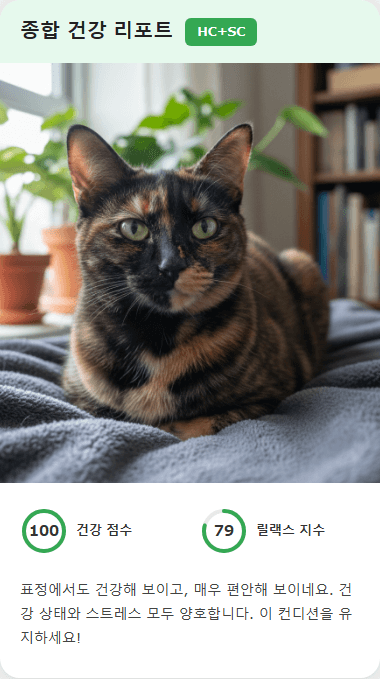

문제가 생기기 전에 미리 발견하세요
매일의 건강 기록이 조기 발견을 가능하게 합니다. CatsMe가 자동으로 변화를 추적해 작은 이상도 놓치지 않습니다.
50개국 380,000명 이상의 보호자가 사용 중


How to Read the Ingredient List Correctly
Ingredients are listed in descending order by weight.
Signs of a Quality Ingredient List
- A named meat or fish as the first ingredient: e.g., "chicken" or "salmon" — a specific animal protein source
- Multiple animal proteins near the top: Indicates the food is protein-forward
Ingredients to Watch Out For
- Vague terms like "meat" or "poultry": The exact protein source is unclear
- Grains as the first ingredient: Foods that lead with corn or wheat tend to be high in carbohydrates
- Artificial colors (e.g., Red #40): Unnecessary for feline health
- Artificial preservatives (BHA, BHT): Natural alternatives like mixed tocopherols are preferable
- Sugar and salt: Added for palatability but offer no health benefit to cats
Meal vs. By-Product
- Chicken meal: Chicken that has been dried and ground. It is a concentrated protein source and is not necessarily low quality
- Chicken by-product: Includes organs, bones, and heads. Quality varies by manufacturer
About Grain-Free Diets
Cats have no dietary requirement for grains and can thrive without them. However, grain-free does not automatically mean higher quality — pay attention to the starch content from substitute legumes and potatoes as well.
Decoding the Guaranteed Analysis & Practical Food Selection
Ideal Guaranteed Analysis Ranges
Dry food: Crude protein 30%+ and crude fat 10-20%
Wet food: Crude protein 8%+ (30%+ on a dry-matter basis)
Why Dry-Matter (DM) Conversion Matters
To compare wet and dry foods fairly, you need to remove moisture from the equation.
Formula: DM value = Listed value / (100% - moisture%) x 100
Example: A wet food with 10% protein and 80% moisture → 10 / 20 x 100 = 50% protein on a DM basis
The Ideal Nutritional Balance for Cats
Cats are obligate carnivores.
- High protein: Primarily from animal sources
- Moderate fat: With a healthy balance of omega-3 and omega-6 fatty acids
- Low carbohydrates: Cats have limited ability to digest carbs
- Taurine: An essential amino acid — deficiency causes heart disease and retinal degeneration
Practical Steps for Choosing Food
1. Confirm the label says "complete and balanced" for the appropriate life stage
2. Verify the first ingredient is a named animal protein
3. Check for unnecessary additives
4. Match the food to your cat's health status, age, and any existing conditions
5. When in doubt, consult your veterinarian
Practical Guide to Choosing Food by Age and Health Status
Once you understand the basics of reading cat food labels, the next step is applying that knowledge to choose the right food based on your cat's age and health status.
Kittens (0-1 year)
- High-protein, high-calorie kitten formula
- DHA included to support brain and eye development
- Small kibble size for easy eating
- Feed small amounts three to four times daily
Adult Cats (1-7 years)
- Complete and balanced adult formula
- Managed calorie content for proper weight management
- Appropriate magnesium and phosphorus levels for urinary health
- Hairball control formulas are also an option
Senior Cats (7+ years)
- Highly digestible, quality protein sources
- Lower phosphorus content to support kidney health
- Joint-support ingredients such as glucosamine and chondroitin
- Refer to the senior cat nutrition guide for additional guidance
Specific Health Conditions
- Overweight cats: Low-calorie, high-fiber weight management formulas
- Urinary stones: Prescription diets formulated for struvite or calcium oxalate management
- Food allergies: Novel protein diets (venison, kangaroo, etc.) or hydrolyzed protein formulas
- Diabetes: Low-carbohydrate, high-protein diets
Always choose therapeutic diets under veterinary guidance.
Expert Analysis: Seeing Through Pet Food Marketing
Understanding the marketing tactics used by the cat food industry equips you with the ability to distinguish genuinely high-quality food from clever packaging.
Marketing Terms to Watch Out For
"Human Grade"
This term lacks a clear legal definition. While it sometimes indicates food manufactured under human food safety standards, it is often used purely as a marketing buzzword. The ingredient list and guaranteed analysis are far more reliable indicators of quality.
"Natural" and "Organic"
Under AAFCO definitions, "natural" means no chemically synthesized ingredients are used, but this is different from organic certification. "Organic" requires third-party certification, though organic food is not necessarily nutritionally superior to conventional options.
"Grain-Free" Marketing
The number of grain-free products has surged, but many substitute grains with large amounts of legume or potato starch. What matters is the total carbohydrate content, not simply whether grains are present or absent.
Do Not Be Misled by Package Photography
Beautiful images of fresh raw meat or fish on the packaging may bear no relation to what is actually inside the bag. Always flip the package over and read the ingredient list.
What "Veterinarian Recommended" Really Means
This label typically represents the endorsement of an individual veterinarian or the manufacturer's in-house veterinary team — not a consensus of the veterinary profession as a whole. AAFCO nutritional compliance is a more objective benchmark of quality.
When in doubt about food selection, base your decision on the numbers in the guaranteed analysis rather than on marketing claims.
When to Take Action: Safely Switching Your Cat's Food
Here is guidance on when a food switch is necessary and how to execute it safely to avoid digestive upset.
When Food Switching Becomes Necessary
- Life-stage transition (kitten to adult, adult to senior)
- Veterinarian recommends a therapeutic diet
- Persistent vomiting or diarrhea on the current food
- Suspected food allergy
- Product recall or discontinuation
Safe Transition Method (7-10 Days)
- Days 1-2: 25% new food + 75% old food
- Days 3-4: 50% new food + 50% old food
- Days 5-6: 75% new food + 25% old food
- Day 7 onward: 100% new food
What to Watch During the Transition
- Check stool consistency daily — soft stools or diarrhea signal that you should slow the pace
- If vomiting persists, revert to the old food
- If the cat flatly refuses the new food, do not force it
- Monitor water intake for any changes
Tips When Your Cat Resists the New Food
- Add a small amount of warm water to enhance the aroma
- Use a topping such as bonito flakes or a small spoonful of wet food
- Try changing the material or depth of the food bowl
- Serve meals in a calm, stress-free environment
If digestive symptoms persist for more than two weeks after completing the transition, consult your veterinarian.
Resources & Tools for Cat Food Selection
Here are useful resources and tools to support your cat food selection decisions.
Trusted Nutritional Information Sources
- AAFCO (Association of American Feed Control Officials): The foundation for nutritional standards
- WSAVA (World Small Animal Veterinary Association): Guidelines for selecting pet food
- Nutritional consultation hotlines provided by major pet food manufacturers
Quick Dry-Matter Conversion Tool
To fairly compare the nutritional content of wet and dry foods, use the dry-matter conversion formula.
DM value = Listed value / (100 - moisture%) x 100
Example: 10% protein with 80% moisture = 10/20 x 100 = 50% protein on a dry-matter basis
Food Management with CatsMe
Using the CatsMe app, you can easily track daily food intake and the types of food you are feeding. Combined with weight management data, this allows you to objectively evaluate the effects of any food changes over time.
Related Carelogy Articles
- Weight Management Guide: How to calculate appropriate feeding amounts
- Senior Cat Nutrition: Essential nutrients for aging cats
- Cat Water Intake: The relationship between hydration and health
- Cat Appetite Loss: What to do when your cat stops eating
- Cat Diabetes: The importance of dietary therapy
Consulting Your Veterinarian
The ideal approach to food selection involves partnering with your veterinarian, who understands your cat's health status best. This is especially important for cats with chronic conditions or those that require therapeutic diets. Carelogy's online consultation service also provides nutritional advice.
수의사에게 '언제부터 그랬나요?'라고 물으면 답할 수 있으신가요?
수의사 앞에서 막막해하지 마세요. CatsMe가 매일 건강 점수를 자동으로 기록하고, 탭 한 번으로 공유할 수 있습니다.
キャットフード成分表示原材料栄養フード選び
FAQ
 CatsMe
이상을 느꼈을 때, 바로 행동할 준비를
사진 한 장이면 AI가 고양이의 표정에서 통증과 건강 상태를 읽어냅니다. 걱정되는 순간 바로 확인하고, 기록은 수의사와 공유하세요.