Daily Care2026-03-13Carelogy編集部

Cat Hiccups: Causes, How to Stop Them & When to Worry

Why do cats get hiccups? Learn the common causes, when they're harmless, how to help stop them, and when hiccups signal a health problem.

Key Takeaway: Cat Hiccups Are Usually Harmless, But Frequent Episodes Need Attention

Yes, cats do get hiccups — and the mechanism is identical to humans. The diaphragm (the large muscle separating the chest and abdomen) contracts involuntarily, causing a sudden intake of air that's cut off by the closing glottis, producing the characteristic 'hic' sound. When hiccups are completely normal (no concern needed): - Occurs occasionally after eating, especially if the cat ate quickly - Stops on its own within a few minutes - Happens only a few times per month at most - Cat is otherwise energetic, eating well, and behaving normally When to consult a veterinarian: - Hiccups occur multiple times per day - Episodes last longer than 30 minutes - Accompanied by coughing or difficulty breathing - Cat is losing appetite or experiencing weight loss - Sudden onset in an adult cat that never hiccupped before (hiccups are much more common in kittens than adults, so adult-onset is worth investigating)

5 Common Causes of Cat Hiccups

1. Eating too fast (most common cause) When a cat gulps food rapidly, the stomach expands quickly and pushes against the diaphragm, triggering involuntary contractions. This is especially common with dry kibble, which expands further after absorbing stomach fluids. Cats in multi-cat households often eat faster due to food competition. 2. Hairballs Swallowed fur accumulates in the digestive tract and can irritate the stomach lining and diaphragm, producing hiccup-like movements. These are sometimes mistaken for actual hiccups. See our guide on hairball prevention for management tips. 3. Normal kitten development Kittens hiccup much more frequently than adult cats because their digestive and nervous systems are still maturing. This is completely normal and typically decreases significantly by the time the cat reaches 1 year of age. If your kitten is eating, growing, and playing normally, occasional hiccups are no cause for worry. 4. Temperature changes Drinking very cold water or experiencing sudden temperature shifts can stimulate the vagus nerve and trigger diaphragm spasms. This is usually a one-time occurrence and resolves quickly. 5. Underlying medical conditions (rare but important) Frequent or persistent hiccups can occasionally be a symptom of: feline asthma (diaphragm irritation from airway inflammation), heart disease (enlarged heart pressing on the diaphragm), gastrointestinal tumors, or diaphragmatic hernia (a hole in the diaphragm allowing abdominal organs to shift into the chest). If hiccups are accompanied by any other symptoms, veterinary evaluation is warranted.
CatsMe

Skulle du märka om något var fel?

Katter döljer smärta instinktivt. CatsMe:s AI läser subtila ansiktsuttryck och förvandlar din magkänsla till tidig upptäckt.

Över 230 000 kattägare i 50 länder litar på CatsMe

How to Help Stop Cat Hiccups

The good news: cat hiccups almost always resolve on their own within a few minutes. Unlike the many folk remedies people use for human hiccups, cats don't need any intervention. Preventive measures that actually help: - Slow-feeder bowls — Puzzle feeders or bowls with raised ridges force your cat to eat smaller bites, preventing rapid stomach expansion. These are the single most effective prevention - Smaller, more frequent meals — Split daily food from 2 meals into 3-4 smaller portions throughout the day - Slightly moisten dry food — Adding a tablespoon of warm water to kibble reduces the amount of air swallowed and slows expansion in the stomach - Regular [brushing](/en/columns/cat-grooming-tips) — Removes loose fur before it's swallowed, reducing hairball-related digestive irritation - Avoid vigorous play immediately after eating — Let your cat rest for 15-20 minutes after meals ⚠️ Things you should NEVER do: - Startle or scare your cat (causes stress and trust issues — doesn't stop hiccups) - Force-feed water, sugar water, or any medication - Hold your cat upside down (dangerous and ineffective)

Track Daily Health Changes with CatsMe for Peace of Mind

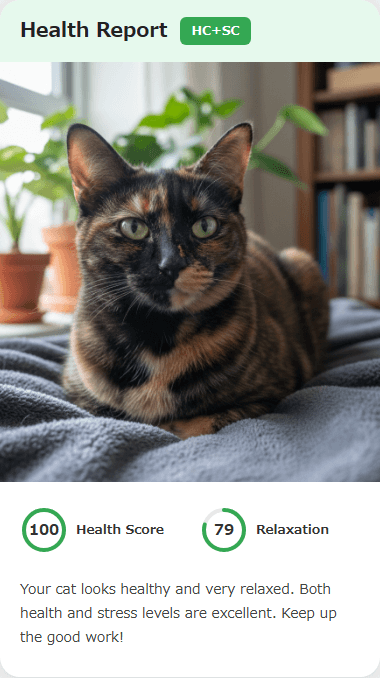
While cat hiccups are usually harmless, it's important to know whether they're becoming more frequent or occurring alongside other symptoms. A vague feeling of 'my cat seems to hiccup a lot lately' isn't enough information for a veterinarian to work with. How CatsMe helps: - AI facial expression analysis automatically calculates a daily health score — captures subtle changes in your cat's condition that are difficult to notice day-to-day - Symptom logging and frequency tracking — Record hiccups, coughing, and vomiting episodes to see exactly how often they occur per week, with timestamps and patterns - Eating pattern monitoring — Track whether your cat tends to eat too fast, and observe how body condition changes after switching foods - Vet consultation reports — Present objective data like 'hiccup frequency has doubled over the past month' instead of subjective impressions Small changes, tracked consistently, are the key to catching serious health issues early. Make CatsMe's 30-second daily health check part of your routine. Try CatsMe now →
CatsMe

Kan du svara på "när började det här?"

När veterinären frågar, stå inte svarslös. CatsMe registrerar automatiskt dagliga hälsopoäng som du kan dela med en knapptryckning.

しゃっくり横隔膜早食い毛球猫の健康

FAQ

CatsMe

Var redo att agera i samma ögonblick du känner att något inte stämmer

Du läser det här för att din katts hälsa verkligen betyder något för dig. Med CatsMe kan du köra en AI-hälsokontroll i samma stund oron slår till.