

Hiding Is Normal — But Refusing Food and Skipping the Litter Box Is Not
Hiding is a deeply rooted feline instinct. In the wild, cats seek enclosed, elevated, or secluded spots to rest, observe their surroundings, and feel safe from predators. So when your indoor cat tucks itself behind the sofa or under the bed, it is not automatically a cause for alarm.
The critical distinction lies in what happens while your cat is hiding. A cat that continues to eat meals, drink water, and use the litter box — even if it dashes back to its hiding spot afterward — is almost certainly dealing with temporary stress rather than illness. On the other hand, a cat that has not eaten for over 24 hours, has not urinated, or is completely unresponsive to your voice or the sound of a treat bag needs veterinary evaluation.
The key takeaway: monitor food intake and litter box activity, not hiding duration. A cat that hides for three days but eats normally is far less concerning than one that hides for 12 hours and has not touched food or water.
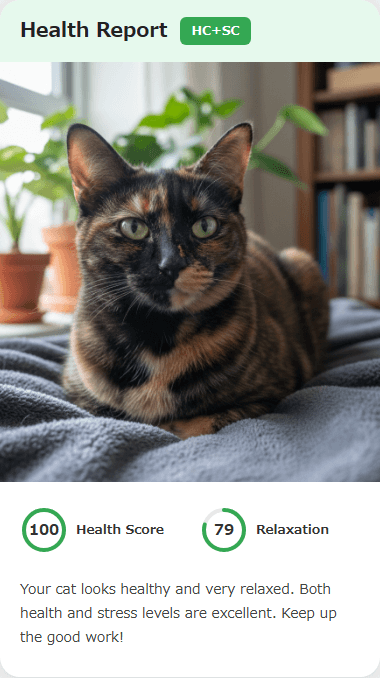

Worried about these symptoms?
Don't wait and wonder. CatsMe's AI analyzes your cat's photo to flag health concerns in seconds.
Över 380 000 kattägare i 50 länder litar på CatsMe


Stress-Related Hiding vs. Illness-Related Hiding
Signs of stress-related hiding (environmental triggers)
- If it only happens while you are out, consider separation anxiety as well
- There is a clear trigger — moving to a new home, visitors, a new pet, or renovation noise
- The cat still eats and uses the litter box, even if less enthusiastically
- The cat reacts to your voice by flicking its ears or turning its head
- Behavior gradually improves over a few days to one week
Signs that illness may be the cause
- Hiding started suddenly with no obvious environmental change
- Food and water intake have clearly decreased
- Litter box habits have changed — more frequent, less frequent, or different stool or urine appearance
- The cat does not respond at all when you call its name
- Visible trembling or a limp, lethargic posture
- The cat vocalizes or flinches when touched, suggesting pain
What You Can Do at Home and What to Watch For
If you suspect stress is the cause:
- Do not force your cat out. Allow it to emerge on its own terms while you maintain a calm, quiet household.
- Place food and fresh water near the hiding spot so eating does not require a long, exposed journey.
- Consider a Feliway diffuser or spray — synthetic feline facial pheromones can help reduce anxiety.
- If a new pet is the trigger, separate the animals into different rooms and introduce them gradually over days or weeks.
Observation checklist:
1. Food consumption — measure how much is left after 24 hours
2. Litter box activity — count clumps, note urine volume, and check for stool
3. Water intake changes
4. Response to your voice or treat sounds
5. Physical changes — eye discharge, runny nose, trembling, or unusual posture
Emergency Signs That Require Immediate Veterinary Care
Contact a veterinarian without delay if any of the following apply:
- No food or water intake for over 24 hours
- No urination for over 24 hours — this is especially urgent, as it may indicate a urinary blockage, a life-threatening emergency
- Your cat growls or cries out when touched, suggesting significant pain
- Labored breathing or open-mouth breathing
- Persistent trembling or altered consciousness
Urinary obstruction can become fatal within 24 to 48 hours. Male cats that are hiding and not urinating require immediate emergency care — do not wait to see if it resolves on its own.
Home Care vs Emergency: When Hiding Becomes Dangerous
Not every instance of hiding requires a vet visit, but some scenarios demand immediate action. Here is a clear decision framework.
Safe to Monitor at Home (24 to 72 Hours):
- There is an obvious environmental trigger — a recent move, a thunderstorm, guests in the house, or construction noise
- The cat is still eating and drinking, even if less than usual
- Litter box activity continues at a normal or near-normal rate
- The cat responds to sounds (treat bag, food being prepared) even if it does not come out
- No visible injuries, discharge, or physical changes
During home monitoring, your most important job is tracking inputs and outputs. Place a measured amount of food near the hiding spot and check how much disappears every 12 hours. Count litter box clumps daily. If intake and output remain stable, the hiding is very likely behavioral rather than medical.
Seek Veterinary Care Within 24 Hours If:
- Food intake has dropped by more than 50 percent for two consecutive days
- Litter box activity has decreased significantly — fewer urine clumps, smaller or absent stool
- The cat appears physically different — weight loss, dull coat, eye discharge, or limping
- The cat is a senior (7 years or older) with no clear environmental trigger for the hiding
Go to the Emergency Vet Immediately If:
- No food or water intake for more than 24 hours
- No urination for more than 24 hours — particularly dangerous for male cats due to urinary obstruction risk
- Open-mouth breathing, labored breathing, or audible wheezing
- Vocalizing in pain when touched or approached
- Sudden collapse, inability to stand, or seizures
When in doubt, a quick online veterinary consultation can help you determine whether your cat needs an in-person exam or whether continued monitoring is appropriate.
Age-Specific Hiding Concerns: Kittens, Adults, and Senior Cats
The significance of hiding behavior changes considerably across a cat's lifespan. What is perfectly normal for a kitten in a new home may be a red flag in a 15-year-old cat.
Kittens and Young Cats (Under 2 Years)
Hiding is extremely common in kittens, especially during the first few days to weeks in a new home. Everything is unfamiliar — new smells, new sounds, new people — and retreat is a healthy coping mechanism. Most kittens come out of hiding within three to seven days as they acclimate. To speed up the process, place food, water, and a small litter box in the room where the kitten is hiding, and spend quiet time sitting on the floor nearby without trying to force interaction. Socialization during the critical window of 3 to 9 weeks shapes future confidence, so kittens that were undersocialized before adoption may take longer to adjust.
Adult Cats (2 to 10 Years)
A well-adjusted adult cat that suddenly starts hiding without an obvious environmental trigger deserves closer attention. Common medical causes in this age group include dental pain from stomatitis or tooth resorption, urinary discomfort from FLUTD, abdominal pain from pancreatitis or inflammatory bowel disease, and fever from infections. Outdoor cats may also hide after sustaining bite wounds that develop into painful abscesses. Check the body carefully for swelling, heat, or puncture marks, particularly around the tail base, limbs, and face.
Senior Cats (10 Years and Older)
New-onset hiding in a senior cat is one of the most important behavioral changes to take seriously. Older cats are masters at concealing illness, and withdrawal from family activity is often the first — and sometimes the only — visible clue that something is wrong. The most common underlying conditions include chronic kidney disease, hyperthyroidism, arthritis-related pain, cognitive dysfunction (feline dementia), and cancer. A senior cat that begins hiding should receive a comprehensive wellness exam including blood work, urinalysis, thyroid screening, and blood pressure measurement. Early detection of these conditions can add months or even years of quality life. Familiarize yourself with end-of-life signs as well, so you can recognize when hiding may signal a more advanced stage of decline.
Creating a Safe Space: Reducing Stress-Related Hiding Long-Term
If your cat frequently hides due to environmental stress, long-term environmental enrichment and management strategies can make a meaningful difference.
Provide Designated Safe Retreats
Rather than trying to eliminate hiding entirely — which is neither realistic nor desirable — give your cat approved hiding spots that feel secure. Covered cat beds, cardboard boxes with entry holes cut in the side, cat trees with enclosed cubbies, and elevated shelves with blankets all serve this purpose. Place at least one designated retreat in every room the cat frequents. When your cat has reliable safe spaces, it feels more in control of its environment and is actually more likely to come out and interact socially.
Feliway and Pheromone Therapy
Feliway Classic (a synthetic analog of feline facial pheromone F3) has been shown in multiple studies to reduce stress-related behaviors in cats, including hiding, urine marking, and over-grooming. Plug-in diffusers provide continuous coverage in a room, while sprays can be applied to specific spots like the inside of a carrier or a new hiding box. Results are not instant — most cats show noticeable improvement after one to two weeks of consistent use.
Routine and Predictability
Cats are creatures of habit. Feeding at the same time each day, keeping the litter box in the same location, and minimizing sudden changes in household activity all contribute to a sense of security. When unavoidable changes are coming — a new baby, a new pet, or a move — introduce them as gradually as possible.
Vertical Territory
Cats feel safest when they have a high vantage point from which they can observe without being approached. Wall-mounted shelves, tall cat trees, and cleared-off bookshelf tops give nervous cats an alternative to hiding under the bed. A cat that watches the household from a high shelf is engaging with its environment far more than one buried in a closet.
When Professional Help Is Needed
If your cat hides persistently despite environmental improvements and pheromone therapy, and medical causes have been ruled out, consider consulting a veterinary behaviorist. Behavioral medication (such as fluoxetine or gabapentin for situational anxiety) combined with desensitization protocols can help chronically anxious cats regain confidence.
Using Carelogy's Online Consultation for a Hiding Cat
When your cat refuses to come out and you cannot physically get it into a carrier, Carelogy's online veterinary consultation is especially useful. There is no need to move your cat — the veterinarian evaluates the situation via video call while your cat remains in its hiding spot.
The vet will ask about appetite, litter box activity, and any behavioral changes, then advise whether emergency care is needed or if it is safe to continue monitoring at home. When you are unsure whether to wait or rush to the clinic, an online consultation provides clarity and peace of mind.
Kan du svara på "när började det här?"
När veterinären frågar, stå inte svarslös. CatsMe registrerar automatiskt dagliga hälsopoäng som du kan dela med en knapptryckning.
隠れる出てこないストレス猫の病気引きこもり
FAQ
References
This article is compiled and summarized by the Carelogy editorial team based on publicly available information from the following veterinary organizations, universities, and clinical manuals.
- American Association of Feline Practitioners (AAFP) / ISFM. AAFP and ISFM Feline-Friendly Handling Guidelines (2011).
- International Society of Feline Medicine (ISFM). ISFM Guidelines on Environmental Needs (2013).
- Cornell Feline Health Center. Behavior Problems in Cats — Feline Health Topics (2017).
- ASPCA. Common Cat Behavior Issues (2024).
 CatsMe
Var redo att agera i samma ögonblick du känner att något inte stämmer
En bild räcker: AI:n läser av smärta och hälsa i kattens ansiktsuttryck. Kontrollera i stunden du blir orolig och dela loggen med veterinären.