

Key Takeaway: Cats Are Obligate Carnivores with Unique Nutritional Needs
Unlike dogs and humans, cats are obligate carnivores — their bodies evolved to derive nutrition exclusively from animal-based proteins. They cannot synthesize many essential nutrients on their own, making their dietary requirements uniquely demanding.
Nutrients cats absolutely cannot live without:
- Taurine — Essential for heart muscle function and retinal health. Taurine deficiency leads to dilated cardiomyopathy (fatal heart disease) and irreversible blindness. Found only in animal tissue
- Arachidonic acid — A fatty acid critical for healthy skin, coat quality, and proper inflammatory responses. Dogs can synthesize it from linoleic acid; cats cannot
- Vitamin A (preformed) — Cats completely lack the enzyme to convert beta-carotene (found in carrots and vegetables) into usable vitamin A. They must consume preformed vitamin A from animal liver or supplements
- Niacin (Vitamin B3) — Cats produce insufficient amounts internally and require dietary supplementation from meat sources
- High protein — Cats require approximately twice the protein intake of dogs because they constantly use amino acids for energy, not just for tissue building
⚠️ Critical warning: Dog food and unsupplemented homemade diets will cause nutritional deficiencies in cats over time. Always ensure your cat's primary diet is a food labeled as 'complete and balanced' (総合栄養食) for cats specifically.


Dry Food vs. Wet Food: Which Is Better?
Both have distinct advantages and disadvantages. For most cats, the ideal approach is to combine them.
| Feature | Dry Food | Wet Food |
|---------|----------|----------|
| Moisture content | ~10% | ~75-80% |
| Dental benefit | Slightly beneficial (chewing action) | No dental benefit |
| Shelf life | Long after opening | Must refrigerate after opening |
| Hydration | Requires separate water intake | Provides significant hydration through food |
| Calorie density | High (easy to overfeed) | Low (harder to overfeed) |
| Palatability | Moderate | High (most cats prefer it) |
Recommended daily combination:
- Morning: Dry food (can be left out for grazing without spoiling)
- Evening: Wet food (boosts water intake + satisfies appetite with high palatability)
This combination is especially important for cats prone to kidney disease (senior cats) and cats that don't drink enough water on their own. Increasing wet food proportion is one of the simplest ways to protect kidney health long-term.
Age-Based Feeding Guide
Kittens (0-12 months)
- Kitten-specific formula is mandatory — it provides the higher calories and protein needed for rapid growth
- Weeks 4-8: Begin weaning with soft kitten food mixed with water or kitten milk replacer
- From week 8: Dry kitten food can be introduced
- Feed 3-4 small meals per day (kittens have tiny stomachs but high energy needs)
- Weigh weekly to ensure steady weight gain — a kitten not gaining weight needs veterinary attention
Adult cats (1-7 years)
- Switch to adult-formula food (kitten food is too calorie-dense for adults)
- Feed twice daily at consistent times — free-feeding (leaving food out all day) often leads to obesity
- Indoor cats are particularly prone to weight gain due to lower activity levels
- Follow package feeding guidelines as a starting point, then adjust based on body condition
Senior cats (7+ years)
- Transition to senior-formula food designed with kidney health and joint support in mind
- Maintain adequate high-quality protein — the outdated advice to restrict protein in older cats has been reversed by current research
- Choose foods with reduced phosphorus and sodium to protect aging kidneys
- See our detailed senior cat nutrition guide for specific recommendations
- Unexplained weight loss in a senior cat always warrants a veterinary checkup
Common Feeding Mistakes to Avoid
1. Feeding dog food to cats
Dog food lacks adequate taurine, arachidonic acid, and protein for cats. Feeding dog food long-term leads to heart disease and vision loss. Even occasional sharing is not recommended.
2. Giving cow's milk
Most adult cats are lactose intolerant — they lose the enzyme (lactase) needed to digest milk sugar after weaning. Cow's milk causes diarrhea and digestive upset. Use cat-specific milk products instead.
3. Switching food too quickly
Transition to new food gradually over 7-10 days by mixing increasing proportions of new food with the old. Abrupt changes commonly cause diarrhea and even blood in stool.
4. Relying solely on homemade food
Without precise supplementation, homemade diets are guaranteed to be deficient in taurine, calcium, vitamin D, and other critical nutrients. If you want to home-cook, consult a board-certified veterinary nutritionist for a balanced recipe.
5. Overfeeding treats
Treats should make up no more than 10% of daily caloric intake. Human foods are generally inappropriate and some are outright toxic to cats (onions, garlic, chocolate, grapes, xylitol).
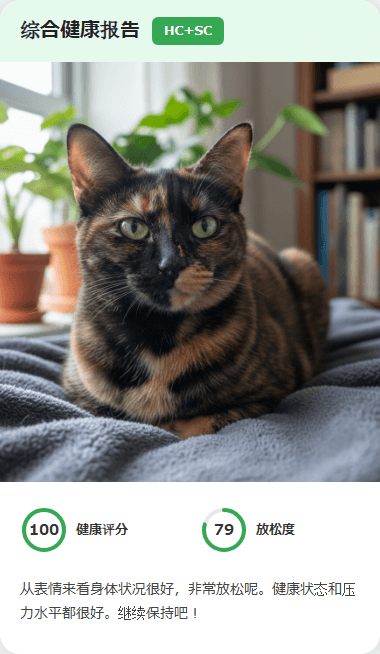
Record changes in your cat's expression with CatsMe
Recording the food, the amount and your cat's weight side by side makes it easier to check with your vet whether the diet suits your cat. CatsMe (by Carelogy Inc.) uses AI to check a photo of a cat's face for signs of pain in its expression. It does not diagnose disease, assess overall health or replace a veterinarian; if you are worried, contact your vet regardless of the result.
- Keep dated records of meals and weight to show your vet
- Records are kept per cat, so it works for multi-cat homes (iOS, Android and web, 14 languages)
- Developed with a background in university joint research; over 1 million checks run to date
Learn more about CatsMe →

兽医问「什么时候开始的?」你答得上来吗?
CatsMe 用 AI 检查猫咪面部照片,查看表情中是否有疼痛迹象,并为每只猫保存带日期的记录,方便与兽医一起查看。它不能诊断疾病。
栄養フード食事タウリンキャットフード猫の食事
FAQ
