

The Bottom Line: Early Detection Dramatically Improves Cancer Outcomes
Cats develop cancer just like people do. Cancer accounts for roughly 30% of deaths in cats over age 10. But early detection changes everything — many cancers caught in their initial stages can be cured with surgery, or at least managed to significantly extend your cat's life. The most effective screening tool is something you already have: your own hands. Regularly touching and feeling your cat's body for changes is the simplest and most powerful way to catch problems early.
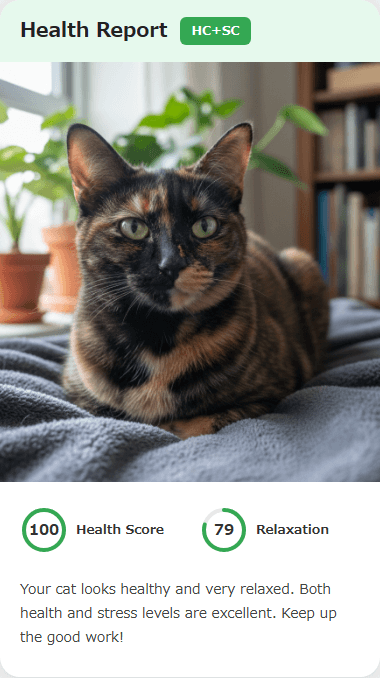

Worried about these symptoms?
Don't wait and wonder. CatsMe's AI analyzes your cat's photo to flag health concerns in seconds.
يستخدمه أكثر من 380,000 مالك قطط في 50 دولة


10 Early Warning Signs of Cancer in Cats
If you notice even one of these signs, a vet visit is warranted:
1. Lumps or swelling: Any palpable mass on or under the skin — especially one that is growing.
2. Unexplained weight loss: If your cat is losing weight despite eating, that is a red flag.
3. Persistent appetite loss: Poor appetite lasting more than a week.
4. Wounds that will not heal: Sores in the mouth or on the skin that linger.
5. Bleeding or foul odor from the mouth: Potential sign of oral squamous cell carcinoma.
6. Changes in urination or defecation: Blood in urine or stool, persistent diarrhea or constipation.
7. Unexplained bleeding or discharge: Nosebleeds or discharge from the genital area.
8. Chronic vomiting or diarrhea: Could indicate gastrointestinal lymphoma.
9. Lethargy or decreased activity: Noticeably less movement than before.
10. Difficulty breathing or coughing: May suggest a chest tumor or lung metastasis.
The Most Common Cancers in Cats
Lymphoma: The most common cancer in cats. It comes in several forms — gastrointestinal (chronic vomiting, diarrhea, weight loss), mediastinal (breathing difficulty), and multicentric (swollen lymph nodes). FeLV/FIV-positive cats face elevated risk.
Mammary tumors: Most frequent in unspayed females. About 85% of feline mammary tumors are malignant (compared to roughly 50% in dogs). Early spaying dramatically reduces lifetime risk.
Squamous cell carcinoma (SCC): Develops in the mouth or on the skin of the ears and nose. White cats and those with lightly pigmented ears are at higher risk due to sun exposure.
Fibrosarcoma: Known as feline injection-site sarcoma (FISS), these rare tumors can develop at previous vaccination sites.
How to Do a Monthly Self-Check at Home
Once a month, give your cat a full-body check while they are relaxed and comfortable.
Head and neck: Look inside the mouth (gum color, any lumps), check the inner ears, and feel the lymph nodes under the jaw.
Torso: Feel the armpits, run your hands along the belly checking all 6–8 nipples along the mammary chain, and check the back.
Hind legs and tail: Feel behind the knees for swollen lymph nodes, and check around the anal area.
Key things to note: Asymmetric lumps, any mass that grows over a 2-week period, and lumps that are hard or fixed in place are all cause for a vet visit.
The CatsMe app's health check feature is a handy way to log daily observations and spot gradual changes you might otherwise miss.
Diagnostic Tests for Cancer in Cats & Associated Costs
When cancer is suspected, a stepwise diagnostic approach is used to reach a definitive diagnosis.
Fine needle aspirate (FNA): A thin needle is inserted into the lump to collect cells for examination. Cost: $25 to $65 (¥3,000–8,000). No anesthesia is needed, making it a quick, first-line screening test for most masses.
Tissue biopsy: A portion or the entirety of the tumor is surgically removed and submitted for histopathology. Cost: $80 to $400 (¥10,000–50,000), plus surgery fees. General anesthesia is required, but it provides the most definitive diagnosis.
Blood work: A complete blood count and chemistry panel assess organ function and overall health status. Cost: $40 to $120 (¥5,000–15,000).
Imaging:
- Abdominal ultrasound: $40 to $80 (¥5,000–10,000) — detects tumors within the abdomen
- Chest X-rays: $25 to $65 (¥3,000–8,000) — checks for lung metastasis
- CT scan: $250 to $650 (¥30,000–80,000) — provides detailed information about tumor size, location, and spread
Typical initial workup total: $160 to $400 (¥20,000–50,000), with additional costs if a CT scan is needed.
The earlier diagnostic testing is performed, the more treatment options remain available — and the better the overall prognosis.
Treatment Options for Feline Cancer & What to Expect
Cancer treatment in cats has advanced significantly in recent years. The choice of therapy depends on the cancer type, stage, and the cat's overall health.
Surgery: The first-line treatment for solid tumors. Early-stage mammary tumors and skin masses can often be completely removed with surgery. Cost: $400 to $2,500 (¥50,000–300,000).
Chemotherapy: Particularly effective against lymphoma. A critical point that reassures many owners: chemotherapy in cats causes far fewer side effects than in humans. Cats rarely lose their fur, and most tolerate treatment well while maintaining a good quality of life. Monthly cost: $150 to $800 (¥20,000–100,000).
Radiation therapy: Useful for tumors that cannot be fully removed surgically, nasal tumors, and brain tumors. Cost: $1,500 to $4,000 (¥200,000–500,000). Available only at specialized facilities.
Immunotherapy: An emerging approach for certain cancers, currently available at a limited number of veterinary centers.
Palliative care: If aggressive treatment is not pursued, pain management and quality-of-life preservation are always the top priorities. Pain medication, nutritional support, and compassionate care to keep the cat comfortable for its remaining time is a completely valid and meaningful choice.
For help with treatment decisions, seeking a second opinion through Carelogy's online veterinary consultation can provide additional clarity and peace of mind.
Living with a Cat Diagnosed with Cancer: A Practical Guide
A cancer diagnosis is devastating news for any pet owner, but it is important to know that many cats continue to enjoy gentle, peaceful days throughout treatment.
Nutritional management:
- Feed high-protein, high-calorie meals to maintain strength and body condition
- If appetite drops, warm wet food slightly to enhance aroma
- For persistent appetite loss, ask your vet about appetite stimulants such as mirtazapine
- Supplements like omega-3 fatty acids may be beneficial but should only be used under veterinary guidance
Pain management:
- Cats instinctively hide pain. Decreased appetite, hiding behavior, and reduced grooming can all be subtle signs of discomfort.
- Appropriate use of pain medication can dramatically improve quality of life
- Never administer human painkillers to a cat — many are highly toxic to felines
Quality-of-life assessment:
- Can the cat still enjoy activities it loves?
- Is pain being effectively managed?
- Is the cat eating and drinking?
- Does the cat still seek out interaction with family?
- Do good days outnumber bad days?
End-of-life care: Facing the possibility that time may be limited is heartbreaking, but working with your veterinarian to make the most compassionate decisions for your cat is the ultimate act of love. The CatsMe app's health log provides objective data that can help guide these difficult conversations and ensure decisions are based on your cat's actual condition rather than fear alone.
هل تستطيع الإجابة عن سؤال "متى بدأ هذا؟"
عندما يسألك الطبيب البيطري، لا تبقَ بلا إجابة. CatsMe يسجّل تلقائيًا نقاط الصحة اليومية ويمكنك مشاركتها بلمسة واحدة.
がん腫瘍リンパ腫乳腺腫瘍猫の病気早期発見
FAQ
 CatsMe
كن مستعدًا للتصرف لحظة شعورك بأن شيئًا ليس على ما يرام
التقط صورة واحدة، ويقرأ الذكاء الاصطناعي علامات الألم والحالة الصحية من تعابير قطتك. تحقّق في اللحظة التي تقلق فيها، وشارك السجل مع طبيبك البيطري.