
Skip to content
News & Trends2026-04-22Carelogy編集部

Complete Cat Disaster Preparedness Guide 2026 — Evacuation Rules, Packing List & Carrier Training

Earthquake and typhoon preparedness for cat owners. Government evacuation rules, cat-specific emergency kit checklist, carrier training steps, and shelter life tips.

Cat care
Share:𝕏fLINE

"Evacuation With" vs "Shelter Together" — Not Knowing the Difference Can Separate You from Your Cat
Japan's Ministry of the Environment recommends evacuating with your pet as a principle, but this does NOT mean "you can live with your cat at the shelter." Two types of evacuation: | Term | Meaning | Reality | |---|---|---| | Accompanied evacuation | Travel to the shelter WITH your pet | Recommended by government. Many municipalities support this | | Co-habitation evacuation | Live in the SAME SPACE as your pet at the shelter | Very few shelters allow this | In practice: - You can bring your cat to the shelter (accompanied evacuation) - But after arrival, cats are typically kept in cages in a separate room - Some shelters may refuse pets entirely What to do now: 1. Check your nearest shelter's pet policy — Verify on your municipality's website or call directly 2. Prepare multiple evacuation options — Backup plan if your first choice doesn't accept pets 3. Consider car evacuation — Many pet owners choose to shelter in their vehicles 4. Bookmark pet-friendly shelter maps — Available from some municipalities Lesson from the 2011 earthquake: Owners who evacuated without pets often returned to retrieve them and suffered secondary disasters. This is WHY the government now recommends accompanied evacuation. Never leave your cat behind is the fundamental rule.
Würden Sie es merken, wenn etwas nicht stimmt?
CatsMe

Würden Sie es merken, wenn etwas nicht stimmt?

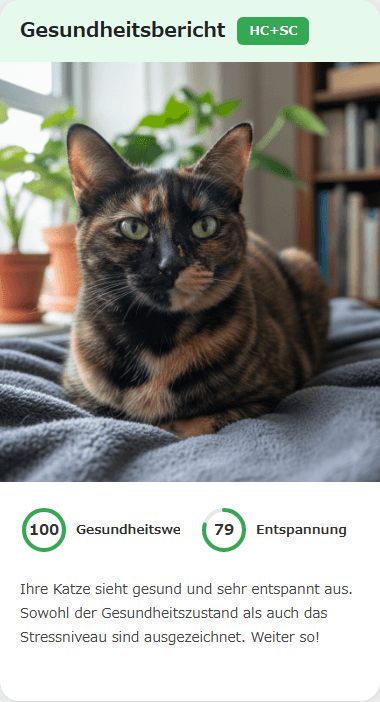
Katzen verbergen Schmerzen instinktiv. CatsMe prüft per KI ein Foto vom Gesicht Ihrer Katze auf Anzeichen von Schmerz im Ausdruck. Es stellt keine Diagnosen – wenn Sie sich Sorgen machen, wenden Sie sich an Ihre Tierarztpraxis.


Cat Emergency Kit: Packing Checklist

After a disaster, you need to survive at least 3 days until rescue arrives. Prepare at least 1 week's supply for your cat. [TOP PRIORITY] Grab immediately: - [ ] Carrier (hard-shell recommended, top-opening + side-opening 2-way) - [ ] Food (1 week): Dry + wet food (wet also provides hydration) - [ ] Water (1 week): 200-300ml/day × 7 days - [ ] Regular medication: Kidney disease or hyperthyroidism meds are life-critical - [ ] Toilet supplies: Portable toilet + litter (pre-portioned in ziplock bags) - [ ] Photo of cat (with owner in frame) — For identification if separated [IMPORTANT] If time permits: - [ ] Harness + leash (for times when you need to take cat out of carrier) - [ ] Laundry net bag (restraint during panic, useful at emergency vets) - [ ] Towel or clothing with owner's scent (stress reduction) - [ ] Microchip registration number - [ ] Regular vet's contact information - [ ] Copy of vaccination certificates - [ ] Duct tape (cage reinforcement, divider creation — multi-purpose) - [ ] Pet pee pads Storage tips: - Rotate food and water every 6 months (check expiration dates) - Keep carrier near the entrance at all times - Create a dedicated cat emergency bag rather than mixing with your own supplies

Carrier Training: Preventing Panic During Disasters

During disasters, the biggest bottleneck is getting your cat into the carrier. A panicked cat after an earthquake hides in dark places and becomes extremely difficult to catch. Daily carrier training protocol: Week 1: Familiarization - Leave the carrier out with the door open - Place your cat's favorite blanket inside - Place treats near → inside → at the back - Don't close the door. Build the association: "carrier = safe place" Week 2: Staying inside - Feed meals inside the carrier - Gently close the door while cat is inside → open after 5 seconds → treat - Gradually extend: 10 seconds → 30 seconds → 1 minute → 5 minutes Week 3: Movement - Walk around the house with the closed carrier (start with 30 seconds) - Short car rides (engine only → around the block) - Use the carrier for non-vet purposes Week 4+: Maintenance - Weekly treat time in the carrier - Monthly short drive - If stress signs appear, go back one step without forcing Pro tip: Laundry net bag If you can't get your cat into the carrier immediately after an earthquake, put them in a large laundry net bag first, then into the carrier. It safely restricts a panicked cat's movement and reduces scratching risk.

Record changes in your cat's expression with CatsMe

In an evacuation you need to be able to explain your cat's conditions and visit history quickly. CatsMe (by Carelogy Inc.) uses AI to check a photo of a cat's face for signs of pain in its expression. It does not diagnose disease, assess overall health or replace a veterinarian; if you are worried, contact your vet regardless of the result. - Keep dated records of vet visits and vaccinations and face photos and check results to show your vet - Records are kept per cat, so it works for multi-cat homes (iOS, Android and web, 14 languages) - Developed with a background in university joint research; over 1 million checks run to date Learn more about CatsMe →
CatsMe

Könnten Sie beantworten: ‚Seit wann geht es ihr so?'

CatsMe prüft per KI ein Foto vom Gesicht Ihrer Katze auf Anzeichen von Schmerz im Gesichtsausdruck und speichert datierte Aufzeichnungen pro Katze, die Sie mit Ihrer Tierarztpraxis besprechen können. Es stellt keine Diagnosen.

防災地震避難キャリーバッグ備蓄2026
Share:𝕏fLINE

FAQ

Seien Sie vorbereitet, wenn Ihnen etwas auffällt
CatsMeCatsMe

Seien Sie vorbereitet, wenn Ihnen etwas auffällt

Ein Foto genügt: CatsMe prüft per KI das Gesicht Ihrer Katze auf Anzeichen von Schmerz. Führen Sie datierte Aufzeichnungen pro Katze, die Sie mit Ihrer Tierarztpraxis besprechen können. Es stellt keine Diagnosen.