

Bottom Line: Use BCS to Assess Obesity — Avoid Crash Diets
Feline obesity is generally defined as a Body Condition Score (BCS) of 4 or 5 on a 5-point scale. If you cannot easily feel your cat's ribs through a layer of fat and the belly sags noticeably, your cat is likely overweight. Rapid calorie restriction in cats is dangerous because it can trigger hepatic lipidosis (fatty liver disease), a potentially fatal condition. The safe approach is a gradual weight loss of 1–2% of body weight per month, guided by your veterinarian.
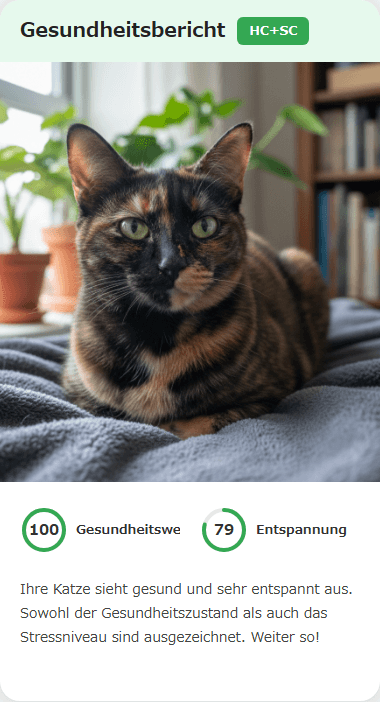

Probleme erkennen, bevor sie entstehen
Tägliches Gesundheits-Tracking ermöglicht Früherkennung. CatsMe protokolliert Veränderungen automatisch, damit Ihnen nichts entgeht.
Über 380.000 Katzenbesitzer in 50 Ländern vertrauen CatsMe


Common Causes of Feline Obesity
Diet issues: Overfeeding, calorie-dense food, or too many treats.
Lack of exercise: Indoor cats with limited activity and insufficient interactive play time.
Hormonal changes: Metabolism drops after spaying or neutering, making weight gain easier.
Aging: Senior cats move less and lose muscle mass, which shifts the calorie balance toward fat storage.
An estimated 30–40% of indoor cats in Japan are overweight or obese — a serious and growing health concern that mirrors global trends.
Health Risks Caused by Obesity
Obesity is a life-shortening condition with far-reaching consequences.
- Diabetes: Fat cells increase insulin resistance, dramatically raising diabetes risk.
- Arthritis: Excess weight puts stress on joints, causing pain and reduced mobility.
- Heart and liver disease: Internal organs work harder under the burden of extra fat.
- Urinary tract disease: Overweight cats tend to drink less, increasing the risk of cystitis and urinary stones.
- Higher anesthesia risk: Surgical procedures become significantly riskier compared to cats at a healthy weight.
Safe Weight-Loss Strategies
Dietary management
Start by reducing current portions by 10–15%. Switching to a low-calorie, high-protein weight-management formula is also effective. Split meals into 2–3 measured servings per day at consistent times.
Increase exercise
Aim for two play sessions of 10–15 minutes each per day. Use wand toys, laser pointers, and motorized toys to get your cat moving.
Set a target weight
A safe rate of loss is 0.5–1% of body weight per month. Never put a cat on a crash diet — the risk of hepatic lipidosis is real and serious.
Track Weight-Loss Progress with Online Veterinary Support
Not sure how many calories to cut? Worried that your cat has lost too much appetite since starting the diet? Carelogy's online veterinary service is available to answer your weight-management questions. A veterinarian will review your cat's weight, current diet, and lifestyle to create a personalized weight-loss plan — all from the convenience of your home.
Step-by-Step Guide to a Successful Cat Diet Program
Follow these concrete steps to implement a safe and effective weight-loss program for your cat.
STEP 1: Establish a baseline
Weigh your cat on a reliable scale and assign a Body Condition Score. Take photographs from above and from the side to document the starting body shape — these visual records are incredibly useful for tracking progress over the coming months.
STEP 2: Set a target weight
Consult your veterinarian to determine an ideal weight based on your cat's breed and frame size. While 3.5 to 5.5 kg is a common range for domestic cats, individual variation is significant and a vet's assessment is far more accurate than a generic chart.
STEP 3: Calculate calorie needs
Measure current food portions precisely and calculate total daily calorie intake. Reduce that figure by 10 to 15 percent as an initial target. A health checkup beforehand is important to rule out metabolic conditions like hypothyroidism or diabetes that could affect weight-loss response.
STEP 4: Transition the diet
Switch to a low-calorie, high-protein formula gradually over 1 to 2 weeks, mixing increasing proportions of the new food with the old. An abrupt change invites digestive upset — diarrhea, vomiting, or food refusal — which can derail the plan before it starts.
STEP 5: Monthly monitoring
Weigh your cat once a month and verify that weight loss is tracking at 1 to 2 percent of body weight per month. If the scale is not moving, reduce calories by an additional 5 percent or increase daily play sessions. If your cat is losing weight faster than 2 percent per month, increase portions slightly to avoid the risk of hepatic lipidosis.
Common Mistakes to Avoid When Dieting Your Cat
Diet failures follow predictable patterns. Knowing them in advance dramatically improves your chances of success.
Mistake 1: Cutting calories too aggressively
Slashing food intake by half overnight is extremely dangerous for cats. When the body is suddenly deprived of adequate calories, it mobilizes fat reserves too quickly, overwhelming the liver and causing hepatic lipidosis (fatty liver disease) — a potentially fatal condition. Always reduce portions gradually, no more than 10 to 15 percent at a time.
Mistake 2: Forgetting to count treat calories
Treats given during or between meals add up fast. If you are giving treats, subtract their calorie value from the main meal allowance. As a rule, treats should account for no more than 10 percent of total daily calories. Opt for low-calorie treats or break standard treats into smaller pieces.
Mistake 3: Inconsistency among household members
One family member secretly slipping extra food undermines the entire plan. Share the diet protocol with everyone in the household — post the daily portion amount on the refrigerator, use a measuring cup, and agree that no one gives additional food without the others knowing.
Mistake 4: Reducing food without increasing exercise
Calorie restriction alone causes the body to lose muscle mass along with fat, which lowers metabolic rate and makes future weight gain even easier. Combining dietary management with regular play sessions preserves lean muscle, keeps metabolism higher, and accelerates fat loss — it is the difference between a healthy body composition change and simply making a smaller but still flabby cat.
Seasonal Considerations for Feline Weight Management
A cat's weight naturally fluctuates with the seasons, and understanding these patterns helps you manage the diet plan year-round without overreacting or underreacting to changes on the scale.
Winter: This is the highest-risk season for weight gain. Cats move less, sleep more, and often eat with greater enthusiasm in cold weather. Indoor cats are especially vulnerable because they lack even the minimal exercise that outdoor exploration provides. Deliberately schedule extra play sessions to offset the seasonal activity drop.
Spring: Shedding season changes coat volume, which can make a cat look thinner even if body weight has not changed. Rely on Body Condition Score rather than visual impression alone. Spring is also a good time for a weigh-in and a dietary adjustment heading into the more active warm months.
Summer: Heat can suppress appetite, and some cats lose weight naturally during the hottest weeks. While this may seem like a bonus for a dieting cat, rapid or unexpected weight loss in summer could also signal heatstroke complications, dehydration, or an underlying illness. Continue regular health monitoring even when the scale is moving in the right direction.
Autumn: Many cats develop a stronger appetite in fall as an instinctive response to approaching winter. This is the ideal moment to reassess portion sizes and tighten dietary controls to prevent winter weight gain before it starts. Using the CatsMe app to log monthly weights makes seasonal trends clearly visible and helps you and your vet fine-tune the plan proactively.
Könnten Sie beantworten: ‚Seit wann geht es ihr so?'
Wenn der Tierarzt fragt, sollten Sie nicht raten müssen. CatsMe protokolliert automatisch tägliche Gesundheitswerte, die Sie mit einem Fingertipp teilen können.
猫の肥満ダイエット体重管理BCS健康体重
FAQ
 CatsMe
Seien Sie vorbereitet, wenn Ihnen etwas auffällt
Ein Foto genügt: Die KI liest Schmerz und Zustand am Gesichtsausdruck Ihrer Katze ab. Prüfen Sie im Moment der Sorge und teilen Sie die Aufzeichnung mit Ihrer Tierarztpraxis.