
News & Trends2026-05-03Carelogy編集部
2026 Feline Infectious Disease Guidelines: Updated FeLV Screening Ages & Vaccine Strategies
JCAS/AAFP 2026 guidelines reverse the long-standing 'one-time FeLV test for life' stance. Re-screening recommendations, updated core vaccine protocols, and realistic risk assessment for indoor-only cats explained.

Bottom Line: What Changed in the 2026 Guidelines (3-Line Summary)
1. The 'one FeLV test for life' rule is officially retired — re-screening is strongly recommended for multi-cat homes, escape history, and new introductions
2. 3 core vaccines (FPV, FHV-1, FCV) are now standardized at 3-year intervals, but the kitten primary series increases from 2 to 3 doses
3. Even indoor-only cats face nonzero rabies and FeLV risk — minimum readiness for disaster evacuation and accidental escapes is recommended
In April 2026, the American Association of Feline Practitioners (AAFP) and the Japan Clinical Veterinary Forum (JCAS) released the first major revision of feline infectious disease guidelines in 6 years. This article distills what cat owners should act on today, in 5 minutes.
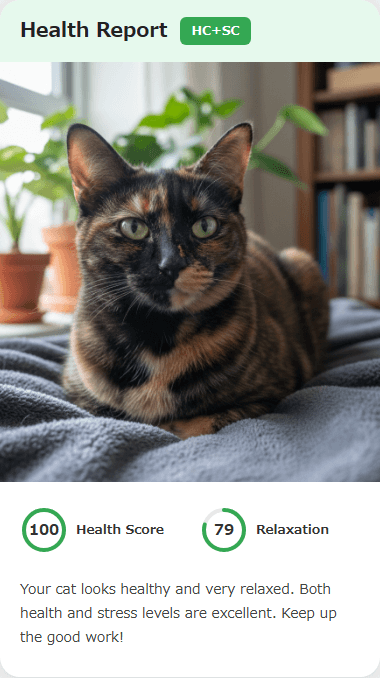

Wondering if this applies to your cat?
Just read the news? Check your own cat now with CatsMe — one photo, instant AI health score.
Used by 380,000+ cat owners in 50 countries


Why the 'One FeLV Test for Life' Rule Was Retired
The previous guidance was simple: test kittens for FeLV/FIV once, and if negative, never test again. Follow-up studies from 2020-2025 changed that picture:
New findings:
- 8.4% of self-reported 'indoor only' households had at least one escape event (US survey, N=12,400)
- Increased cases of latent FeLV in newly adopted cats (only detectable via PCR)
- Documented reactivation of latent virus during stress or immune suppression
New 2026 recommendations:
| Scenario | Recommended Test |
|---|---|
| Adopting a kitten | FeLV antigen + FIV antibody (mandatory) |
| Adding to multi-cat household | Test all cats (before introduction + 30 days after) |
| After confirmed escape | Re-test 60 days later |
| Onset of chronic disease | FeLV-PCR as differential diagnosis |
| Entering senior years (age 11) | Once, alongside health screening |
Cost: FeLV/FIV combination kits run ¥4,000-7,000 per test. Many clinics discount when bundled with health checkups.
Core Vaccines: Evidence for 3-Year Intervals and Exception Patterns
Core vaccines (recommended for all cats):
- Feline Panleukopenia Virus (FPV)
- Feline Herpesvirus 1 (FHV-1)
- Feline Calicivirus (FCV)
Confirmed in the 2026 update:
- Kitten primary series increases to 3 doses (8, 12, and 16 weeks of age)
- After the 1-year booster, revaccination every 3 years is sufficient (FPV antibody titers shown to persist long-term)
- Titer testing is now an accepted alternative to revaccination
Exceptions where annual vaccination is still advised:
1. Shelter or multi-cat facility cats
2. Cats with outdoor access
3. Cats regularly using boarding/grooming services
4. Immunocompromised cats (FIV+, on long-term steroids)
Non-core vaccines (case-by-case):
- FeLV vaccine: Outdoor access, cohabiting with FeLV+ cat, young shelter-origin cats
- Chlamydia / Bordetella: Only for group housing environments
- Rabies: Not legally required in Japan, but recommended if international travel or disaster shelter use is anticipated
Vaccine-Associated Sarcoma (VAS) precautions:
Injection site rotation is still recommended in 2026 — right hind leg (FeLV) / left hind leg (rabies) / right shoulder (FPV/FHV/FCV) — using distal limb sites so any mass can be more easily resected.
Realistic Risks Even for Indoor-Only Cats
"My cat is strictly indoors so infections don't apply." The 2026 update explicitly rejects this assumption.
Real-world infection routes:
- Virus exposure through windows or screen doors (FCV spreads via aerosols up to 5m)
- Viruses on owner's shoes and clothing (FPV survives outdoors for up to 1 year)
- Group exposure at disaster shelters
- Transmission in vet clinic waiting rooms from undiagnosed carriers
- New cat introductions (the largest single risk)
5 actions you can take today:
1. Maintain core vaccines on the 3-year schedule — don't lapse during adulthood thinking 'it's no longer needed'
2. Quarantine any new cat for 2 weeks plus FeLV/FIV testing before introduction
3. Re-test cats from hoarding rescues or shelters at the 60-day mark
4. Keep copies of vaccination certificates in your disaster go-bag
5. Keep cats inside their carrier in vet waiting rooms (drape with a towel to reduce stress)
Disaster shelter blind spot:
Since the 2024 Noto Peninsula earthquake, more shelters in Japan accept pets — but many require vaccination certificates for entry. Cats without proof are often segregated or refused. Snap a photo of the current vaccination record now while you have time.
5 Questions to Ask Your Vet at the Next Visit
Question template (copy-paste friendly):
1. "When was my cat's last FeLV/FIV test? Per the 2026 guidelines, does she need re-testing?"
2. "Can we switch core vaccinations to a 3-year interval? Is antibody titer testing an option here?"
3. "Considering disaster preparedness, are there additional vaccines I should consider?"
4. "Given my cat's current medications and conditions, are there vaccine reactions I should watch for?"
5. "Can we run an infectious disease screening alongside the next health checkup?"
If even one of these gets a vague answer, a second opinion may be worthwhile. The 2026 guidelines are public — whether your vet has incorporated them is a meaningful signal.
Carelogy's online consultation builds a per-household risk profile aligned with the 2026 guidelines. You'll have clarity on "what does my specific cat need" within 30 minutes.
Book a Carelogy online vet consultation →
Centralize Vaccine Records and Health Data with CatsMe
Infection prevention doesn't end at vaccination. Continuous tracking of dose dates, titer trends, and adverse reactions is what protects long-term health.
What CatsMe offers:
- Vaccine schedule management — reminder notifications for next due dates
- Vaccine certificate photo storage — instantly accessible during disasters
- Adverse reaction tracking — log appetite and energy the day after vaccination
- AI health score — visualize whole-body condition from a single photo, catch early infection signs
- Vet-ready PDF reports — share at the next appointment
Start protecting your cat with CatsMe → (3-day free trial)
Stay ahead of your cat’s health
CatsMe automatically logs daily health scores you can share with your vet in one tap — so you’re never left guessing.
FeLVワクチン感染症ガイドラインAAFPJCAS2026
FAQ
 CatsMe
Be ready the moment you sense something's off
Take one photo and the AI reads pain and condition from your cat's expression. Check the moment you wonder, and share the record with your vet.