
News & Trends2026-04-20Carelogy編集部
Complete Guide to Preventing Cat Heatstroke in Summer 2026 — AC Settings, Home Alone Tips & First Aid
Another scorching summer ahead. Cat heatstroke risk spikes above 32°C. Optimal AC settings, home-alone safety tips, and emergency first aid — vet-supervised guide.

Cat Heatstroke Starts in May: "It's Not That Hot Yet" Is the Most Dangerous Mindset
Peak hospital admissions for cat heatstroke occur in July-August, but cases actually start in May.
Why May is dangerous:
- Sudden temperature spikes catch cats before their bodies adjust to heat
- Owners think "it's too early for AC" and take no precautions
- Closed rooms can be 5-10°C hotter than outdoor temperatures
- Window sunbathing spots can reach 40°C+ locally
Why cats are especially vulnerable to heat:
- Sweat glands only on paw pads and nose tip (cannot cool through perspiration)
- Unlike dogs, cats are poor at panting to dissipate heat
- Fur acts as insulation, trapping body heat
- Long-haired breeds (Persian, Norwegian Forest, Ragdoll), flat-faced breeds (Exotic Shorthair), obese cats, and senior cats face even higher risk
Fatality data:
Emergency veterinary data shows that severe heatstroke (body temperature above 41°C/106°F) carries a fatality rate of approximately 50% in cats. Mild cases (39.5-40.5°C) recover with proper treatment, but prognosis worsens with every hour of delay.
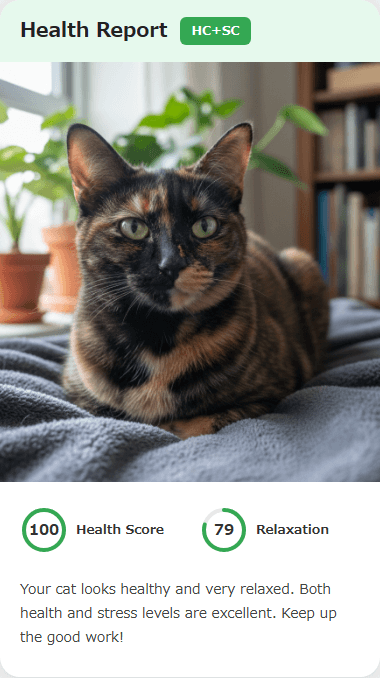

Wondering if this applies to your cat?
Just read the news? Check your own cat now with CatsMe — one photo, instant AI health score.
Used by 380,000+ cat owners in 50 countries


Optimal AC Settings and How to Create a Cat-Safe Cool Room
AC settings summary:
- Temperature: 26-28°C (79-82°F) — cats' comfort zone
- Humidity: 50-60% — dehumidify mode works well
- Airflow: upward or oscillating — direct wind bothers cats and risks overcooling
- Mode: mild cooling or dehumidify — avoid sudden temperature changes
"Leave it on" vs "turn on/off" debate:
Leave it on when your cat is home. The reasons are clear:
- Frequent on/off cycling actually costs more (high startup power consumption)
- Once room temperature rises, it takes time to cool back down
- Your cat is at risk during that gap
- Summer AC costs about ¥3,000-5,000/month (a trivial price compared to your cat's life)
Create an environment where cats can self-regulate:
Cats are excellent at finding their comfort spot. Provide both "cool" and "warm" options:
1. AC-cooled room — main living area
2. Access to a non-AC room — escape if too cold (keep doors slightly open)
3. Cooling mats — aluminum or marble types are most effective (¥1,000-3,000)
4. Multiple water stations — Water fountains encourage drinking through flowing water
5. Curtains on sunbathing spots — blackout curtains block direct sunlight
Warning: fans alone are NOT enough
Cats don't sweat, so fan airflow does not cool their body. Fans only circulate air — they cannot replace air conditioning.
Home-Alone Heatstroke Prevention Checklist
The most common heatstroke scenario is while owners are away. Review this checklist before leaving home.
Essential pre-departure checks:
- [ ] AC set to 26-28°C and ON
- [ ] Remote control secured where cat can't step on it (cats accidentally turning off AC is a real incident)
- [ ] At least 2 water stations (backup in case one gets knocked over)
- [ ] Blackout curtains closed
- [ ] Door stoppers installed so cat can't get trapped in a non-AC room
- [ ] Pet monitoring camera with temperature sensor active
Additional precautions for extended absence (8+ hours):
- Run a circulating water fountain
- Place cooling mats in accessible areas
- Leave dry food instead of wet food (prevents spoilage)
- Have someone check on the cat if possible
Power outage contingency (often overlooked):
- Summer storms and typhoons can knock out power, stopping the AC
- A household UPS (Uninterruptible Power Supply) costs ¥5,000-15,000
- Configure smart plugs to "auto-restart on power restore"
- Enable "temperature alert" on your pet monitoring camera
What if you don't have AC?
Bottom line: surviving summer without AC poses a life-threatening risk to your cat. If AC installation isn't possible, ensure access to the coolest room, and at minimum provide a dehumidifier + cooling mat + ample water. However, these are not substitutes for air conditioning.
Heatstroke First Aid: The Golden 30 Minutes
If you suspect heatstroke, start first aid while simultaneously calling the veterinary hospital. A 30-minute delay in treatment dramatically increases fatality risk.
Initial signs of heatstroke:
- Open-mouth panting (panting in cats is ALWAYS abnormal)
- Excessive drooling
- Severe lethargy, unresponsive
- Gums are bright red or pale white
- Body feels hot (especially ears and paw pads)
First aid steps (call the vet at the same time):
1. Move to a cool location — AC room or shade
2. Apply wet towels — Focus on neck, armpits, and inner thighs (major blood vessel areas)
3. Offer small amounts of room-temperature water — Don't force it; never give water to an unconscious cat
4. Do NOT use ice water — It constricts surface blood vessels and traps heat inside
5. Use a fan or cool hair dryer — Wind on wet fur creates evaporative cooling
What you must NEVER do:
- ❌ Submerge in ice water (causes shock)
- ❌ Give water to an unconscious cat (aspiration pneumonia risk)
- ❌ "Wait and see" (30 minutes can mean life or death)
- ❌ Assume recovery means no damage (organ damage manifests later)
Always visit the vet. Even if your cat appears to recover, serious kidney or liver damage may remain hidden. Acute kidney failure can develop within 72 hours of a heatstroke episode.
Use CatsMe to Visualize Room Conditions and Prevent Heatstroke
The scariest aspect of heatstroke is that it progresses without obvious early warnings. Use CatsMe to record daily data and make risk visible.
What CatsMe can do:
- Water intake tracking — Drinking less than usual is an early dehydration warning
- Activity monitoring — Check if heat is reducing your cat's activity
- Weight & appetite logging — Understand summer appetite patterns
- Symptom checker — Enter "lethargy" or "open-mouth breathing" for urgency assessment
Noticing when something is "different from normal" is your best weapon against heatstroke.
Start tracking your cat's health with CatsMe →
Stay ahead of your cat’s health
CatsMe automatically logs daily health scores you can share with your vet in one tap — so you’re never left guessing.
熱中症夏エアコン留守番応急処置2026
FAQ
 CatsMe
Be ready the moment you sense something's off
Take one photo and the AI reads pain and condition from your cat's expression. Check the moment you wonder, and share the record with your vet.