

Ideal Weight and Body Condition Score (BCS)
Body Condition Score (BCS) is a 1-to-9 scale used to evaluate your cat's body composition:
- BCS 1–3: Underweight (ribs and spine visibly prominent)
- BCS 4–5: Ideal weight (ribs easily felt but not visible; waist noticeable from above)
- BCS 6–7: Overweight (ribs hard to feel; waist poorly defined)
- BCS 8–9: Obese (ribs cannot be felt; belly hangs down)
The typical healthy weight for an adult cat is 3.5–5.5 kg (8–12 lbs), but this varies by frame size and breed. Large breeds like Maine Coons can be over 8 kg and perfectly healthy.
Feline obesity significantly increases the risk of diabetes, joint disease, and hepatic lipidosis (fatty liver disease).
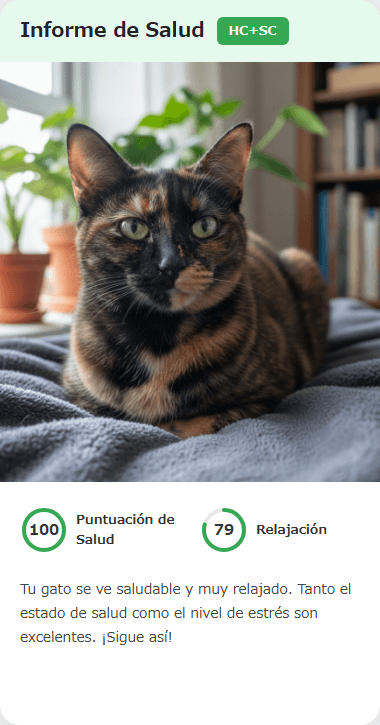

Detecta los problemas antes de que aparezcan
El seguimiento diario de salud hace posible la detección temprana. CatsMe registra los cambios automáticamente para que nada pase desapercibido.
Más de 380.000 dueños de gatos en 50 países confían en CatsMe


Creating a Safe Weight Loss Plan
Crash diets are dangerous: Rapid calorie restriction in cats can trigger hepatic lipidosis (fatty liver disease), which can be fatal. Stick to a safe rate of 1–2% of body weight per week.
Set a goal: Consult your vet to determine a target weight. Losing 1 kg for a 3–4 kg cat typically takes 3 to 6 months.
Food management:
- Reduce current calorie intake by 10–15%
- Switch to a weight-management formula (low calorie, high protein, high fiber)
- Keep treats to 10% or less of daily calories
- Measure portions with a scale or measuring cup — eyeballing leads to overfeeding
Refer to our food guide to maintain balanced nutrition during weight loss.
Multi-cat homes: Prevent food theft by feeding cats in separate locations. Our multi-cat guide has practical tips.
Boosting Calorie Burn Through Exercise
Indoor exercise plays an important supporting role in weight loss.
- Interactive play: 15 to 30 minutes daily with wand toys, laser pointers (always end with a physical toy to "catch"), or balls.
- Puzzle feeders: Make your cat work for their food, slowing intake and increasing both mental stimulation and physical activity.
- Cat trees: Climbing and jumping provide efficient calorie burning through vertical movement.
- Cat exercise wheels: An excellent option for high-energy cats.
Track progress: Weigh your cat monthly. Periodic blood work helps ensure organ health during the diet.
Once the target weight is reached, switch to a maintenance diet. Continue regular weigh-ins to prevent rebound weight gain.
Step-by-Step Cat Diet Plan
Execute a safe and effective cat diet by following this structured plan.
Step 1: Consult your veterinarian. Confirm the target weight and BCS. Run blood work to assess organ health before starting.
Step 2: Calculate current calorie intake. Check food packaging and calculate the exact daily calories you are providing.
Step 3: Reduce calories by 10–15%. Rapid restriction risks hepatic lipidosis. Decrease gradually.
Step 4: Measure portions precisely. Use a kitchen scale for accuracy. Scoops and estimates typically overfeed by 20–30%.
Step 5: Increase physical activity. Add 15–30 minutes of indoor exercise daily. Introduce puzzle feeders for mental stimulation.
Step 6: Monthly weigh-ins. Maintain a loss rate of 1–2% of body weight per week. If weight loss stalls for 3+ weeks, consult your vet to adjust the plan.
Common Cat Diet Mistakes
Avoid these errors that frequently derail cat diet plans.
Mistake 1: Crash dieting. Cutting calories by 50% or more can trigger hepatic lipidosis (fatty liver disease), which can be fatal.
Mistake 2: Forgetting treat calories. A single treat can contain 30+ calories — potentially 10–15% of a cat's daily needs.
Mistake 3: Poor food management in multi-cat homes. The dieting cat steals food from others. Feeding in separate, closed rooms is essential.
Mistake 4: Relying on exercise alone. Diet without calorie restriction is rarely sufficient for weight loss in cats. Diet accounts for 80% of results, exercise for 20%.
Mistake 5: Stopping monitoring after goal weight. To prevent rebound, continue measuring portions and weighing your cat regularly after reaching the target.
Expert Tips for Successful Cat Weight Management
Veterinary nutrition specialists recommend these strategies for successful long-term weight management.
Prescription weight management diets. Veterinary-prescribed low-calorie, high-fiber formulas provide better satiety and more effective weight loss than over-the-counter diet foods.
Increase meal frequency. Splitting the same daily amount into 4–5 smaller meals reduces hunger without increasing calories. Timed automatic feeders make this practical.
Prevent boredom eating with environmental enrichment. Many cats eat out of boredom. Toys, cat trees, window perches, and robust indoor exercise routines replace food-seeking behavior with healthy stimulation.
Track weight with an app. Recording monthly weights and visualizing the trend on a graph maintains motivation and catches plateaus early.
Stay motivated by understanding obesity's health risks. Feline obesity quadruples the risk of diabetes and shortens lifespan by 2–3 years. Weight management is the greatest health investment you can make for your cat.
When to Consult a Vet About Weight Issues
Consult your veterinarian about weight concerns in these situations.
BCS of 7 or higher. Diet plans for significantly obese cats should be supervised by a vet for both safety and effectiveness.
Rapid weight gain. Gaining more than 5% of body weight in a single month may indicate hypothyroidism or another endocrine disorder.
Lethargy during dieting. If your cat becomes lethargic while losing weight, caloric intake may be too low or hepatic lipidosis may be developing.
Weight loss stall lasting 3+ weeks. The diet plan needs reassessment to account for individual metabolic variation.
Unexplained weight loss. Losing weight without dieting is a red flag for kidney disease, hyperthyroidism, diabetes, or cancer.
¿Podrías responder "¿desde cuándo está así?"
Cuando tu veterinario pregunte, no te quedes sin respuesta. CatsMe registra automáticamente puntuaciones de salud diarias que puedes compartir con un solo toque.
ダイエット肥満体重管理BCS
FAQ
 CatsMe
Prepárate para actuar en cuanto sientas que algo no va bien
Basta una foto: la IA interpreta el dolor y el estado de salud a partir de la expresión de tu gato. Compruébalo en el momento en que te preocupes y comparte el registro con tu veterinario.