
Prevention2026-03-10Carelogy編集部
Cat Blood Test Results Explained: BUN, ALT, Kidney/Liver Values (Vet 2026)
How to read your cat's blood test results: CBC, biochemistry panel explained. BUN/creatinine = kidney function, ALT/AST = liver, glucose = diabetes. What each abnormal value really means, with vet-supervised explanations.

Understanding Blood Work Empowers You to Protect Your Cat's Health
If you've ever stared at a blood test report full of numbers and abbreviations and felt completely lost, you're not alone. Learning what the key values mean gives you a deeper understanding of your cat's health and makes conversations with your vet far more productive.
Routine blood work as part of a regular health checkup is one of the most powerful tools for catching diseases early — often before symptoms appear.
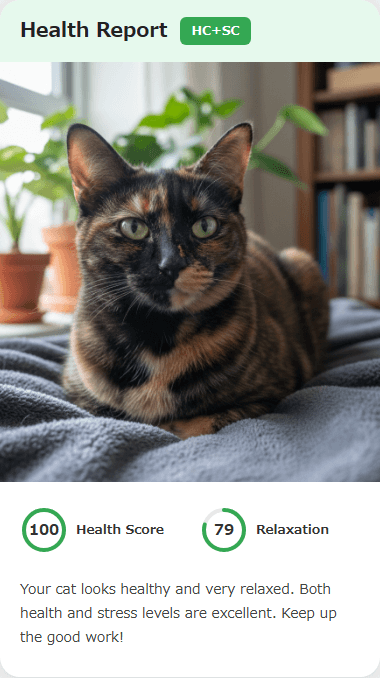

Catch problems before they start
Daily health tracking makes early detection possible. CatsMe logs changes automatically so small shifts don't slip past you.
50 देशों में 380,000 से अधिक बिल्ली मालिक CatsMe पर भरोसा करते हैं


Kidney Markers
BUN (Blood Urea Nitrogen): Normal range 16–36 mg/dL
- High → Kidney disease, dehydration, or high-protein diet
- Low → Liver disease or low-protein diet
Creatinine (Cre): Normal range 0.8–2.4 mg/dL
- High → Declining kidney function (more kidney-specific than BUN)
- Note: Influenced by muscle mass, so thin cats may show falsely low readings
SDMA: Normal range 0–14 mcg/dL
- High → Rises when kidney function drops by just 25%, detecting disease earlier than creatinine
- A newer marker that isn't affected by muscle mass
Phosphorus: Normal range 3.1–6.8 mg/dL
- Increases as kidney disease progresses. Dietary phosphorus restriction is a cornerstone of treatment
Liver & Pancreas Markers
ALT (GPT): Normal range 12–130 U/L
- High → Liver cell damage (hepatic lipidosis, toxicity, infection)
AST (GOT): Normal range 0–48 U/L
- High → Liver or muscle damage (evaluate alongside ALT for context)
ALP: Normal range 14–111 U/L
- Elevated ALP in cats is more clinically significant than in dogs. It suggests biliary tract disease or hepatic lipidosis
Bilirubin (T-Bil): Normal range 0–0.9 mg/dL
- High → Indicates jaundice. Possible causes include liver disease, bile duct obstruction, or hemolytic anemia
fPLI / Spec fPL: A specific marker for pancreatitis. Used in the diagnosis of feline pancreatitis
Blood Cell Counts & Other Key Values
CBC (Complete Blood Count):
- Red blood cells / Hematocrit (Ht/PCV): Low = anemia. High = dehydration
- White blood cell count (WBC): High = infection or inflammation. Low = viral infection or bone marrow suppression
- Platelets: Low = bleeding risk. Also a marker for DIC (disseminated intravascular coagulation)
Other important values:
- Blood glucose: Normal 74–159 mg/dL. High = possible diabetes (but stress can temporarily spike glucose in cats, so fructosamine should be checked alongside for confirmation)
- T4 (Thyroxine): Screens for hyperthyroidism. Recommended for cats age 10 and older
- Electrolytes (Na/K/Cl): Help evaluate dehydration, kidney failure, and adrenal disease
If you're unsure about your cat's results, Carelogy's online consultation lets you discuss the numbers directly with a veterinarian.
Common Misconceptions About Cat Blood Tests
Here are common misunderstandings about blood test interpretation that every cat owner should be aware of.
"If it's within the reference range, everything is fine": Reference ranges represent the broad normal population. Your cat's individual baseline may sit at one end of that range, and a shift toward the other end — while still technically 'normal' — could signal an emerging problem. This is why annual testing to track trends is so valuable. A BUN of 35 is "within range" but highly concerning if your cat's previous five readings were all around 20.
"One abnormal result means my cat is sick": Stress-induced blood glucose elevation is extremely common in cats — a nervous cat at the vet can easily produce a reading that looks diabetic. A single abnormal value cannot diagnose a condition. Confirmatory testing (like fructosamine for diabetes or repeat values after fasting) is always necessary before drawing conclusions.
"Young cats don't need blood work": Genetic conditions, FeLV, FIV, and other diseases can appear at any age. A baseline blood panel at age 1 establishes your individual cat's normal values, making future deviations immediately recognizable. Without that baseline, your vet is interpreting every future test in a vacuum.
"Blood tests are too expensive": A standard panel costs roughly $35 to $100. Compare that to the cost of treating advanced kidney disease, diabetes, or hyperthyroidism — which can run thousands of dollars per year. Early detection through routine blood work is overwhelmingly more cost-effective than managing diseases discovered late.
Practical Tips & How-To: Reading Your Cat's Blood Work
Here is a practical guide to understanding the blood test report your veterinarian hands you.
How to read the report: A standard report lists the test name, your cat's value, the reference range, and a flag for abnormal results. Items outside the reference range are typically marked with H (high) or L (low). Don't panic at the sight of a flag — some deviations are clinically insignificant, while others demand immediate attention. Context matters enormously.
The power of comparison: The single most valuable thing you can do with blood work is compare it to previous results. A creatinine of 2.0 means very different things depending on whether your cat's previous reading was 1.8 (mild, expected change) or 1.2 (significant jump warranting investigation). Save every blood test report and bring them to each visit.
Questions to ask your veterinarian:
- "Which flagged values are clinically significant versus likely normal variation?"
- "How do these results compare to last time — are there any concerning trends?"
- "Are any follow-up tests needed based on what we're seeing?"
- "What should I monitor at home before the next blood panel?"
Incorporating blood work into regular health checkups creates a longitudinal health record that becomes your single most powerful tool for early disease detection over your cat's lifetime.
CatsMe Health Tracking for Blood Test Management
Centralize your cat's blood work history in CatsMe to unlock the full value of longitudinal health tracking.
Digital record keeping: Paper lab reports are easy to lose, especially over the years. Photograph each report and save it in CatsMe, or manually enter key values. Having five or ten years of blood work in one searchable location transforms how you and your vet approach preventive care.
Trend visualization: When you log numerical values in CatsMe over time, you can spot gradual directional changes even within the normal reference range — the kind of slow drift that signals early-stage disease months before values cross the abnormal threshold. This is particularly powerful for kidney markers like BUN, creatinine, and SDMA, where catching the trend early opens treatment windows that close once clinical disease is established.
Seamless vet sharing: When you switch veterinarians, visit a specialist, or arrive at an emergency clinic, showing your CatsMe records provides instant access to your cat's complete testing history. This eliminates redundant testing, saves money, and enables more accurate diagnoses based on the full picture rather than a single data point.
Testing schedule reminders: Set age-appropriate blood work reminders in CatsMe — annually for cats 1 to 6 years old, twice yearly for cats 7 and older. Consistent testing is the foundation of early detection, and automated reminders ensure you never accidentally miss a scheduled panel.
क्या आप जवाब दे पाएंगे — "यह कब से हो रहा है?"
जब पशु चिकित्सक पूछे, तो बिना जवाब न रहें। CatsMe रोज़ाना स्वास्थ्य स्कोर अपने आप रिकॉर्ड करता है जिसे एक टैप से शेयर किया जा सकता है।
血液検査健康診断BUNクレアチニン猫の病気
FAQ
 CatsMe
जिस पल कुछ गलत लगे, उसी पल तैयार रहें
बस एक फ़ोटो लें — AI आपकी बिल्ली के हावभाव से दर्द और सेहत का आकलन करता है। जब भी चिंता हो तभी जाँचें, और रिकॉर्ड अपने पशु-चिकित्सक के साथ साझा करें।