

The Bottom Line: Mixed Breed Cats Are Genetically Tough, but Preventive Care Determines Lifespan
Mixed breed cats (moggies) benefit from a broad genetic pool, which means they face fewer breed-specific hereditary diseases — a phenomenon known as hybrid vigor. But a sturdy genetic foundation alone does not guarantee a long life. Vaccinations, dental care, routine checkups, and proper nutrition are still the deciding factors in whether your mixed breed cat lives to 15 or well past 20.
For average lifespan across all cats, how many years the indoor vs outdoor gap is worth, and what actually extends it, see how long cats live and how to extend it.

Your cat's daily companion
From grooming reminders to weight trends, CatsMe keeps your cat's care routine on track — all in one app.
Dipercaya oleh lebih dari 380.000 pemilik kucing di 50 negara


Preventive Medicine: Vaccines and Parasite Control
Even indoor-only mixed breed cats need a consistent preventive care routine.
Vaccinations: The core FVRCP vaccine (feline herpesvirus, calicivirus, panleukopenia) should be given every one to three years. Cats with any outdoor access should also receive the feline leukemia virus (FeLV) vaccine. Parasite prevention: Indoor cats are not immune — fleas can hitch a ride on your clothes, and mosquitoes carrying heartworm can enter through windows. Monthly flea, tick, and deworming prevention is recommended. Spaying/neutering: Dramatically reduces the risk of reproductive cancers, heat-related behavioral issues, and roaming.
Dental Care and Oral Health
Dental disease is one of the most common chronic conditions in cats. Over 70% of cats aged 3 and older have some form of dental disease.
Home care: Daily brushing with cat-safe toothpaste is ideal, but even two to three times a week makes a real difference. Dental treats and sprays: Useful alternatives when brushing is not feasible. Professional cleanings: An annual oral exam, with scaling under general anesthesia as needed, keeps teeth and gums healthy.
Advanced periodontal disease allows bacteria to enter the bloodstream, potentially damaging the heart, kidneys, and liver — so dental health truly is whole-body health.
Diet and Weight: The Biggest Factor in Longevity
Maintaining a healthy weight is directly linked to lifespan. Obese cats live an estimated 2–4 years less than cats at a normal weight.
Choosing food: Select formulas where animal protein is the primary ingredient, with low carbohydrates and appropriate calorie density. Portion control: Free-feeding (leaving food out all day) is the number-one cause of feline obesity. Always measure meals. Hydration: Offer wet food or keep fresh water available at all times to protect against urinary tract disease. Senior transition (age 7+): Begin a gradual switch to a senior-formulated diet to support aging kidneys and joints.
Age-Related Changes to Watch in Mixed Breed Cats
Mixed breed cats are genetically resilient, but they face the same age-related diseases that affect all domestic cats. Knowing what to watch for is the key to catching problems early.
Chronic kidney disease (CKD): Affects roughly 30% of cats over 15. Increased thirst and urination plus weight loss are the earliest clues. Hyperthyroidism: Seen in 10–15% of cats over 10. A ravenous appetite paired with weight loss and nighttime yowling is the classic presentation. Diabetes: Especially common in overweight cats, presenting with excessive thirst, frequent urination, and weight loss. Cancer: The risk of lymphoma, mammary tumors, and squamous cell carcinoma rises with age. Any new lump or bump deserves prompt veterinary evaluation. Cognitive dysfunction syndrome (CDS): In cats over 15, increased nighttime vocalization, disorientation, and litter box accidents may point to feline dementia.
It is easy to assume that a mixed breed's hybrid vigor makes them invincible, but from age 10 onward, semi-annual bloodwork screening for these conditions is the single most effective longevity strategy available.
Quality of Life Assessment for Mixed Breed Cats
Because mixed breed cats vary so widely, the foundation of quality-of-life assessment is knowing what "normal" looks like for your individual cat.
Start recording these baselines while your cat is young and healthy, so you have a clear reference point as aging progresses: (1) Activity patterns: When during the day is the cat most active, and when does it rest? (2) Food intake and preferences: How much does the cat eat, which foods does it prefer, and how does it eat? (3) Elimination patterns: Typical urination frequency and stool consistency. (4) Social behavior: How does the cat interact with family members and other animals? (5) Grooming: How often and how thoroughly does the cat groom itself?
With this baseline documented, a vague concern like "something seems off" becomes a specific observation — "active time has dropped from three hours to ninety minutes per day" — which gives your vet a far clearer picture. From the senior years (age 7+) onward, make a brief monthly QoL check a habit. Consistency is what makes the data useful: a single snapshot tells you little, but a trend line across months reveals even the most gradual decline in time to act.
Age-Based Nutrition Guide for Mixed Breed Cats
Since there are no breed-specific dietary guidelines for mixed breed cats, age-stage nutrition becomes the most important framework for feeding decisions.
Adult (ages 1–6): A complete and balanced diet built on animal protein with appropriate calorie density. Prevent obesity by measuring every meal. Mature (ages 7–10): Reduce calories by 5–10% and consider transitioning to a phosphorus-restricted formula to protect the kidneys. Foods enriched with antioxidants (vitamins E and C) support healthy aging. Senior (ages 11–14): The three pillars are highly digestible protein, phosphorus restriction, and ample hydration. Complete the switch to a senior-formulated food. Geriatric (age 15+): Appetite often declines, so offer highly palatable wet food in small, frequent meals. Increase calorie density so that even modest food intake delivers adequate nutrition.
At every age, hydration is the top priority. A predominantly wet diet, a pet water fountain, and multiple water stations throughout the home are the simplest and most effective defenses against urinary tract disease, kidney stress, and constipation. Nutrition is the one aspect of your cat's health that you control entirely — make it count.
Get Age-Specific Care for Your Mixed Breed With Carelogy's Online Consultations
Mixed breed cats vary enormously from one individual to the next, and there are few breed-specific guidelines to follow — making personalized health evaluations especially valuable. Carelogy's online vet consultations offer tailored health advice based on your cat's age, weight, and lifestyle.
Questions like "When should I start senior care?" or "My cat seems heavier — is the food amount right?" can be answered by a vet after you share a few photos and your cat's weight history.
Bisakah Anda menjawab "sejak kapan ini terjadi?"
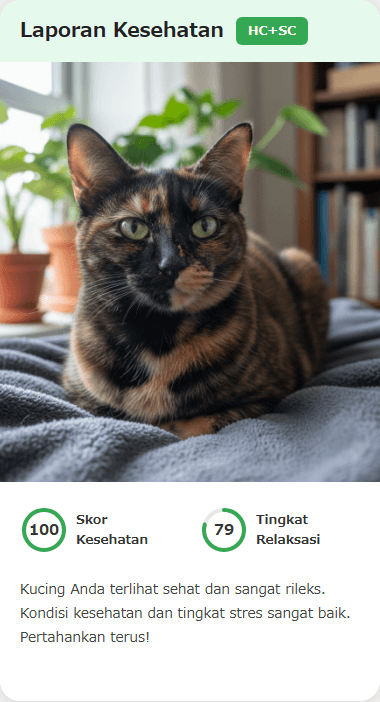
Saat dokter hewan bertanya, jangan sampai Anda bingung. CatsMe mencatat skor kesehatan harian secara otomatis yang bisa dibagikan hanya dengan satu ketukan.
雑種猫猫種別ミックス長寿予防医療
FAQ
 CatsMe
Siap bertindak saat Anda merasa ada yang tidak beres
Cukup satu foto: AI membaca rasa sakit dan kondisi kesehatan dari ekspresi kucing Anda. Periksa saat Anda mulai khawatir, dan bagikan catatannya ke dokter hewan.