

The Bottom Line: Blood in Urine + Straining in a Male Cat Is an Emergency
Finding blood in your cat's urine is always alarming — and it should be. Hematuria (blood in urine) signals a problem somewhere in the urinary tract: the kidneys, ureters, bladder, or urethra. The most critical scenario is a male cat straining to urinate but producing little or no urine. This points to urinary obstruction — a blockage that prevents urine from leaving the body — and it is a life-threatening emergency that can cause kidney failure and death within 24–48 hours without treatment.
Even when urine is still flowing, blood should prompt a same-day veterinary consultation. In female cats and non-blocked males, the most common causes are cystitis (bladder inflammation) and urinary stones, both of which are treatable but can worsen if ignored. Cats are particularly prone to urinary problems: feline lower urinary tract disease (FLUTD) affects an estimated 1–3 % of all cats each year, and recurrence rates are high. Stress-induced idiopathic cystitis — where no bacteria or stones are found — accounts for roughly 60 % of cases in younger cats, making environmental management just as important as medical treatment.
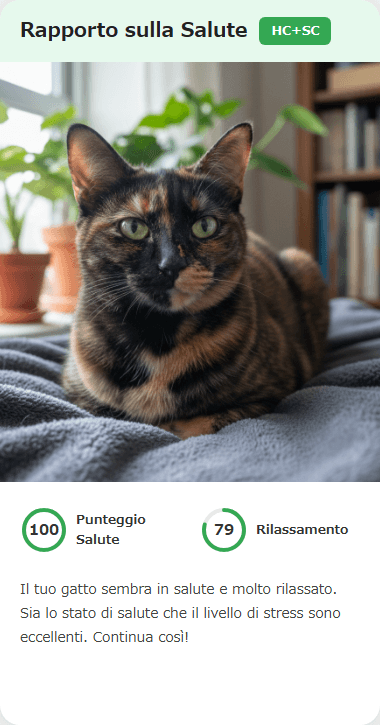

Questi sintomi ti preoccupano?
Non restare nel dubbio. L'IA di CatsMe analizza la foto del tuo gatto e rileva segnali di allarme in pochi secondi.
Oltre 380.000 proprietari di gatti in 50 paesi si affidano a CatsMe


Common Causes of Blood in a Cat's Urine
Understanding the cause is the first step toward the right treatment. Here are the most common reasons cats develop bloody urine.
Cystitis (bladder inflammation). The single most frequent cause. In cats under 10, "feline idiopathic cystitis" (FIC) — inflammation driven by stress rather than bacteria — dominates. In senior cats, bacterial urinary tract infections become more common, especially in females.
Urinary stones (urolithiasis). Struvite and calcium oxalate crystals can form in the bladder or kidneys, irritating the urinary lining and causing bleeding. Diet, genetics, and hydration status all play a role.
Urinary obstruction. Primarily a male-cat emergency because the male urethra is narrower and longer. Stones, mucus plugs, or inflammatory debris block urine flow, causing excruciating pain and rapid toxin buildup.
Kidney disease. Inflammation, infection, or tumors in the kidneys can cause blood to enter the urine.
Trauma. Falls from height or impact injuries can damage the bladder, kidneys, or urethra. If your cat has had a recent accident and shows bloody urine, seek immediate care.
Home Observation Checklist
When you notice blood in the litter box, take a few minutes to gather information that will help your vet move quickly.
1. Litter-box frequency. Is your cat visiting the box more often than usual? Are the urine clumps small and numerous? Frequent urination with small volumes is a hallmark of cystitis and stones.
2. Straining behavior. Watch your cat in the litter box. If it crouches for a long time, pushes hard, or vocalizes while urinating, there may be a partial or complete blockage.
3. Urine color. Note the exact shade — pink-tinged, frankly red, or brown. Photograph the litter clumps or any urine on light-colored surfaces. This visual information is invaluable for the vet.
4. Urinating outside the box. Cats with bladder pain often associate the litter box with discomfort and start urinating on cool surfaces (bathtubs, tile floors, sinks). This is a medical symptom, not a behavior problem.
5. Energy and appetite. A cat with mild cystitis may eat and play normally. A cat that is lethargic, vomiting, or refusing food alongside bloody urine is in more serious trouble.
Record all observations and share them during your Carelogy online consultation — the more detail you provide, the faster the vet can triage the case.
Emergency Warning Signs: When Every Minute Counts
Some situations involving bloody urine are true emergencies. Do not wait — seek immediate veterinary care if you observe any of the following:
- Your cat (especially a male) assumes the urination posture but produces little or no urine. This is the classic sign of urinary obstruction. The cat may cry, lick its genitals obsessively, and visit the litter box repeatedly without result.
- Vomiting or lethargy alongside the blood. These signs suggest toxin buildup from urine that cannot exit the body, indicating the kidneys are under acute stress.
- No urination for 24 hours. Even if you have not observed straining, an empty litter box in a 24-hour period is cause for urgent concern.
- A hard, painful abdomen. A distended bladder that cannot empty feels firm and causes significant pain when touched.
Urinary obstruction can lead to acute kidney failure, dangerously high potassium levels (which can stop the heart), and bladder rupture if left untreated. Time is measured in hours, not days. If you suspect a blockage, head to the nearest emergency animal hospital immediately — even at 3 a.m. A Carelogy online consultation can help you triage the situation if you are unsure, but err on the side of caution: when in doubt, go.
What the Vet Will Do: Tests, Diagnosis & Costs
Here is what to expect when you bring your cat to the vet for blood in the urine.
Urinalysis (¥2,000–¥5,000 / $15–$40). The cornerstone test. A urine sample is examined for red blood cells, white blood cells, bacteria, and crystals (struvite or calcium oxalate). Urine concentration (specific gravity) is also measured to assess kidney function.
Blood work (¥5,000–¥15,000 / $40–$120). A biochemistry panel checks kidney values (BUN, creatinine, SDMA), potassium levels (critically important in obstructed cats), and overall organ health.
Imaging — X-rays and ultrasound (¥5,000–¥15,000 / $40–$120). Radiographs detect radiopaque stones (calcium oxalate shows up clearly). Ultrasound reveals bladder wall thickening, non-radiopaque stones, sludge, and kidney abnormalities.
Urine culture (¥5,000–¥10,000 / $40–$80). If bacterial infection is suspected — especially in senior or diabetic cats — a culture identifies the specific bacterium and the antibiotics it responds to.
Obstruction treatment. If a blockage is confirmed, the vet will sedate the cat, pass a urinary catheter to relieve the obstruction, and hospitalize for IV fluids and monitoring. Cost: ¥30,000–¥100,000 depending on severity and length of stay. In rare cases, surgery (perineal urethrostomy) is needed for recurrent obstruction.
Budget ¥10,000–¥30,000 for the initial non-emergency workup. Obstruction cases requiring hospitalization typically run ¥50,000–¥100,000.
Age-Specific Considerations: Young Cats vs. Seniors
Age is one of the first factors vets consider when evaluating blood in a cat's urine, because the most likely cause differs significantly between life stages.
Young cats (1–6 years)
Feline idiopathic cystitis (FIC) — stress-related bladder inflammation with no bacterial cause — is by far the most common diagnosis. Struvite crystals are also more prevalent in younger cats. Management centers on stress reduction (environmental enrichment, pheromone therapy, multi-cat conflict resolution) and increasing water intake.
Middle-aged and senior cats (7+ years)
Bacterial urinary tract infections become more common, especially in female cats and those with underlying conditions like diabetes or chronic kidney disease. Calcium oxalate stones are more prevalent than struvite in this age group. Bladder tumors (transitional cell carcinoma) should also be considered in older cats with chronic hematuria unresponsive to treatment.
Understanding these age-related patterns helps both you and your vet prioritize the right tests and avoid unnecessary delay in reaching the correct diagnosis.
Prevention & Long-Term Management
Urinary problems in cats have notoriously high recurrence rates — up to 50 % of cats with idiopathic cystitis will have another episode within a year. Prevention is therefore just as important as treatment.
Maximize water intake
- Install a pet water fountain. Many cats instinctively prefer running water and will drink significantly more from a fountain than a still bowl.
- Make wet food the primary diet. Canned food is 75–80 % water, which naturally dilutes the urine and reduces crystal formation.
- Place multiple water stations around the house to make drinking convenient.
Stress management (critical for idiopathic cystitis)
- Use Feliway pheromone diffusers in key areas. These synthetic feline facial pheromones have been shown to reduce FIC recurrence.
- Provide one litter box per cat plus one extra, and scoop daily. A dirty or hard-to-access box is a major stress trigger.
- Ensure every cat has a safe, quiet retreat — vertical space (cat trees) is especially valuable in multi-cat homes.
- Separate food, water, and litter stations in multi-cat households to reduce territorial tension.
Dietary management
- Veterinary urinary-health diets (Hill's c/d, Royal Canin Urinary S/O) are formulated to dissolve struvite crystals and create an unfavorable environment for stone formation.
- Follow your vet's recommendations for periodic urinalysis to catch crystal recurrence before symptoms appear.
Any cat that has experienced a urinary episode deserves ongoing preventive care. The investment in diet, hydration, and stress reduction is far less than the cost — financial and emotional — of repeated emergency visits.
Sapresti rispondere "da quando sta così?"
Quando il veterinario chiede, non restare senza risposta. CatsMe registra automaticamente i punteggi di salute giornalieri che puoi condividere con un tocco.
血尿膀胱炎尿路結石猫の病気
Related Symptoms
FAQ
 CatsMe
Sii pronto ad agire nel momento in cui senti che qualcosa non va
Basta una foto: l'IA legge dolore e condizioni di salute dall'espressione del tuo gatto. Controlla nel momento in cui ti preoccupi e condividi il diario con il veterinario.