

Bottom Line: Take At Least 2–4 Weeks for a Gradual, Staged Introduction
Cats are territorial by nature, and placing a stranger cat into a resident cat's space without warning can spark serious conflict. Introducing a new cat requires a phased approach over at least 2 to 4 weeks. Start by swapping scents only, then progress to visual contact, and finally allow supervised face-to-face time. This gradual process minimizes stress for the resident cat and sets the stage for a peaceful relationship.
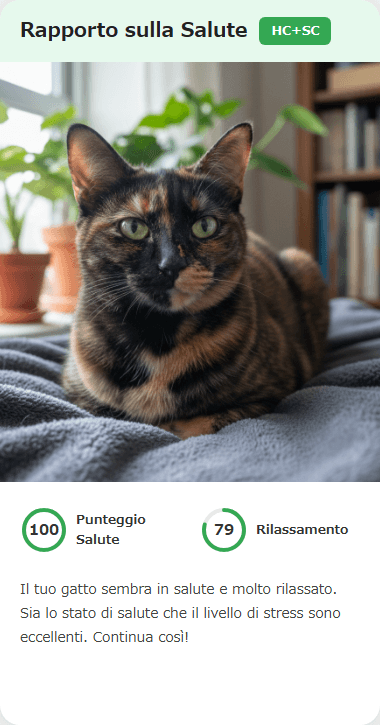

Il compagno quotidiano del tuo gatto
Promemoria per la cura, andamento del peso e routine di salute: CatsMe gestisce tutto in un'unica app.
Oltre 380.000 proprietari di gatti in 50 paesi si affidano a CatsMe


Step-by-Step Introduction Process
Phase 1 (Week 1): Scent swapping
Keep the new cat isolated in a separate room. Exchange towels or blankets between the two cats so each becomes familiar with the other's scent. Place food bowls near the closed door on either side so both cats learn to associate the other's smell with something positive.
Phase 2 (Week 2): Visual contact through a barrier
Install a mesh or baby gate in the doorway so the cats can see each other without physical contact. Offer treats during these sessions to reinforce "other cat = good things happen."
Phase 3 (Weeks 3–4): Supervised time in the same room
Allow both cats into a larger space for a few minutes at a time, ensuring escape routes are available. Gradually extend the duration as long as both cats remain calm.
Setting Up the Environment for Multiple Cats
The key to a harmonious multi-cat household is distributing resources so no cat has to compete.
- Litter boxes: One per cat plus one extra, in separate locations.
- Feeding stations: Feed each cat in a different spot to prevent food guarding.
- Water bowls: Place in multiple areas around the home.
- Elevated perches (cat trees): Provide separate resting and escape spots for each cat.
- Hiding places: Boxes, tents, or high shelves — one private retreat per cat.
Even in a small apartment, you can carve out individual territory by using vertical space — shelves, wall-mounted perches, and tall cat trees — to multiply usable area.
Signs of a Poor Match and How to Address Them
If the following signs persist, the compatibility issue may be serious.
Warning signs
- One cat is constantly being chased or hides and refuses to come out.
- A cat is unable to access food or the litter box.
- Fights intense enough to cause injuries.
- Stress indicators such as inappropriate elimination or over-grooming.
What to do: Try Feliway (synthetic feline pheromone diffuser) to calm the environment. Create positive shared experiences around mealtimes and play. If aggression continues, consult a veterinarian or a certified animal behaviorist — professional guidance can make the difference between a household that works and one that does not.
Health Management in Multi-Cat Households
Living with multiple cats comes with extra health-management responsibilities.
- Viral screening: Always test a new cat for FIV/FeLV before introducing it to the household.
- Individual monitoring: In a group, subtle changes in one cat can go unnoticed. Track each cat's appetite, weight, and litter box habits separately.
- Flea and parasite prevention: If one cat gets parasites, they spread to all. Keep every cat on a regular preventive schedule.
- Fight-related injuries: Bite wounds are infection-prone — inspect each cat regularly and treat any wounds promptly.
Common Mistakes to Avoid in Multi-Cat Households
Most multi-cat household problems stem from insufficient environmental planning. Understanding these common errors prevents conflict before it starts.
Mistake 1: Putting cats together immediately
This is the single most common and damaging mistake. Without at least 1 to 2 weeks of scent-swapping before any visual or physical contact, territorial aggression can escalate quickly and become entrenched. Never skip the gradual introduction process — it is not optional.
Mistake 2: Forcing cats to share resources
Expecting multiple cats to share one food bowl, one water dish, or one litter box guarantees resource guarding and competition. Every cat needs its own feeding station, water source, and toilet, plus an extra box as a buffer. High perches and hiding spots should also be distributed so no single cat can monopolize all the prime real estate.
Mistake 3: Neglecting the resident cat
New cat excitement is natural, but when all attention shifts to the newcomer, the resident cat feels displaced and anxious. Make a deliberate effort to increase individual play time and affection with your resident cat during the introduction period. The resident cat needs reassurance that its territory and bond with you are not being taken away.
Mistake 4: Letting fights resolve themselves
The belief that cats will "work it out on their own" often leads to one cat becoming chronically stressed, which can manifest as inappropriate elimination, over-grooming, appetite loss, or hiding. If you see frequent chasing, hissing, or physical confrontations, intervene with environmental changes — more vertical space, additional litter boxes, Feliway diffusers — or consult a veterinary behaviorist.
Expert Tips & Best Practices for Multi-Cat Harmony
Animal behaviorists and multi-cat household specialists recommend these advanced strategies for long-term harmony.
Maximize vertical space
Cat trees, wall-mounted shelves, and cat walkways create elevated territory that allows cats to share a room while maintaining comfortable distance. Cats value vertical hierarchy over floor space, so even a small apartment can accommodate multiple cats if you think upward. Aim for at least one elevated resting spot per cat, positioned so each cat can reach its perch without passing through another cat's space.
Individualized feeding management
Microchip-activated automatic feeders allow each cat to access only its own food, solving the dual problems of food theft and portion control. This technology is especially valuable when one cat needs a weight-management diet or a prescription formula while the others eat standard food.
Create positive shared experiences
Give treats only when the cats are in each other's presence. Play interactive games with both cats simultaneously. Over time, these shared positive events build an association: "When the other cat is around, good things happen." This classical conditioning approach is one of the most effective tools for improving inter-cat relationships.
Individualize health monitoring
In a multi-cat home, subtle changes in one cat can easily be masked by the group's overall behavior. Use the CatsMe app to log each cat's food intake, weight, and litter box habits separately. Schedule wellness exams for each cat individually so health trends are tracked per animal rather than as a household average.
Seasonal Considerations for Multi-Cat Households
Different seasons present unique management challenges when multiple cats share a household.
Summer: Heatstroke risk compounds with every additional cat. High perches — which cats love — are also the warmest spots in a room, so place cooling mats on the top platforms of cat trees. Distribute water stations at a minimum of twice the number of cats across different rooms to ensure no cat has to compete or travel far for hydration.
Winter: Competition for warm spots intensifies during cold months. Provide pet-safe heating pads or warm beds equal to the number of cats to prevent conflicts over the single coziest spot. Combine winter care practices with individual water-intake monitoring for each cat — in a group setting, it is easy to miss that one cat is drinking significantly less than the others.
Spring and autumn (shedding season): Heavy shedding means more fur in litter boxes, which reduces clumping effectiveness and requires more frequent cleaning. Hairball vomiting also increases during these periods, so step up brushing for each cat individually. In a multi-cat home, keeping grooming supplies organized by cat prevents the spread of any skin conditions between animals.
Breeding season: If any cats in the household are not spayed or neutered, hormonal surges during breeding season can dramatically increase aggression, territorial spraying, and escape attempts. Spaying and neutering every cat in a multi-cat household is not just a health recommendation — it is essential for maintaining peace.
Sapresti rispondere "da quando sta così?"
Quando il veterinario chiede, non restare senza risposta. CatsMe registra automaticamente i punteggi di salute giornalieri che puoi condividere con un tocco.
多頭飼い猫の顔合わせ猫同士の相性先住猫猫のストレス
FAQ
 CatsMe
Sii pronto ad agire nel momento in cui senti che qualcosa non va
Basta una foto: l'IA legge dolore e condizioni di salute dall'espressione del tuo gatto. Controlla nel momento in cui ti preoccupi e condividi il diario con il veterinario.