

Key Takeaway: Sudden Onset Drooling Signals a Health Issue
Cats may drool slightly when purring or anticipating food, and this is perfectly normal. The warning signs are drool that starts suddenly, continues for hours, comes in large amounts, or has a foul smell.
Normal drooling (no concern needed):
- Small amounts while purring and kneading — often called 'happy drool'
- Brief drooling when smelling a favorite food
- Stops on its own within minutes
Dangerous drooling (veterinary attention needed):
- Sudden onset that won't stop → oral foreign body or injury inside the mouth
- Strong foul odor → dental disease or stomatitis (about 70% of cats over 3 have some form of dental disease)
- Foaming or bubbling drool → poisoning or seizure activity — seek emergency care
- Accompanied by vomiting → gastrointestinal disease or kidney disease
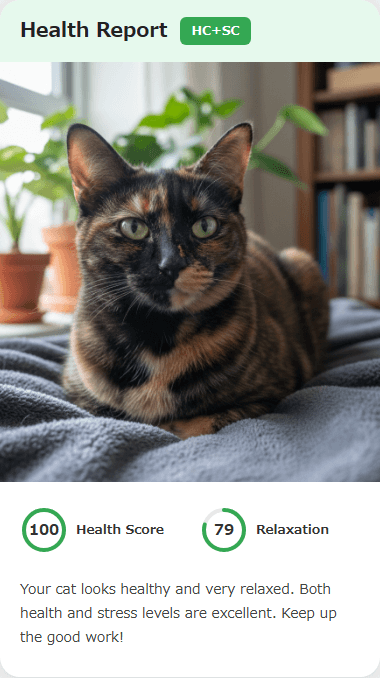

Worried about these symptoms?
Don't wait and wonder. CatsMe's AI analyzes your cat's photo to flag health concerns in seconds.
Ponad 380 000 właścicieli kotów w 50 krajach ufa CatsMe


Top 6 Causes of Excessive Drooling in Cats
1. Periodontal disease & gingivitis
The most common cause of excessive drooling in cats. Approximately 70% of cats over 3 years old have some form of dental disease. Look for red, swollen gums, bleeding when eating, and strong bad breath. Professional dental cleaning (scaling) under anesthesia is the definitive treatment.
2. Stomatitis (especially caudal stomatitis)
Severe inflammation deep in the back of the mouth causes intense pain, making eating nearly impossible. The hallmark sign: your cat approaches the food bowl eagerly but then backs away crying. In severe cases, full-mouth tooth extraction may be the most effective treatment.
3. Foreign body stuck in the mouth
Bones, string, plant fragments, or other objects can become wedged between teeth or under the tongue. Watch for pawing at the mouth, exaggerated chewing motions, or head shaking.
4. Poisoning
Lily plants (extremely toxic to cats — even small amounts cause kidney failure), toxic foods, household cleaners, and insecticides can all cause drooling. Foamy drool combined with vomiting is the classic presentation. This is a veterinary emergency — bring the suspected toxin with you.
5. Nausea & digestive disorders
Drooling often increases as a precursor to vomiting. Motion sickness during car rides, indigestion, and pancreatitis are common triggers. If your cat drools only during car trips, this is likely motion sickness.
6. Kidney disease (advanced stage)
When chronic kidney disease progresses, toxin buildup (uremia) causes painful oral ulcers that produce persistent drooling. A distinctive ammonia-like breath odor is the key identifying feature. Common in senior cats over 10.
Home Assessment & First Aid
Step-by-step home assessment:
1. Gently examine the mouth — With your cat calm, lift the lip to check for visible foreign objects, broken teeth, or swollen gums. Do not force the mouth open if your cat resists strongly
2. Check gum color — Healthy gums are pink. Red = inflammation/infection. White or very pale = anemia or shock (emergency)
3. Assess the odor — Foul rotting smell = dental disease. Ammonia/chemical smell = kidney disease. Sweet/fruity = possible diabetes
4. Note accompanying symptoms — Is there also vomiting, diarrhea, lethargy, or refusal to eat?
What NOT to do:
- Don't force the mouth open or reach in to pull out objects (risk of being bitten or pushing the object deeper)
- Never apply human toothpaste or antiseptic solutions (many contain xylitol or other substances toxic to cats)
Seek emergency veterinary care if:
- Foaming or bubbling at the mouth
- Labored or difficulty breathing
- Repeated vomiting episodes
- Unable to eat or drink for 12+ hours
- Any possibility of toxic substance exposure (bring the container with you)
Veterinary Diagnosis & Treatment Costs
Diagnostic tests for excessive drooling:
- Oral visual exam (included in consultation fee, ¥1,000-3,000 / $8-25) — First step: visual inspection for tartar buildup, gum swelling, foreign bodies, and oral masses
- Blood work (¥5,000-10,000 / $40-80) — Checks kidney function (BUN/creatinine), liver values, blood glucose, and infection markers. Essential for ruling out kidney disease and diabetes
- Dental X-ray (¥3,000-8,000 / $25-65) — Reveals tooth root condition and bone loss. Teeth can look normal externally while the roots are severely diseased
- Professional dental cleaning (scaling) (¥20,000-50,000 / $160-400, including anesthesia) — Performed under general anesthesia. This is the definitive treatment when periodontal disease is the cause
- Tooth extraction (¥50,000-150,000 / $400-1,200 for severe cases) — For severe stomatitis, full-mouth extraction of premolars and molars is often the most effective long-term solution
You can start with an online consultation by sending photos of your cat's mouth to get initial guidance.
Catch Oral Health Problems Early with CatsMe
Dental disease and stomatitis are almost always discovered only after they've progressed significantly. Cats are masters at hiding pain, so by the time owners notice symptoms, the condition is often already severe.
Early detection with CatsMe:
- AI facial expression analysis detects subtle signs of oral discomfort — difficulty closing the mouth, chewing on one side only, or subtle grimacing that humans easily miss
- Eating behavior tracking — Logs patterns like 'approaches food eagerly but won't eat' or 'sudden change in food preference from dry to wet only' — both classic signs of oral pain
- Monthly oral check reminders — Build a habit of regular mouth inspections at home
- Vet consultation reports — Share recorded data on drooling frequency, appetite changes, and breath odor with your veterinarian
Veterinarians recommend annual dental checkups for all cats over 3 years old. CatsMe's daily tracking is the fastest way to catch the earliest signs of trouble.
Try CatsMe now →
Czy potrafisz odpowiedzieć na pytanie: od kiedy to trwa?
Gdy weterynarz zapyta, nie zostawaj bez odpowiedzi. CatsMe automatycznie rejestruje codzienne wyniki zdrowotne, które możesz udostępnić jednym dotknięciem.
よだれ流涎口腔疾患中毒猫の病気
FAQ
 CatsMe
Bądź gotowy do działania, gdy poczujesz, że coś jest nie tak
Wystarczy jedno zdjęcie — SI odczytuje ból i stan zdrowia z wyrazu pyszczka kota. Sprawdź w chwili niepokoju i udostępnij zapis weterynarzowi.