

A Temperature Above 103.1 F (39.5 C) Means Fever — Above 104 F Needs Urgent Care
A healthy cat's normal body temperature ranges from 100.4 to 103.1 degrees Fahrenheit (38.0 to 39.5 degrees Celsius). Anything above 103.1 F is classified as a fever, and 104.0 F (40.0 C) or higher is considered a high fever that demands urgent veterinary attention.
Fever is not a disease in itself — it is the body's response to infection, inflammation, or other underlying conditions such as cancer. When a cat's temperature climbs above 105 F (40.5 C) and stays there, the risk of organ damage to the brain, kidneys, and other vital organs increases rapidly.
If you suspect your cat has a fever — based on lethargy, warm ears, reduced appetite, or shivering — the first step is to confirm the temperature with a thermometer. The sections below explain exactly how to do this safely at home.
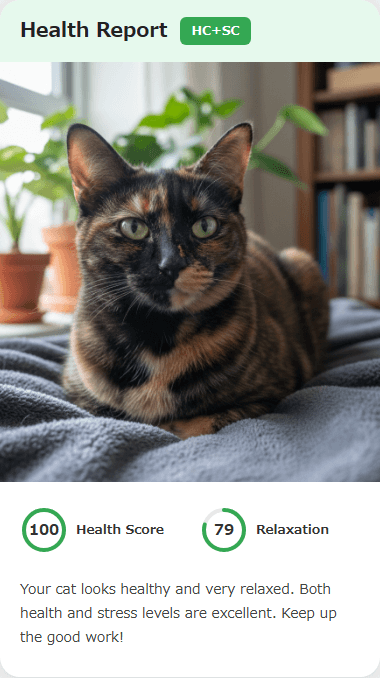

Worried about these symptoms?
Don't wait and wonder. CatsMe's AI analyzes your cat's photo to flag health concerns in seconds.
Ponad 380 000 właścicieli kotów w 50 krajach ufa CatsMe


How to Take Your Cat's Temperature at Home
The most accurate method is a rectal temperature reading. Use a pet-specific or flexible-tip digital thermometer, apply a small amount of petroleum jelly or water-based lubricant to the tip, and gently insert it about half an inch to three-quarters of an inch into the rectum. Having a helper hold the cat or offering treats as a distraction makes the process smoother.
Ear thermometer (pet-specific). Slightly less precise than rectal measurement but far less stressful for most cats. The key is inserting the probe correctly into the ear canal — an angled insertion can give a false low reading.
Touch-based estimation. Feeling the inner ear flaps, paw pads, or belly can give you a rough sense of whether your cat feels warmer than usual. However, this method is unreliable for confirming or ruling out a fever.
For a detailed step-by-step guide, see our article on how to measure your cat's temperature at home.
Common Causes of Fever in Cats
Infections. Bacterial, viral, and fungal infections are the most common cause of fever in cats. Upper respiratory infections (cat flu), feline panleukopenia (feline parvovirus), and FIP (feline infectious peritonitis) can all trigger significant fever.
Inflammatory conditions. Pancreatitis, enteritis, and arthritis produce inflammation that raises body temperature even without an infectious agent.
Cancer. Certain tumors, particularly lymphoma, can cause persistent low-grade or spiking fevers that resist conventional treatment.
Heatstroke. Exposure to hot environments or poorly ventilated spaces in summer can cause a rapid, dangerous rise in body temperature. Heatstroke is a veterinary emergency.
Post-vaccination reaction. A mild fever within 24 to 48 hours of vaccination is a normal immune response and typically resolves on its own.
Home Care for a Feverish Cat — and Critical Warnings
What you must NEVER do:
- Never give human fever reducers — acetaminophen (Tylenol), ibuprofen (Advil), and aspirin are all fatally toxic to cats. Cats lack the liver enzymes to metabolize these drugs, and even a single dose can cause liver failure and death.
What you CAN do:
- Keep your cat in a cool, quiet room and let it rest
- Encourage fluid intake — offering water from a syringe in small amounts can help prevent dehydration
- Place a damp (not cold) towel on the body briefly to help lower temperature, but avoid over-cooling
- Record the temperature reading, time, appetite level, and any other symptoms — this information is invaluable when you visit the vet
If the temperature reaches 104 F (40 C) or higher, do not rely on home care alone. Seek veterinary attention promptly.
Home Care vs Emergency: Drawing the Line
Knowing exactly when you can safely monitor a fever at home — and when delay could be dangerous — is one of the most valuable skills a cat owner can develop.
When Home Monitoring Is Appropriate:
- The temperature is between 103.1 and 104.0 degrees Fahrenheit (39.5 to 40.0 degrees Celsius)
- Your cat is still eating small amounts and drinking water
- Lethargy is mild — the cat rests more than usual but still responds to your voice or the sound of a treat bag
- You have a known cause, such as a vaccination within the past 48 hours
- There are no other alarming symptoms (no vomiting, no difficulty breathing, no collapse)
During home monitoring, keep a written log every four to six hours that includes: the temperature reading, whether the cat ate or drank, litter box activity, and energy level. This log becomes invaluable if a vet visit becomes necessary later.
When to Head Straight to the Vet — No Exceptions:
- Temperature is 104.0 degrees Fahrenheit (40.0 degrees Celsius) or higher
- The cat has not eaten or drunk anything for more than 24 hours
- Breathing is labored, rapid, or open-mouthed
- Gums are pale, white, or yellowish (jaundice)
- There is accompanying vomiting or diarrhea — especially bloody
- The cat is a kitten under 6 months old — kittens dehydrate much faster than adults and can deteriorate within hours
- An FIP diagnosis is suspected or confirmed — fever is a hallmark of this serious disease
A good rule of thumb: if your gut tells you something is wrong, trust it. A "wasted" vet visit is infinitely better than a delayed one.
What Happens at the Vet: Diagnostic Process & Cost Guide
Understanding what to expect during a veterinary visit for fever helps reduce anxiety and allows you to make informed decisions about your cat's care.
Step 1: Physical Examination (Included in Consultation Fee)
The vet will take a rectal temperature for an accurate reading, check the heart rate and respiratory rate, palpate the abdomen for organ enlargement or pain, examine the mouth for signs of stomatitis or dental disease, and feel the lymph nodes for swelling.
Step 2: Blood Work
A complete blood count (CBC) reveals whether infection, anemia, or inflammation is present. A biochemistry panel checks liver and kidney function. Costs typically range from 5,000 to 15,000 yen depending on the panels run. If FIP is suspected, additional tests such as the Rivalta test or PCR analysis may be recommended.
Step 3: Urinalysis
A urine sample can detect urinary tract infections, kidney disease, or diabetes — all of which can cause fever. Cost: approximately 2,000 to 5,000 yen.
Step 4: Imaging (If Needed)
X-rays may be ordered if pneumonia, fluid in the chest, or an abdominal mass is suspected. Ultrasound provides a more detailed view of internal organs. X-rays cost approximately 4,000 to 8,000 yen; ultrasound ranges from 5,000 to 10,000 yen.
Step 5: Treatment
Treatment depends entirely on the diagnosis. Antibiotics for bacterial infections, antiviral supportive care for viral illness, anti-inflammatory drugs for sterile inflammation, or IV fluids for dehydration and fever support. Hospitalization for severe cases may cost 10,000 to 30,000 yen per day.
Total Estimated Cost for a Fever Workup:
A straightforward case (exam, blood work, antibiotics) typically runs 10,000 to 25,000 yen. Complex cases requiring imaging, hospitalization, or specialized testing can reach 50,000 to 100,000 yen or more. Pet insurance can significantly offset these costs if your policy is active.
Age-Specific Fever Risks: Kittens, Adults, and Seniors
A fever does not carry the same level of risk across all life stages. Understanding age-specific vulnerabilities helps you respond appropriately.
Kittens (Under 1 Year)
Kittens are disproportionately vulnerable to fever-causing infections because their immune systems are still developing. Upper respiratory infections (feline herpesvirus and calicivirus) and feline panleukopenia are leading causes of fever in unvaccinated or incompletely vaccinated kittens. Dehydration progresses far more rapidly in a small body — a kitten with a fever of 104 degrees Fahrenheit can become critically dehydrated within 12 to 18 hours. Key rule: any fever in a kitten under 6 months old warrants a same-day vet visit, not a "wait and see" approach.
Adult Cats (1 to 7 Years)
Healthy adult cats have the strongest immune response and can often fight mild infections effectively. Common fever triggers in this age group include bite-wound abscesses from outdoor fights, urinary tract infections, and dental disease. An important note: indoor adult cats that develop a persistent fever with no obvious cause should be screened for FIP, particularly if other symptoms like weight loss, loss of appetite, or abdominal swelling are present.
Senior Cats (7 Years and Older)
In older cats, fever can be more subtle and harder to detect because seniors naturally have lower baseline activity levels. Chronic kidney disease, hyperthyroidism, cancer (especially lymphoma), and chronic infections are the most common causes of fever in this age group. Senior cats also metabolize medications differently, so pain relievers and antibiotics may need dose adjustments. A fever in a senior cat combined with increased thirst, weight loss, or behavioral changes like hiding should prompt a thorough geriatric workup including blood tests, urinalysis, and imaging.
Regardless of age, a fever that persists beyond 48 hours despite home care always deserves professional evaluation.
Consult a Vet Online About Your Cat's Fever
When you are unsure whether your cat's fever warrants a trip to the clinic, Carelogy's online veterinary consultation can help you decide. Share the temperature reading, appetite status, energy level, and any other symptoms with the veterinarian, and they will assess urgency and recommend either home monitoring or an immediate in-person visit.
This service is especially valuable during evenings and weekends when deciding between waiting until morning or heading to an emergency clinic. The vet can also walk you through how to use a thermometer properly via video call if you are uncertain about the technique.
Czy potrafisz odpowiedzieć na pytanie: od kiedy to trwa?
Gdy weterynarz zapyta, nie zostawaj bez odpowiedzi. CatsMe automatycznie rejestruje codzienne wyniki zdrowotne, które możesz udostępnić jednym dotknięciem.
発熱体温高熱猫の病気受診タイミング
FAQ
 CatsMe
Bądź gotowy do działania, gdy poczujesz, że coś jest nie tak
Wystarczy jedno zdjęcie — SI odczytuje ból i stan zdrowia z wyrazu pyszczka kota. Sprawdź w chwili niepokoju i udostępnij zapis weterynarzowi.