

Key Takeaway: FLUTD Recurs in ~50% of Cases — Diet & Environment Changes Cut Risk Dramatically
After initial treatment, FLUTD (Feline Lower Urinary Tract Disease) recurs within one year in approximately 50% of cases. However, with consistent dietary management, adequate hydration, and stress reduction, the recurrence rate can be dramatically reduced.
The three pillars of recurrence prevention:
1. Continuing prescription diet — Optimizes urinary pH and mineral balance
2. Increasing water intake — Dilutes urine to prevent crystal formation
3. Stress management — Stress is the primary trigger for feline idiopathic cystitis (FIC)
"Switching back to regular food after recovery" is the single most common cause of recurrence. If urinary abnormalities or blood in urine return, consult your veterinarian immediately.
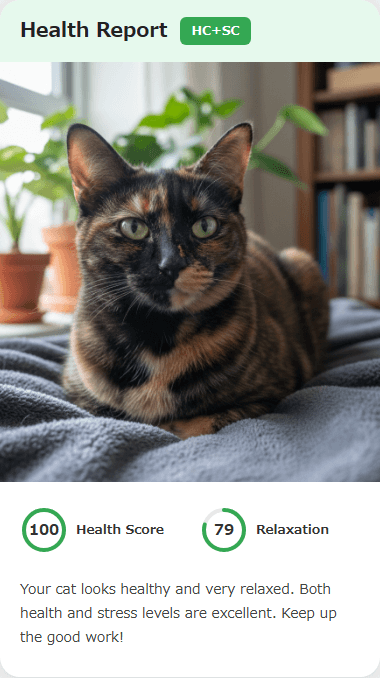

Catch problems before they start
Daily health tracking makes early detection possible. CatsMe logs changes automatically so small shifts don't slip past you.
Used by 380,000+ cat owners in 50 countries


Dietary Therapy: Choosing & Maintaining a Prescription Diet
The most critical factor in preventing FLUTD recurrence is continuing a prescription urinary diet.
Recommended prescription diets (veterinary prescription required):
- Hill's c/d Multicare — Effective against both struvite and calcium oxalate. The most widely used urinary diet worldwide
- Royal Canin Urinary S/O — Reduces urine specific gravity to prevent crystal formation
- Hill's c/d Stress — Contains hydrolyzed milk protein and L-tryptophan, specifically designed for stress-related cystitis
Tips for maintaining the prescription diet long-term:
- Prioritize wet food — 70-80% moisture content naturally increases water intake
- Try multiple flavors to find your cat's preference — compliance is everything
- Critical mistake to avoid: Switching back to regular food after symptoms resolve → recurrence risk spikes dramatically
- In multi-cat households, separate feeding stations to ensure the affected cat eats only prescription food
Cost estimate:
Approximately ¥5,000-8,000/month for a wet food-dominant diet. Compared to hospitalization for recurrence (¥50,000-100,000 per episode), prevention is vastly more cost-effective.
Understanding cat nutrition basics will also help you make informed dietary choices.
Hydration & Stress Management: Environmental Changes That Prevent Recurrence
Methods to increase water intake:
- Make wet food the primary diet — The most effective single change. More reliable than adding water to dry food
- Install a cat water fountain — Many cats prefer running water, with studies showing 20-30% increased water consumption
- Place water bowls in multiple locations — At least one per floor of your home
- Position water away from food bowls (cats instinctively prefer separation between food and water sources)
- Experiment with water temperature — some cats prefer lukewarm water
Target: 50-60ml of water per kilogram of body weight daily. For a 4kg cat, that's 200-240ml/day.
Stress management (most critical for FIC prevention):
Feline Idiopathic Cystitis (FIC) accounts for approximately 60% of FLUTD cases, and stress is its primary trigger.
- Litter box quantity — Ideally one per cat plus one extra. A dirty litter box leads to urine holding → increased cystitis risk
- Environmental enrichment — Cat trees, window perches, and regular interactive play sessions
- Multi-cat household tension reduction — Ensure each cat has their own litter box, food bowl, and resting spot
- Moving or environmental changes — Refer to moving house care tips to minimize transition stress
- Feliway (synthetic pheromone) — Plug-in diffusers placed in living areas. Scientifically proven to reduce feline stress markers
Early Signs of Recurrence & When to Seek Veterinary Care
FLUTD recurrence can be caught early to prevent severe episodes. Watch for these warning signs.
Warning signs (see vet within 24 hours):
- Frequent trips to the litter box producing only small amounts of urine
- Urinating outside the litter box
- Crying or straining during urination
- Blood in urine
- Excessive licking of the genital area
Emergency signs (seek immediate veterinary care):
- No urine produced for 12+ hours → Possible urinary blockage. In male cats, this is a life-threatening emergency
- Vomiting accompanying urinary symptoms
- Lethargy or collapse
Diagnostic tests for recurrence:
- Urinalysis (pH, specific gravity, crystals, bacteria): ~¥3,000-5,000
- Abdominal ultrasound (bladder wall, stones): ~¥5,000-10,000
- Blood work (kidney function): ~¥5,000-10,000
Comparison with previous episodes is crucial for treatment decisions, so keeping CatsMe records makes veterinary consultations much more productive.
Home Care & When to Wait vs. When to Seek Emergency Help
Knowing what you can manage at home versus what demands emergency veterinary intervention can be the difference between a minor episode and a life-threatening crisis during FLUTD recurrence.
Immediate home care measures:
- Switch to a wet-food-dominant diet to boost water intake. If the cat was previously on a prescription urinary diet that has lapsed, restart it immediately. Increased fluid consumption helps dilute the urine and flush irritants from the bladder wall.
- Clean the litter box thoroughly — replace all litter rather than simply scooping. A dirty litter box discourages urination, which worsens bladder inflammation.
- Install a Feliway diffuser or spray in the rooms where the cat spends the most time. Since stress is the primary trigger for feline idiopathic cystitis, calming pheromones can help break the stress-inflammation cycle.
- Carefully monitor whether the cat is actually producing urine. Watch for posturing in the litter box without results, which indicates possible obstruction.
See a vet within 48 hours if you notice:
- Frequent urination persisting for more than two days
- Blood in the urine while the cat is still able to pass urine
- New onset of urination outside the litter box
- Reduced appetite or reluctance to move around normally
Seek emergency care immediately if:
- A male cat has not urinated for 12 or more hours — complete urinary obstruction can become fatal within 24 to 48 hours as potassium levels rise to dangerous levels, leading to cardiac arrest
- Repeated vomiting alongside urinary symptoms
- Extreme lethargy or near-collapse
- The abdomen feels hard and distended when gently palpated, suggesting a critically full bladder
Critical reminder: Male cat owners must remain vigilant about urinary obstruction risk at all times. A "wait and see" approach can be deadly when a male cat stops producing urine.
Vet Diagnostic Process & Costs for FLUTD Recurrence
When FLUTD recurs, the veterinarian places significant emphasis on comparing the current episode with previous ones to identify patterns and optimize the treatment approach.
Standard diagnostic tests for recurrence:
1. Urinalysis — Measures pH, specific gravity, crystal presence, and bacterial content. This is the single most informative test for FLUTD and costs ¥3,000 to ¥5,000.
2. Abdominal ultrasound — Evaluates bladder wall thickening, the presence of stones or sludge, and overall urinary tract structure. Cost: ¥5,000 to ¥10,000.
3. Blood chemistry panel — Assesses kidney function and, in cases of urinary obstruction, checks for dangerous electrolyte imbalances, particularly elevated potassium. Cost: ¥5,000 to ¥10,000.
4. Urine culture (when indicated) — Confirms or rules out bacterial cystitis, which requires antibiotic treatment. Cost: ¥5,000 to ¥8,000.
Treatment costs for emergency urinary obstruction:
- Urinary catheter placement and bladder flushing: ¥10,000 to ¥20,000
- Hospitalization (typically 2 to 5 days): ¥30,000 to ¥80,000 depending on duration
- Intravenous fluids and electrolyte correction: ¥10,000 to ¥20,000
- Total: ¥50,000 to ¥150,000 per obstruction episode
Perineal urethrostomy (PU surgery):
For male cats that experience repeated urinary obstructions, PU surgery is a definitive surgical option that widens the urethral opening to prevent future blockages. The procedure costs ¥100,000 to ¥250,000. Success rates are high, but the wider urethra slightly increases the risk of ascending urinary tract infections post-surgery, requiring ongoing monitoring.
Having detailed records of previous episodes — when symptoms started, what they looked like, and which treatment resolved them — allows the veterinarian to make faster, more accurate decisions.
Age-Specific FLUTD Risks & Tailored Prevention Strategies
The underlying cause of FLUTD and the most effective prevention approach shift significantly depending on the cat's age. Tailoring your strategy to your cat's life stage produces much better outcomes.
Ages 1 to 6 (young adult cats):
Feline Idiopathic Cystitis (FIC) is by far the most common diagnosis in this age group, accounting for roughly 60 percent of FLUTD cases. Stress is the dominant trigger, making environmental enrichment the single most impactful prevention measure. Pay special attention to stressful events such as moving to a new home, introducing a new pet, or major changes in the owner's daily routine. Overweight cats face double the risk, so weight management through portion control and active play is a foundational preventive step.
Ages 7 to 10 (middle-aged cats):
This transitional period sees risk from both FIC and urinary stones. Routine urinalysis becomes increasingly important for catching crystal formation before stones develop. Continuation of the prescription urinary diet is more critical than ever, as the margin for error narrows. Because kidney function also begins to decline in this age range, work with your veterinarian to choose a prescription diet that supports both urinary and renal health simultaneously.
Ages 11 and older (senior cats):
Bacterial cystitis becomes proportionally more common in elderly cats as their immune defenses weaken. Concurrent kidney disease is frequent and complicates both diagnosis and treatment, since kidney disease itself changes urine composition. Diabetes also increases urinary tract vulnerability. Urine culture testing gains importance in this age group because antibiotics should only be prescribed when a genuine bacterial infection is confirmed. Comprehensive health screenings twice a year are strongly recommended.
Matching your prevention strategy to your cat's life stage minimizes recurrence risk and keeps your cat comfortable long-term.
Prevention & Long-Term Management: Lifestyle Optimization & Seasonal Considerations
Preventing FLUTD recurrence requires continuous optimization of your cat's daily environment rather than one-time changes. Long-term success comes from building sustainable habits.
Litter box environment optimization:
The litter box is the single most controllable factor in FLUTD management. Aim for one box per cat plus one additional box. Scoop daily and perform a complete litter change weekly. Place boxes in quiet, easily accessible locations — never near noisy appliances or in areas the cat must navigate past a rival cat to reach. Avoid changing litter brands or types, as even this seemingly minor change can cause enough stress to trigger an episode. Choose a box that is at least 1.5 times the cat's body length to provide comfortable posturing space.
Seasonal considerations:
- Winter: Cats naturally drink less in cold weather because they are less active and the water itself may be uncomfortably cold. Offer lukewarm water and increase the proportion of wet food in the diet. Monitor urine clump size in the litter box — smaller clumps indicate reduced urine output.
- Summer: Heat-related dehydration can concentrate urine and trigger crystal formation. Add extra water stations throughout the home and consider a cat water fountain to encourage drinking.
- Seasonal transitions: Changes in daylight, indoor temperature, and household routines during spring and autumn can create low-level chronic stress that precipitates FLUTD flares. This is a good time to deploy Feliway diffusers proactively.
Special considerations for multi-cat households:
- Ensure each cat has dedicated food bowls, water bowls, and litter boxes — resource competition is one of the most potent stress triggers for cats with FLUTD.
- Periodically assess whether inter-cat social dynamics have shifted. A new tension between formerly friendly cats can silently drive recurrence.
- Provide ample vertical territory with cat trees and shelving so that subordinate cats always have an escape route.
- Position feeding stations so cats do not have to make direct eye contact while eating.
The cumulative effect of small, consistent environmental improvements is the most reliable path toward eliminating FLUTD recurrence entirely.
Detect FLUTD Recurrence Early with CatsMe
Understanding recurrence patterns is the key to long-term FLUTD management. Use the CatsMe app to track daily urination habits and catch changes early.
What CatsMe can do for you:
- AI facial expression analysis detects urinary pain and discomfort early — cystitis-related distress manifests in subtle facial changes
- Litter box frequency & urine volume tracking — Visualize patterns of increased frequency or decreased output with intuitive graphs
- Symptom checker — Enter 'frequent urination,' 'blood in urine,' or 'urinating outside litter box' for urgency assessments
- Vet-ready health reports — Compare past recurrence patterns with current symptoms to help your vet make precise treatment decisions
FLUTD management is a lifelong commitment. Consistent daily tracking protects your cat's comfort and quality of life.
Try CatsMe now →
Prevention starts with noticing early
The best time to catch a problem is before it grows. CatsMe logs daily health scores so small changes never go unnoticed.
FLUTD下部尿路疾患膀胱炎尿路結石再発予防療法食ストレス
FAQ
 CatsMe
Be ready the moment you sense something's off
Take one photo and the AI reads pain and condition from your cat's expression. Check the moment you wonder, and share the record with your vet.